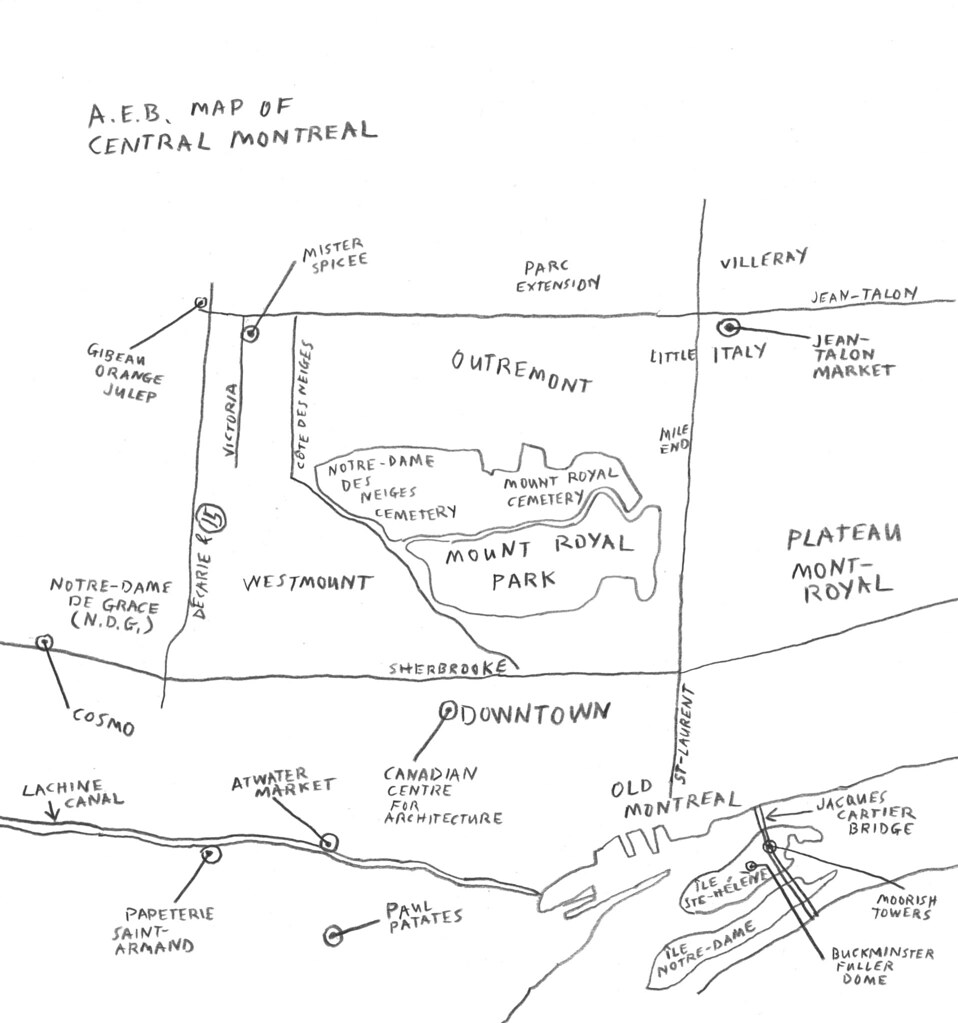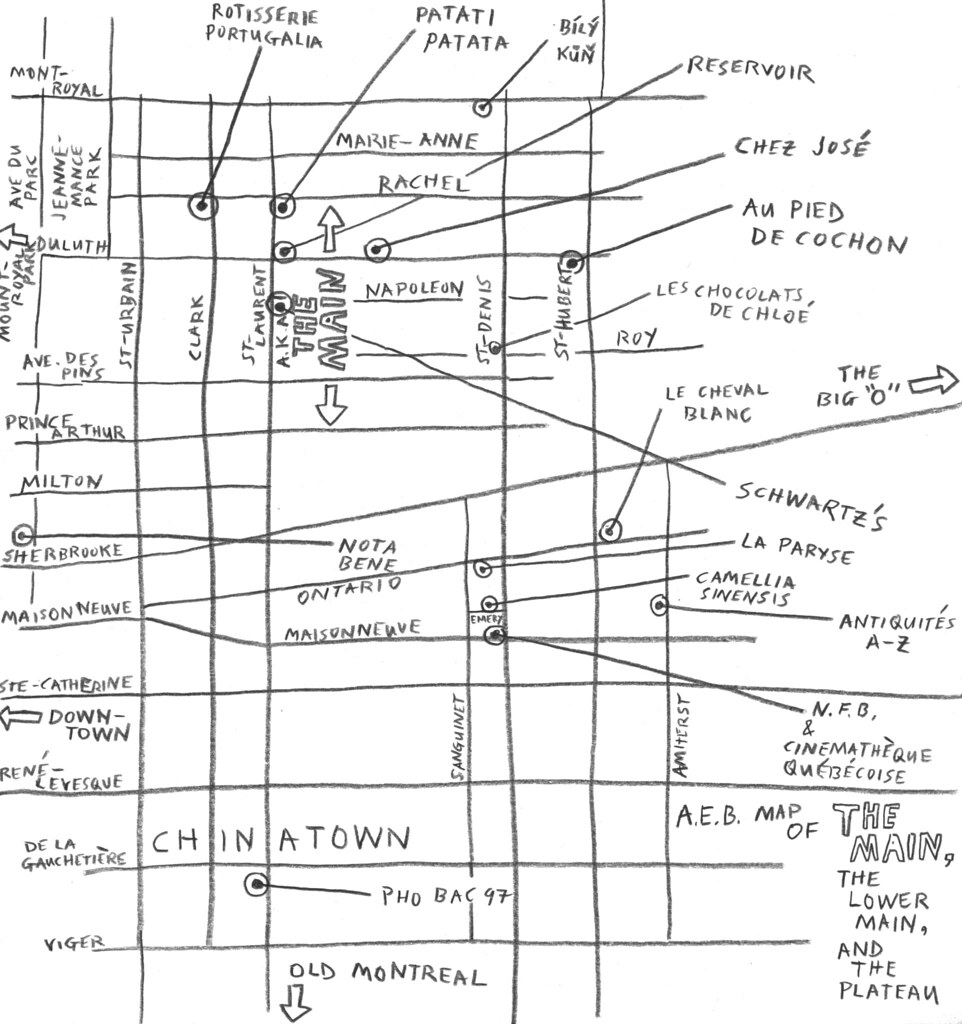
Friday, January 01, 2010

Goodbye, 2009! (Hello, 2010!)

Print

Andrea Nguyen, Into the Vietnamese Kitchen: Treasured Foodways, Modern Flavors

Andrea Nguyen, Asian Dumplings: Mastering Gyoza, Spring Rolls, Samosas, and More

Jeffrey Alford and Naomi Duguid, Beyond the Great Wall: Recipes and Travels in the Other China

Fuchsia Dunlop, Revolutionary Chinese Cookbook: Recipes From Hunan Province

A16

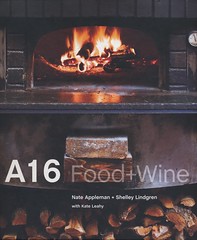
Nate Appleman and Shelley Lindgren, A16

Reed and Reed, Holy Smoke

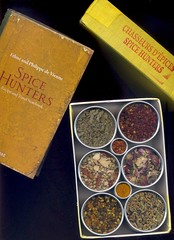
spice hunters

Ethné & Philippe de Vienne, Spice Hunters

A.S. Byatt, Possession

Hans Fallada, Every Man Dies Alone

Roberto Bolaño, The Savage Detectives

Atul Gawande, “The Cost Conundrum: What a Texas Town Can Teach Us About Health Care,” The New Yorker

Barbara Ehrenreich, Nickel and Dimed: On (Not) Getting By in America

Robert Musil, The Man Without Qualities

Errol Morris, “The Case of the Inappropriate Alarm Clock” (Parts 1-7), The New York Times

Marion Cran, The Story of My Ruin

Dirk Bogarde, A Particular Friendship

John Steinbeck, East of Eden

Malcolm Gladwell, “Offensive Play: How Different Are Dogfighting and Football?,” The New Yorker

Werner Herzog, Conquest of the Useless

David Grann, “Trial By Fire: Did Texas Execute an Innocent Man?,The New Yorker

momofuku

David Chang and Peter Meehan, Momofuku

Gourmet: The Magazine of Good Living (R.I.P.)


Moving images

Bright Star, dir. Campion

che

Che, pt. 1: The Argentine, dir. Soderbergh

The Informant!, dir. Soderbergh

Fantastic Mr. Fox, dir. Anderson

Gomorrah, dir. Garrone

Friday Night Lights, season one

Tyson, dir. Toback

The Wrestler, dir. Aronoff

The Best of Everything, dir. Negulesco

Mad Men, season two

Broken Flowers, dir. Jarmusch

Ali: Fear Eats the Soul, dir. Fassbinder

In a Lonely Place, dir. Ray

Il Divo, dir. Sorrentino

Duplicity, dir. Gilroy

Wendy & Lucy, dir. Reichardt

The Hurt Locker, dir. Bigelow

The Class, dir. Cantet

Border Incident, dir. Mann

Tokyo Story, dir. Ozu

Tokyo-Ga, dir. Wenders

Happy Go Lucky, dir. Leigh

Standard Operating Procedure, dir. Morris

Only Angels Have Wings, dir. Hawks

I Am A Fugitive From a Chain Gang, dir. LeRoy

Captains Courageous, dir. Fleming


Song

Witchies, self-titled EP

pink mountaintops

Pink Mountaintops, Outside Love

V/A, Dirty French Psychedelics, esp. Dashiell Hedayat, “Long Song for Zelda,” Brigitte Fontaine, "Il Pleut," Bernard Lavilliers, "Les Aventures Extraordinaire d'un Billet de Banque," and Karl-Heinz Schäfer & Arabian, "Utopia"

Tapestry, Down By Maple River

Sonic Youth, The Eternal

Alice Coltrane, Journey Into Satchidananda

africa boogatwo

V/A, Africa Boogaloo: The Latinization of West Africa

Moonface, Dreamland EP

Bob Dylan, New Morning

Wilco, self-titled LP

V/A, AEB 1980s Dance Party, vol. 1: Salad Days

Handsome Furs, "Radio Kaliningrad"

The Kinks, “Strangers”

Bert Jansch, The Black Swan

Kenny Rogers & the First Edition, "Just Dropped In (To See What Condition My Condition Was In)"

Abner Jay, True Story of Abner Jay

V/A, Psych Funk 101

Sunset Rubdown, Dragonslayer

endless boogie 1

Endless Boogie, Focus Level


Food & Drink

moules à la Bonne Humeur

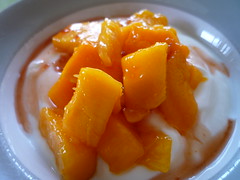
alphonsos & yogurt

Alphonso mangoes

red flannel hash

red beans & rice

red peas & rice

uppuma

soto ayam

homemade bánh mì

Vermont Artisan Coffee & Tea, Waterbury, VT

Red Hen Baking Co., Middlesex, VT

Myriade, Montreal, QC

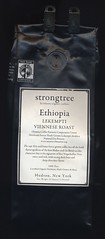
strongtree's lekempti

Strongtree, Hudson, NY

Fleisher’s, Kingston NY

Dic Ann’s, Montreal, QC

Cuisine Mas, Montreal, QC

Laloux, Montreal, QC

Parker Pie Company, West Glover, VT

Convivio, New York, NY

Co., New York, NY

Motorino, Brooklyn, NY

Libretto, Toronto, ON

Gilead Café, Toronto, ON

Dépanneur Le Pick Up, Montreal, QC

The Alchemist, Waterbury, VT

Hen of the Wood, Waterbury, VT

Oscar’s, Warrensburg, NY

W.W. Boyce Farmers’ Market, Fredericton, NB

The Whalesbone Oyster House, Ottawa, ON

Hawaï, Ville St-Laurent, QC

Cabane à Sucre Au Pied de Cochon, St-Benoît de Mirabel, QC

AEB’s Montreal Restaurant of the Year: Qing Hua


Miscellaneous

“Walker Evans and the Picture Postcard,” Metropolitan Museum of Art, New York, NY

instant karma

“Imagine: The Peace Ballad of John & Yoko,” Musée des Beaux Arts, Montreal, QC

"Actions: What You Can Do With the City," Canadian Centre for Architecture, Montreal, QC

Kaaterskill Falls, NY

(do the) Camel's Hump, VT

things are looking up

Happy New Year!

little twin stars

m & aj

ps--Oh, yeah: AEB's cartoon of the year:

New Yorker, 5/11/2009

(Ward Sutton, The New Yorker, May 11, 2009)

Wednesday, December 30, 2009

Hudson River School, rev. ed.

ornaments fig. a: self-portrait w/ xmas ornaments

The holidays found us back in the Catskills, taking pictures of ourselves reflected in Christmas ornaments,

barn fig. b: barn, Cornwallville, NY

exploring big, old barns,

hudson river valley fig. c: view of the Hudson River Valley

and studying the landscape. This view is from Olana,

Olana fig. d: Olana

the outlandish Orientalist fantasy home built by the Hudson River School's Frederic Edwin Church on a site that affords spectacular views of the Hudson River, the Catskills, and the Taconic hills, a site Church called "the center of the world."
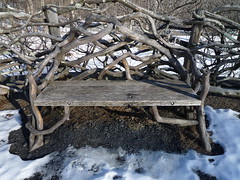
olana 3 fig. e: gnarly!

Church fetish for all things Persian may have been somewhat incongruous, but Michelle approved of Olana's views and its sense of whimsy (including its heart-shaped pond), and she was especially fond of Church's taste in outdoor furnishings.

Hudson

hudson, NY fig. f: Hudson Gothic

The town of Hudson is a handsome Hudson River Valley town with a handsome Amtrak station that also happens to be one of the town's most important landmarks. Not only is Hudson's train station a stately, subdued example of American Gothic, not only is it the oldest continuously operational train station in the entire state of New York, but it happens to be across the street from one of New York's very best cafés.
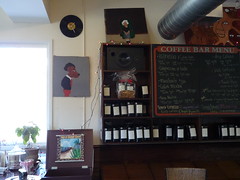
strongtree fig. g: inside Strongtree

That's right, directly across the street you'll find the good people at Strongtree Organic Coffee Roasters, purveyors of the "finest quality organic heirloom coffees." In many ways, 2009 was the Year of Coffee for us, the year that we had 4 or 5 of the most momentous coffee experiences of our entire lives. Strongtree was the final coffee discovery of the year (TY, S & T!), but it vaulted right into our Top 3. We loved this place from the moment we set foot in the joint. The fact that they were playing the dubbed -out sounds of This is Reggae Music, vol. 3, an album that, by all reasonable measures (longest history, most listens, etc.), is my #1 reggae album of all time, certainly didn't hurt.

santa's little helpers fig. h: Santa's little helpers

The display of loopy holiday art didn't hurt either. But what really caught our attention was that first cappuccino. This was not your average espresso shot. It left a tremendously memorable impression. So memorable, in fact, that two days later we remembered to make a special detour back to Strongtree to pick up some beans and have an even more impressive espresso shot. This time time made with their Conquering Lion blend (irie!), this time served up as a latte. But what sealed the deal was when we got back home and brewed up our first batch of their Ethiopian Lekempti Viennese Roast. "Strong dark fruit and deep chocolate flavor," indeed. Again, easily one of our Top 3 coffees of the year.
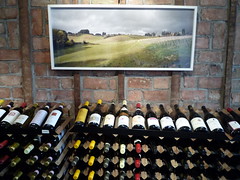
hudson wine merchants fig. i: inside Hudson Wine Merchants

Hudson is also blessed with an awfully impressive wine shop: Hudson Wine Merchants. Not only do the folks at HWM share our passion for landscape, but they stock a great selection of Italian wines, including an awfully tasty Campo di Sasso Insoglio del Cinghiale 2006.

diner fig. j: Hudson diner

And, if you're interested, Hudson also has a beautifully streamlined vintage diner, which is currently FOR SALE. Takers?

Kingston
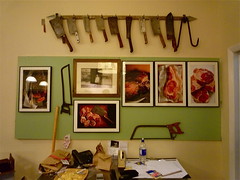
tools of the trade fig. k: inside Fleisher's

If Strongtree was one of the highlights of our trip, the other major highlight was found not in Hudson, but about an hour south along the NY Thruway in Kingston. Fleisher's Grass-Fed & Organic Meats is a new school butcher shop run by Joshua & Jessica Applestone that has very deservedly received an enormous amount of attention in the five years since they opened. Fleisher's is the epitome of principled: not only is all their meat organic, but it's all grass-fed, pasture-fed, and ethically raised. In fact, Joshua & Jessica established a set of tenets when they opened up shop, principles that guide the way they run their operation and the way they do business. They look something like this:

-All farms are multigenerational with a long history of ethical practices.
-Farmers are proponents of proper animal husbandry for all animal reproduction.
-Animals always have access to grass and open pastures and are not kept in pens.
-Animals are rotated through pastures to ensure they have exercise and fresh grass to eat.
-Animals are not given antibiotics or hormones.
-Animals live in closed herds.
-All feed and grains must come from local mills and farms. Store bought grain is never acceptable.
-Animals travel less than an hour to the slaughterhouse.


Where does this commitment to sourcing and carving the very best, most humanely raised meat come from? Well, interestingly, it comes from a shared history of vegetarianism. Joshua & Jessica were both vegetarians when they first met. Hell, Joshua was a vegan. For 17 years (!). Obviously, they left their vegetarian ways behind years ago, but their food ethics remained, and they've made a business out of supporting and promoting a humane and human-scale approach to animal husbandry.

The Fleisher's story is a nice story, too. Not only is it founded on a love story, but there's some real history to it. You might think that the Fleisher's name is just a clever play on the word "butcher," but you'd be wrong. The store is named after Wolf Fleisher, a kosher butcher who came to America in 1901 and set up his own shop--the original Fleisher's--in Brooklyn. The business became a success, known for the high quality of its beef and poultry, as well as the high standards by which it was run. Joshua is Wolf Fleisher's great-grandson, and the Fleisher's tradition lives on.

Now, we'd read about Fleisher's a while back, but it all seemed so faraway and exotic (perhaps because no butcher shop in Montreal is even remotely as progressive) until we happened to meet Joshua & Jessica at Joe Beef on a balmy summer night back in August (TY, AG, TY, JB!). We got to talking and when they graciously invited us to come down and pay them a visit, we pledged to do just that at the soonest opportunity.

It's one thing to hear or read about an all-organic, grass- and pasture-fed meat shop, but it's a whole other thing to see one in operation, especially when it takes the shape of a good, old-fashioned neighborhood butcher shop (albeit one that does a healthy trade with several of New York's finest restaurants, 90 miles down the Hudson), especially when the run-up to Christmas is very much on. This joint was jumping. Fleisher's had a full team in full swing, carving up sides of beef, putting together special orders, tending to customers. Somehow Joshua & Jessica still found the time to give us a tour and chat with us.
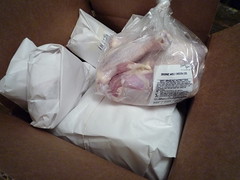
the haul fig. l: the haul

When we got back home, we had a box full of Fleisher's organics meats purchases in tow:

6 organic whole chicken legs
2 huge, organic beef short ribs
1 organic bone-in pork shoulder
1 massive, organic, dry-aged rib steak
4 lamb loin chops


As soon as we made our first Fleisher's meal we started to have regrets about not buying more. Four meals later and still batting 1.000 (actually, these meals have been so good, it feels like we're batting over 1.000), we're kicking ourselves (hard!).

Here are the first two:

AEB Chicken & Dumplings

1 tbsp olive oil
1 small organic chicken, cut into parts, or 6 organic whole chicken legs
1 medium onion, finely chopped
2 ribs of celery, finely chopped
2 medium carrots, finely chopped
1/4 cup parsley, minced
4 tbsp flour
1 cup dry white wine
2 cups chicken or vegetable stock
salt & freshly ground pepper

dumplings:
2 cups sifted all-purpose flour
1/4 tsp salt
2 rounded tsp baking powder
1 tsp brown sugar
2 tbsp butter
2/3 cup buttermilk

Heat the oil in a large stove- and ovenproof casserole over medium heat. Salt and pepper your chicken liberally. When the oil begins to smoke, brown your chicken parts or legs, roughly 5 minutes per side. You might need to do this in batches. I did. When the chicken parts have been browned, remove them from the casserole and set them aside. Add the onion to the casserole and sauté until the onion has turned translucent. Add the celery and the carrots and continue sautéing, 2 to 3 minutes. Add the parsley, sauté another minute, then add the flour and sauté for another 1-2 minutes, stirring constantly, until the vegetable have turned a pale golden hue. Add the white wine and the chicken/vegetable stock. Add the browned chicken pieces. Bring to a boil, then turn the heat way down and simmer ever so gently for 45 minutes.

Meanwhile, prepare the dumplings. Sift the flour, salt, baking powder, and sugar into a mixing bowl. Add the butter, blending with your fingertips. Add the buttermilk and mix well. Spoon the dough onto a floured surface and roll it evenly 1/4 inch in diameter. Cut into 1-inch rounds or diamond shapes.

When the chicken has cooked for 45 minutes, taste and adjust the seasonings. Add the dumplings. Cover and cook for another 20 minutes at a gentle simmer. Test the dumplings--they should be light, airy, and fully cooked through. Serve the chicken and dumplings in wide, shallow bowls. Devour.

[the dumplings part of this recipe is based on Edna Lewis' recipe in The Taste of Country Cooking, although her recipe uses 2/3 cup of milk instead of buttermilk]

Chicken & Dumplings is one of my absolute favorite meals, but it was even better with Fleisher's plump, organic, pastured chicken. The rich gravy--always a thing of beauty--was noticeably richer, noticeably more beautiful. The chicken meat was so thoroughly delicious that we found ourselves literally gnawing at the bones, ravenously, trying to make sure we got each and every last morsel.

Equally phenomenal was this lamb chops dish that combined the Fleisher's method for cooking and savoring their grass-fed and pastured meats with elements of a Mario Batali recipe for scottaditi (one that called for the use of New Zealand lamb [!], not Hudson River Valley lamb*). Now, our lamb chops were loin chops, not the neck-end lamb chops (or frenched lamb chops) that one usually uses for scottaditi, but they were equally finger-scorching-good. Fleisher's method was very familiar to us--it's basically the exact same method we use for making our steaks--but Jessica insisted that this was a fool-proof method for preparing virtually all of their meats.*

Lamb Chops with Confited Garlic and Mint

4 lamb loin chops
1/4 cup extra-virgin olive oil
10-12 whole cloves of garlic
1 cup dry wine
1/2 cup sweet wine
salt and freshly ground black pepper
4 sprigs mint, leaves only

Heat the oil in a 10-inch sauté pan over medium heat. Add the garlic cloves and sauté slowly, shaking the pan frequently to keep the garlic moving, until they are lightly browned on all sides, about 10 minutes. Add the wines, bring to a slow boil, and cook until the liquid is reduced to 1/4 cup, at which point the garlic should be very soft, indeed. Remove from the heat and set aside.

Preheat your oven to 300º F.

Season the lamb chops liberally with salt and pepper.

Heat a stovetop-to-oven-ready pan (like a cast-iron) over medium-high heat until it reaches the smoking point. Add the lamb chops and sear for 2 minutes on each side. Remove the pan from the stovetop and place it in the oven. Cook for an additional 4-8 minutes, until your lamb chops reach your desired level of doneness (our lamb loin chops took about 6 minutes in the oven). Take the pan out of the oven. Remove the lamb chops, place them on a cutting board, and allow them to rest 5 minutes.

While the lamb is resting, season the garlic mixture with salt and pepper and add the mint leaves. Serve each lamb chop with a few confited garlic cloves and drizzle the sauce overtop.

[confited garlic and mint sauce based on a recipe in Mario Batali's Molto Italiano]


Getting schooled rarely tasted so great.

New Year's Resolution: Go back to Hudson & Kingston at the earliest opportunity.

Strongtree Organic Coffee Roasters, 60 South Front Street ("at the train depot"), Hudson, NY, (518) 828-8778

Fleisher's Grass-Fed and Organic Meats, 307 Wall Street, Kingston, NY, (845) 338-6666

aj

* That was a few years ago, I'd be surprised if Mario hasn't changed his tune by now. For one thing, Fleisher's meats are featured at Batali's Casa Mono & Bar Jamón.

** Fleisher's "cooking instructions from the MooRu***" read as follows:

1. Oven preheat 300º [10 minutes]
2. Heat pan on stovetop to smoking point
3. Pre-salt each side [5-10 minutes ahead of time]
4. Put into pan / sear for 2 minutes each side
5. Put pork/lamb/chicken/beef into oven w/ pan
6. Pork > 6 minutes up to 10 minutes in oven [125º]
Lamb > 4-8 minutes in oven [120º]
Chicken > 10-15 minutes in oven [135-140º]
Beef > 4-8 minutes in oven [120º]
7. Take out of oven--let sit [rest] for 5 minutes


*** MooRu = meat + guru
Thursday, December 24, 2009

The Red and the White Redux

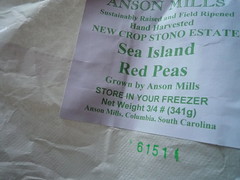
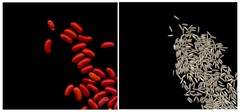
anson mills red peas

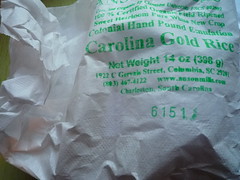
anson mills carolina gold rice

I wasn't sure it was possible, but our new, improved Red Beans & Rice recipe got better. Well, actually, it kinda got transformed into Peas & Rice, a.k.a. Peezy Reezy, and then it got better.

It all had to do with some heirloom Sea Island Red Peas and Carolina Gold Rice that we'd gotten from the good people at Anson Mills earlier this year. They came in the simple, but lovely, bags you see above, and, as per the instructions marked on the bag, we'd had them sitting in our freezer for the last several months, just waiting for an opportunity to shine. And, with a little advice from Anson Mills' website, that's exactly what we gave them: an opportunity to shine and shine bright.
Red Peas are exactly that--they're peas not beans. But these particular red peas--an heirloom variety from the Sea Islands of South Carolina and Georgia--cook much more quickly than red beans, they're packed with flavor, and they have an extraordinary texture that creates a full-bodied gravy while remaining perfectly, appealingly toothsome. As the folks at Anson Mills point out, this variety of field peas and its preparation have a long and illustrious history. Not only is red pea gravy the kind of dish described by the old (or should that read olde) English rhyme "Pease porridge hot," but the Gullah name Peezy Reezy is also related to the ancient Italian dish risi e bisi, which, as Marcella Hazan points out, is often misunderstood as being a risotto with peas, but which is actually "a soup, albeit a very thick one" (in other words, a "pease porridge").

Our new, improved Red Beans & Rice recipe made do with just water--the combination of the beans, the herbs, and the various forms of pork created a rich gravy quite naturally. But here we took the advice of Anson Mills and began with their Smoked Ham and Chicken Stock. They describe this stock as "the backbone" of their Red Peas and Rice recipe, and note that "canned chicken broth is not an acceptable substitute in terms of flavor or body" [my emphasis]. God knows we had plenty of beautiful ham and ham bones kicking around just waiting to be put to use, and it truly is a wonderful stock.

Smoked Ham and Chicken Stock

1 lb smoked pork neck bones or ham hocks
1 lb chicken wings or necks
2 medium yellow onions, peeled and chopped
2 small carrots, peeled and chopped
2 ribs celery, chopped
6 sprigs fresh thyme
4 garlic cloves, peeled and halved
1 Turkish bay leaf
6 parsley stems
2 quarts spring or filtered water

Combine all the ingredients in a heavy 4- or 5-gallon stockpot and bring to a simmer over medium-high heat. Reduce the heat and simmer gently until the stock is rich in flavor, about 3 hours. Remove from the heat and strain the stock through a fine sieve into a large mixing bowl. There should be 4 cups. Pick the meat from the ham bones and reserve it to add later, if you so desire. Discard the remaining bones, meat, and vegetables. Cover the stock and refrigerate. Before using, remove the congealed fat from the surface of the stock with a spoon and discard.


So we began with this Ham and Chicken stock, and we applied it to our Red Beans & Rice recipe, replacing the red beans with the Sea Island red peas and the pickled pork with another big, ole ham bone, but otherwise following the recipe to a T, so that we ended up with Sea Island Red Peas & Rice.

I should point out that Anson Mills suggested a very particular way to prepare their Carolina Gold Rice. Not only is this rice an heirloom variety (perhaps even the American heirloom variety: they call it "the grandfather of long grain rices in the Americas"), but all of Anson Mills' rice is new-crop rice. Cooked according to standard methods, a "sticky finish" will result. Cooked carefully according to Anson Mills' suggestions, however, and "you will be rewarded with a dish of such simple refinement" that it's known as "Charleston ice cream" in the Lowcountry. Sound good? We certainly thought so.

Classic Separate-Grain Rice

1 cup Anson Mills Carolina Gold Rice
1 tbsp fine sea salt, plus a bit more for seasoning
6 cups spring or filtered water
3 tbsp unsalted butter
1/2 tsp freshly ground black pepper

Preheat the oven to 300º F.

Bring the water and salt to a boil in a heavy-bottomed 3 1/2-quart saucepan. Add the rice, stir once, and return to a boil. As soon as the water boils, reduce the heat. Simmer gently, uncovered, stirring occasionally, until the rice is just tender with no hard starch at its center, about 15 minutes. Drain the rice through a fine, colander and rinse well with cool water. Shake the colander to get rid of excess water.

Spread the rice evenly over a rimmed baking sheet. Place it in the oven to dry, turning it gently from time to time with a spatula, about 5 minutes. Dot the rice with butter and sprinkle with salt and pepper. Return the sheet to the oven and continue turning the rice periodically until the butter has melted and the rice is hot, about 5 minutes more. Transfer to a warm serving bowl and serve immediately.

Makes 4 cups.


As was the case with the Red Beans & Rice, serve mounds of the Carolina Gold rice in bowls, covering the rice with generous ladlefuls of the red pea gravy and sprinkling green onions on top.

Not only does this combination produce another fantastic, deeply soulful Southern dish, but it's a New Year's classic, both peas and beans having long associations with the New Year and good luck. Feeling lucky? You will when you dig in to either of these dishes.

aj

P.S.--For more about Anson Mills, check out their website. Unfortunately, they don't ship to Canada, but they will ship to your friends anywhere in the United States, and there are absolutely no restrictions against you or your friends driving such a shipment of rice, peas, grits, farro, etc., across the border.

Friday, December 18, 2009

Holiday High Jinks

Another year, another holiday special. Except that this one was a little extra-special. We weren't able to celebrate AEB's 5th anniversary in November when that momentous date passed on by, so our 5th annual holiday jam* doubled as our AEB 5th Anniversary Party.

Last year, our party's centerpiece was a ham twin-set--one Kentucky country ham served raw in thin slices, and one Virginia country ham that had been baked. This year we featured another country ham--this time from William Mulder's Fresh Meats of Fredericton, NB--but, frankly, the savory fare got overshadowed a bit by our first annual AEB gingerbread house.

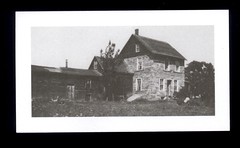
I can honestly say that I had nothing to do with the gingerbread house, aside from a little consulting. The gingerbread house was the product of the Montreal Cake Club (M.C.C.), a local cell of cake-decorating extremists with reputed links to Laloux, the Preservation Society, and La Salle à manger. It didn't weigh 390 pounds, and it wasn't covered in white chocolate, but, like the 2009 White House Gingerbread House, it was modeled on an actual existing structure: the M.H. Merchant Stone House.

M.H. Merchant Stone House 2 fig. a: M.H. Merchant Stone House

The finished product looked something like this,

gingerbread stone house 2 fig. b: M.H. Merchant Gingerbread House 1

gingerbread stone house 3 fig. c: M.H. Merchant Gingerbread House 2

and by the morning after, it was a little worse for wear (note the candied-almond "stones" missing from the walkway),

gingerbread stone house 1 fig. d: M.H. Merchant Gingerbread House 3

but it was still pretty magical. In fact, if you took a close look and peered through the caramel "glass" windows, you'd swear there was someone inside taking advantage of the spacious two-story, 4 1/2-room interior.

gingerbread stone house 5 fig. e: M.H. Merchant Gingerbread House 4

Anyway, the M.C.C.'s M.H. Merchant Gingerbread House was certainly an impressive sight, and it was 100% edible, but it wasn't really meant to be eaten (that didn't stop some of our guests from trying, though). Attending to the more immediate spiritual needs of our invited guests was the following vaguely Mad Men-inspired menu:

Coca-Cola- & Chipotle-Glazed Ham
Serious Mac & Cheese, Smothered w/ Cajun Gravy
Chicken & Sausage Gumbo
Cajun Deviled Eggs
Crudités
Crackers
Cucumber-Herb Dip
Baked Artichoke Dip
Clam Dip
Cheddar Cheese
Armadale Farm Cumin Gouda

Heineken
Punchbowl Old-Fashioneds
Martinican Rum Punch

Bourbon Chocolate Cookies
Vanilla Crescents
fresh clementines

We were dead-set on another baked ham. Ham has become something of a tradition at our holiday parties, and we'd managed to source a particularly good smoked ham in the Maritimes. Then we received our December issue of Saveur--"HAM FOR THE HOLIDAYS"--and it was as if the food gods (or at least the food press gods) were speaking directly to us (and about 600,000 others). Their cover story has plenty of great-looking ham-centric recipes, but the one that really caught our attention was the Pineapple-Chipotle-Glazed Ham (who knows, might have had something to do with the fact that that's the one featured on the cover). We'd always wanted to do a Coca-Cola ham, but this recipe's Coke, chipotle, and honey glaze sounded particularly tempting.

Coca-Cola- & Chipotle-Glazed Ham

1 15-lb whole smoked ham
8 fresh pineapple slices
whole cloves
2 3/4 cups Coca-Cola
1 rounded tbsp chipotle purée
1/3 cup honey

Put the ham into a large stockpot, cover with water, and bring to a boil. Reduce heat and simmer for 60 minutes.

Heat oven to 350º. Transfer the ham to a roasting rack in a roasting pan. Using toothpicks, secure the pineapple slices to the surface of the ham. Stud the ham with cloves to taste [Saveur recommends 64 cloves, but we like our ham a little less clove-y, so we went with about half that many]. Pour 2 cups of the Coca-Cola over the ham, then add 1 cup of water to the bottom of the roasting pan. Cover loosely with foil and bake for 60 minutes.

Meanwhile, combine the remaining Coca-Cola, the chipotle purée, and the honey in a saucepan and bring to a boil. Reduce the heat to medium, and cook, stirring frequently, until the glaze has reduced and become syrupy, roughly 12-15 minutes. Uncover the ham and brush it with some of the glaze. Increase the heat of the oven to 500º. Bake the ham, brushing occasionally with the glaze, until it has become browned and glossy, about 15-20 minutes. [Make sure to watch the ham carefully, though. If it starts to brown too quickly, you may want to protect it with that loose foil covering again.] Let cool for 20 minutes before carving.


As for the mac & cheese. This recipe was quite literally the product of hearsay. As in, a couple of weeks ago, I was motoring along on the Trans-Canada, listening to a podcast of American Public Media's The Splendid Table, when I heard Jane & Michael Stern gushing about Rocky & Carlo's in Chalmette, Louisiana. The segment was about the famed hybridity of Louisiana's cuisines, and the ways in which the Italian-American idiom has coupled with Cajun, Creole, and Southern cuisine in all kinds of interesting ways there, but mostly it was about Rocky & Carlo's as a prime example of this culinary bricolage. There was a lot about the Sterns' spiel that had me ready to veer off my easterly course and make a beeline for Chalmette, but the thing that stuck with me the most was their positively ecstatic descriptions of Rocky & Carlo's macaroni & cheese. They came out and anointed Rocky & Carlo's mac & cheese their very favorite mac & cheese in all of America (!). They had plenty of good reasons for naming Rocky & Carlo's mac & cheese #1, but a big part of its considerable charm had to do with the fact that you could get it smothered with either a red sauce or a Cajun brown sauce. For a split second there, I seriously thought about putting the pedal to the metal over the border and across 8 eight states all the way to Chalmette to give that smothered mac & cheese a try, but then I came up with a Plan B: put the pedal to the metal all the way to my kitchen so that I could improvise a batch of Mac & Cheese Smothered w/ Cajun Brown Sauce myself.

The following is what I came up with. Does it bear any resemblance to Rocky & Carlo's? I have no idea, but mac & cheese has rarely tasted so good.

Smothered Mac & Cheese

Make your preferred macaroni & cheese recipe, keeping in mind that you're going to smother it with a zesty roux-based brown sauce momentarily, so you might want to keep things simple and straightforward, and you might want to avoid a béchamel sauce and go with a cheese and milk/cream sauce instead (the logic: béchamel + roux + macaroni = flour + flour + flour).

Got your macaroni & cheese in the oven? Perfect. Now it's time to make your brown sauce:

1/4 cup vegetable oil
1/4 cup all-purpose flour
1/2 small onion, diced
1/2 celery stalk, diced
1/4 bell pepper (green or red), diced
2 tbsp mixed herbs (parsley, thyme, chives, etc.), finely minced
1 tbsp Cajun Magic (recipe follows)
2 cups vegetable or chicken stock (or 2 cups water, in a pinch) [we've been using vegetable stock and/or water, usually, meaning our smothered mac & cheese has been 100% vegetarian!]
salt & pepper to taste

Warm your stock in a separate saucepan.

Heat the oil over medium heat in a large non-stick frying pan or a properly seasoned skillet. When the oil is hot, add the flour all at once and begin stirring constantly. Make a deep Cajun roux. When your roux has reached your desired depth (I recommend going with a cappuccino-colored roux here), add the onion and sauté for 2-3 minutes. Add the celery and bell pepper and sauté for another 2-3 minutes. Add the herbs, stir, and add the Cajun Magic, sautéing for another minute. Add the stock in a slow stream, stirring constantly. Cook the gravy until it thickens, reaching your desired consistency. If it thickens too quickly and you want the flavors to meld a bit longer, add a bit more water or stock and cook it down some more over medium heat. Add salt and pepper to taste.

Serve your hot macaroni and cheese, smothering each helping with plenty of the brown sauce, and topping with a dash or two of Tabasco sauce, if you so desire.

Cajun Magic

1/4 Cup of salt
2 tbsp sweet paprika
2 tbsp cayenne pepper, espelette pepper, or hot paprika
1 tbsp onion powder
1 tbsp garlic powder
1 tbsp black peppercorns
1 tbsp white peppercorns
2 tsp dried basil
1 tsp chili powder
1/2 tsp dried thyme

Combine all the ingredients, and, using a mortar & pestle or an electric spice grinder, grind them together. The resultant spice blend should be lively and complex.


We knew we were making Martinican Rum Punch again this year--we've been rockin' that recipe for several years now, and it's a guaranteed crowd-pleaser. But this year we wanted to add a new drink to our arsenal of beverages. We thought about making Old-fashioneds to order, but then discovered this ingenious punchbowl version in the Esquire Party Book. Much, much easier to prepare, and our guests loved 'em. Maybe a little too much. They cleaned us out of the first batch in no seconds flat, and, the next thing we knew, a chant of "Make more punch! Make more punch!!" erupted throughout the apartment. You've been warned.

Punchbowl Old-fashioneds

8 lumps of sugar
2 tbsp bitters
1/3 cracked ice or 1 appropriately sized ice ring
1 quart bourbon or rye
16 slices of orange, lemon
16 cherries

Muddle the sugar, bitters, and ice together in a punch bowl. Add the bourbon or rye and stir well. Drink responsibly-ish.


How good were these Punchbowl Old-fashioneds? This good:

cocktail girl fig. f: Michelle loves Old-fashioneds

Thanks to all our guests for making our 5th anniversary bonanza such a blast and for participating so generously in our donations drive for Dans la rue.

party montage fig. g: in the light of the miracle

Thanks to MS and CWI for packing pixels and helping us to document the festivities.

aj

* If you're particularly devoted to reading AEB and particularly good at math, you might be thinking: "seeing as you threw your first AEB holiday party just weeks after you started the blog, shouldn't this be your 6th holiday party?" And you'd be right. It should have been our 6th, but, if you must know, we skipped a year once.

Wednesday, December 02, 2009

South of the Border

No, not here:

fig. a: Pedro's South of the Border, Dillon, SC

Quite a ways further south, actually.

All the way down here:

fig. b: Spaceship Earth, EPCOT, Florida

Yes, Spaceship Earth bears a certain resemblance to a couple of Montreal icons:

fig. c: U.S. Pavilion, Expo 67, Montreal, QC

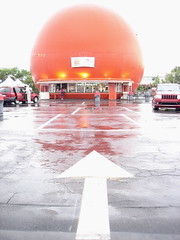
Gibeau Orange Julep fig. d: Gibeau Orange Julep, Montreal, QC

But it turns out that's not all that Montreal and EPCOT share in common.

F.Y.I.

What, no poutine?

aj

Sunday, November 29, 2009

The Red and the White

the red & the white fig. a: the red & the white

There’s no way I can pin this date down exactly, but I’d venture a guess that this is the 20th anniversary of my relationship with red beans & rice. Love affair, actually. Passionate, even. This is going to make me sound like some kind of Legume Lothario, but I’m kind of crazy about the beans. Black, brown, white, speckled, black-eyed, green. You name ‘em. But I’ve got a special place in my heart for red beans. A staple of enormous cultural significance all across the Southern United States and a good portion of the Caribbean, red beans & rice have never really caught on and been commodified in the same way that black beans and pinto beans have. (Apparently some things are sacred. Praise the Lord!) Our relationship has never grown stale, it’s never become banal. Somehow they still taste special.

And they’ve been tasting especially special recently, because after years of my home recipe being a perfectly respectable vegetarian version, this year (to mark our 20th anniversary?) I finally started experimenting with that combination of herbs, spices, and pork (!) that is so central to the Southern tradition of red beans & rice. And the version that’s been blowing my mind recently is a version that includes the spicy tang of homemade pickled pork (!!).

All great dishes have their schools. Old and new. Public and private. Conventional and experimental. Red beans & rice is no exception, and (in the South, at least) one of these schools is the Pickled Pork School.

The bottom line is that if you want to make a true Southern version, it’s gotta have that herbal quality, it's gotta have some heat, and it's gotta involve some pork--nothing fancy, just a ham bone, or some ribs, or some sausage (and maybe all three). In other words, the kind of "scrap" cuts that were essential to African diasporic cuisine in the antebellum South (read: the remarkable, against-all-odds cuisine of the slavery era). The resultant dish is one that’s rich in protein and vitamins. Make a true Southern version and it’ll also have that luscious quality that has made the dish one of the most soulful of Soul Food dishes for a good 200-300 years.

The following red beans & rice recipe makes great use of your very own homemade pickled pork (spare ribs, specifically). Feel free to add a ham bone and/or some smoked sausages (Cajun, kielbasa) to the mix. Also, feel free to use this red beans recipe as the basis for your very own vegetarian version. It's a lot more fully rounded that your standard issue red beans & rice recipe (it's definitely more herbal than the version I'd been making), and you won't be disappointed.

Pickled Pork

1/2 cup mustard seed
1 tbsp celery seed
1 dried hot pepper
1 quart distilled white vinegar
1 bay leaf
1 tbsp kosher salt
12 whole peppercorns
6 cloves of garlic, peeled and crushed
2 1/2 pounds spare ribs, cut into individual ribs (you can also use boneless pork butt, if you prefer)

Combine all the ingredients, with the exception of the spare ribs, in a non-reactive pot and bring to a boil. Simmer for 3 minutes and let cool. When the pickling liquid has reached room temperature, place the pork in a deep crock or bowl and cover it with the liquid. Stir with a spoon to make sure that all the air bubbles have been released. Place a small plate inside the crock or bowl to keep the meat below the surface of the liquid. Cover with plastic wrap and place it in the refrigerator to cure for at least 3 days, stirring occasionally. A longer cure will result in a tangier pickled pork. Three to four days is about perfect for me. Use within two weeks.

[note: you only need half this recipe for the red beans & rice recipe below, so you may want to cut the recipe in half if you're not sure what you might do with the remaining pickled pork. I've found mine to be versatile--think Southern-style greens, Southern-style stews, etc.]

peppers thyme fig. b: the red & the green

Red Beans & Rice

1 pound of red kidney beans (preferably the smaller variety), soaked overnight and cooked until just tender (this will depend on the beans; recently the beans I've been using having been cooking in under 2 hours; for further instructions look here)
1 tbsp bacon fat or vegetable oil or olive oil
2 medium onions
2 large bell pepper, one red and one green, chopped
2 medium carrots, peeled and diced
2 celery stalks, diced
1 bunch flat-leaf parsley, finely chopped
1 bunch green onions, finely chopped, including the green tops
4 cloves of garlic, minced
1 sprig fresh thyme
1 or 2 bay leaves
at least 1 small hot red pepper, finely chopped
1 - 1 1/2 lbs pickled pork
salt and freshly ground pepper to taste
enough cooked rice to feed all comers

Heat the fat or oil in a large pot over medium heat. Sauté the onions for 3-5 minutes, then add the bell pepper, the carrots, and the celery and cook for another 5 minutes, until the onion has begun to turn translucent, the other vegetables have softened slightly, and the flavors have begun to meld. Add the parsley, half the green onions (reserve the rest for serving time), the garlic, the thyme, the bay leaves and the hot red pepper, stir and sauté for another minute. Add the prepared beans, the cooking liquid, and the pickled pork. Bring the cooking liquid to a simmer and taste for seasoning. Add salt and pepper to taste. Simmer the beans for another 1 1/2- 2 hours, checking the liquid occasionally and adding more water if necessary. When you check the beans from time to time, use a wooden spoon to smash some of the beans against the side of the pot, then stir them back into the mixture, creating a thicker, richer broth.

When your beans are just about ready--the legumes ultra-tender, the broth thick and luscious--remove the thyme spring and the bay leaves and cook your rice. Let the rice sit on the stove for an additional 5 minutes after it’s finished cooking to let the rice dry out a little, and to drive yourself even more insane with anticipation. Serve mounds of rice in bowls, covering the rice with generous ladlefuls of the red beans and their broth, and sprinkling some of the reserved green onions (remember them?) on top. Serve with a salad, a crusty loaf of bread or, better yet, some piping-hot cornbread, and a bottle or two of your favorite hot sauce to spice things up even further.

[thanks to John Thorne’s Serious Pig for the serious pickled pork recipe and for some serious inspiration (yet again)]


aj

Friday, November 27, 2009

lo-tech > hi-tech

AEB map cover

Remember our notorious AEB maps that we produced back in 2007 in conjunction with our "My Montreal is Better Than Yours" spread in Budget Travel?

Well, one of our readers was clever enough to take our precious, "handcrafted" maps and transform them into a high-tech, interactive map of Montreal. We didn't even have to ask him. In fact, we've never actually met him. He just went ahead and did it on his own. Seriously. Check it out!

TY, MM!

ak

Saturday, November 21, 2009

Top Ten #32

1. Bright Star, dir. Jane Campion

2. Hans Fallada, Every Man Dies Alone

3. red beans + rice

4. red flannel hash

fig. a: On Dangerous Ground

5. On Dangerous Ground, dir. Nicholas Ray

fig. b: Border Incident

6. Border Incident, dir. Anthony Mann

7. Dirk Bogarde, A Particular Friendship

8. King of Hearts Drink Book (1955) + Esquire Party Book (1965)

9. The Best of Everything, dir. Jean Negulesco

fig. c: Thanksgiving by Gourmet

10. Gourmet's final issue, November 2009

aj

Friday, November 06, 2009

Christmas in September

fig. a: the set-up (detail)

What can I say? The girl's on a tear!

First there was her 2-night gig at Les Touilleurs, and now this:

Michelle's in the new issue of Elle Québec, along with six other talented local chefs. The concept goes like: 1) you bring together a group of chefs in a top Montreal restaurant (say, La salle à manger), 2) you tell them to come prepared to make a special Christmas dish, preferably one that's dear to them, 3) you get them to cook their respective dishes, 4) and you finish off the occasion by having a spectacular Christmas meal with plenty of vino and other assorted spirits.

Sounds great, right?

Well, in September, when the shoot actually took place, it sounded kind of crazy. For one thing, it was hot. For another, Christmas seemed a long ways away. But everyone showed up, they came armed with recipes and mad skills, they made some pretty stellar dishes, the wine started to flow, and the event turned into quite the party. Michelle even got dressed up old-school Czech-style ("«la reine de Noël»!") to go along with her traditional Czech dessert.

fig. b: if you're going to Christmas in September...*

If you want to read the entire article, you'll have to go to your local newsstand. The issue is out now.

If you want to check out Michelle's recipe for "Les biscuits au chocolat, aux noix et au rhum" (Czech rum, walnut, and chocolate cookies), you can find it here on ellequebec.com. You can also find the highly international, highly tantalizing menu and all six of the other recipes there, including:

Les pastelles au merlan (Guinea-Bissau) de Julio Mendy, chef du Résident

La morue à la vizcaina (Mexico) d’Alonso Ortiz, chef du Pintxo

Les cigares au chou (Romania) d’Emilian Manole, chef du Picapica

La longe d’agneau (France) de Stéphane Modat,chef de l'Utopie

Le jeune canard sur os et les jambonneaux à l'érable (Quebec) de Samuel Pinard, chef de La salle à manger

and, Michelle's pick of the night,

Le salmis de pieuvre au girofle (Mauritius) de Stelio Perombelon, chef des Cons servent et du Pullman

ak

* ...be sure to wear flowers in your hair.

Wednesday, November 04, 2009

Hash Fiend 1, or Frying the Flannel

red flannel fig. a: red flannel

Lately, I’ve been cooking up a fair bit of hash. No need to worry, though. This hasn’t led to me rereading Steppenwolf, or resurrecting my old Jim “An American Poet” Morrison poster, or illuminating my room with black lights and lava lamps, and it’s not part of some kind of mid-life crisis. At least, I don’t think it is.

The hash I’m talking about is good old-fashioned hash-house hash, the kind of hash that consists of the combination of diced meat or fish, onion, and some root vegetables--usually potatoes, plus carrots, beets, or turnips. The kind of hash that was a North American staple for generations. The kind of hash that was much more than just a breakfast dish and that was largely displaced by fast food (especially the hamburger) and changing tastes in the early- to mid-twentieth century.

Now, as you'll see in subsequent posts, I've been making a whole host of hashes over the last couple months, but today I want to begin this discussion by looking at a colorful little gem called Red Flannel Hash.

I know, I know: sounds like the name of a grunge band circa 1992. Can't you just picture the poster?

rfh poster fig. b: Live! At the Hi-Hat!

rfh poster detail fig. c: Live! At the Hi-Hat! (detail)

[As it turns out, there is a band that goes by the name of Red Flannel Hash, but my gut feeling tells me they've never shared a bill with either Mudhoney or Tad, let alone fIREHOSE. Check 'em out.]

Anyway, as I was saying, this concoction has more to do with the Northeast than with the Northwest. All indications point to the fact that the dish originated in New England--"authentic" versions of the dish are often described as Yankee Red Flannel Hash, and most of the tall tales that surround the dish's origins are set in lumber camps in Maine, or New Hampshire, or Vermont.

Look Red Flannel Hash up and you'll also find that it's one of those dishes that provokes controversy. We're not talking barbecue-size controversy, or pizza-size controversy, but controversy nonetheless. Everyone agrees that beets should be front and center, the main question is whether or not corned beef should also be a part of the ensemble. And what you find is that some of the most vocal experts on the matter, people who take the culinary foodways of the Northeast very seriously indeed, insist that red flannel should be corned beef-free. Not meat-free, mind you, but corned beef-free. According to this school, the combination of beets, potatoes, onions, and corned beef adds up to something altogether different: a Calico Hash. In a true Red Flannel Hash, the beets are the stars, and they have no fear of being upstaged. This doesn't mean that Red Flannel Hash is meatless. As with most other hashes, tradition says that bacon fat plays an important supporting role, and it's not uncommon to find some actual bacon in the cast, as well.* [Have an opinion on these matters? By all means, chime in.]

Our own version is one we’ve extrapolated from a few different sources. If you’re already a Red Flannel Hash fiend, you might take exception to this or that element, but this AEB version has all the essential elements--the onions, the beets, and the potatoes--and it makes for one fine hash. It's become one of our very favorite breakfasts here at AEB HQ, especially at this time of year, when beets of all types (red, golden, chioggia) are plentiful.

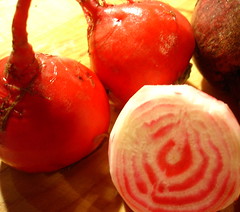
beets, candy-striped and otherwise fig. c: beets, candy-striped and otherwise

I’ve read recipes for Red Flannel Hash that don’t involve boiling your vegetables--some insist on steaming the vegetables instead--but boiled vegetables are an important part of most true hashes, and we’ve been pretty happy (ecstatic, actually) with the results here.

If you’re a vegetarian, you could easily omit the bacon and replace the bacon fat with a tablespoon of oil, and you’d wind up with a perfectly satisfying Red Flannel Hash, but there is something to be said about the marriage of those beets and that smoky bacon flavor, and it pays to hunt down top quality beets and bacon to match. If you’re a vegan, you could omit both the bacon and the whipping cream, and you’d still be left with a perfectly acceptable (and delicious!) hash--the cream is optional, but (highly) recommended. If you’re a raw foodist, though, I’m sorry, this isn’t the dish for you. It’s just not a Red Flannel Hash if the flannel hasn’t been fried.

AEB Red Flannel Hash

2-3 strips of smoky bacon
5 small beets (mixed varieties, if available), peeled and diced
2 medium potatoes, peeled and diced
1 small carrot, washed and diced
1 small parsnip, washed and diced
salt and black pepper to taste
1 small onion, peeled and diced
1 clove garlic, minced
1-2 tbsp parsley, minced
1/4 cup whipping cream (optional, but recommended)
sour cream (optional)

Add the diced beets, potatoes, carrots, and parsnip to a small pot, and add just enough water to cover the vegetables. Salt the water to taste and bring the water to a boil. Turn down the heat and simmer the vegetables for about 10-12 minutes, or until just tender. Drain the vegetables, making sure to reserve the liquid. [This broth is essentially a clear borscht. Adjust the seasoning, and you have yourself a great light meal.]

Meanwhile, fry the bacon in a frying pan or a cast-iron skillet until crispy. Remove the bacon with a slotted spoon or slotted spatula, reserving the bacon fat. Mince the bacon and set aside.

Fry the onion in the bacon fat over medium heat until the onions have softened and have turned translucent, about 5-10 minutes. Add the vegetables and sauté for a few minutes. Add the garlic, the parsley, and the reserved bacon and sauté for another minute. Add the cream, adjust the seasoning, and turn up the heat. Many hash fiends will tell you that you should turn the heat up to high and fry the hell out of it, so that the hash forms a blackened crust. This hash fiend will tell you that I’ve tried making my hash a number of ways, and that I prefer my Red Flannel Hash with the golden brown crust that one gets when one cooks the hash over medium to medium-high heat for a few minutes per side.

Serve a generous heap of the red flannel hash on each plate, with a poached egg or two perched on top, and maybe even a dollop of real sour cream.

Serves 2-4, depending on appetite/enthusiasm.

[major inspiration provided by John Thorne's Serious Pig]


aj

*Okay, enough with the extended metaphor.