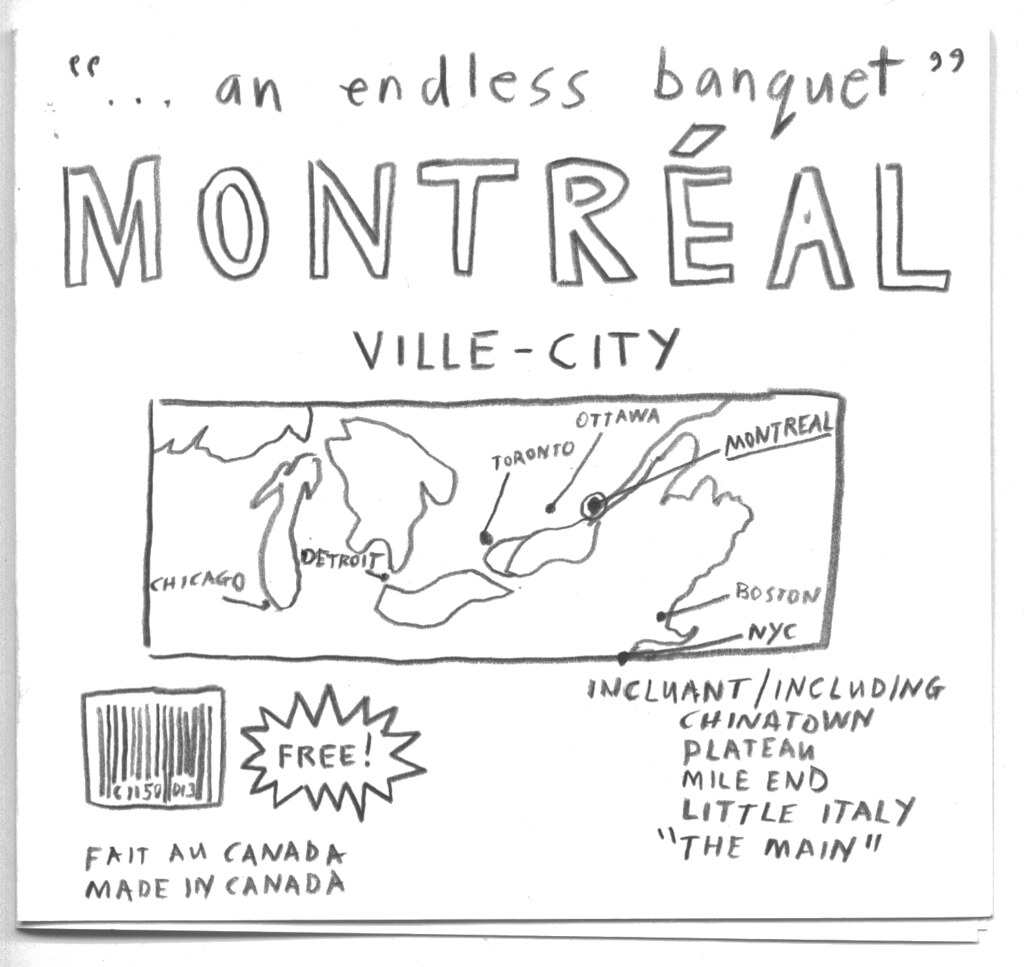
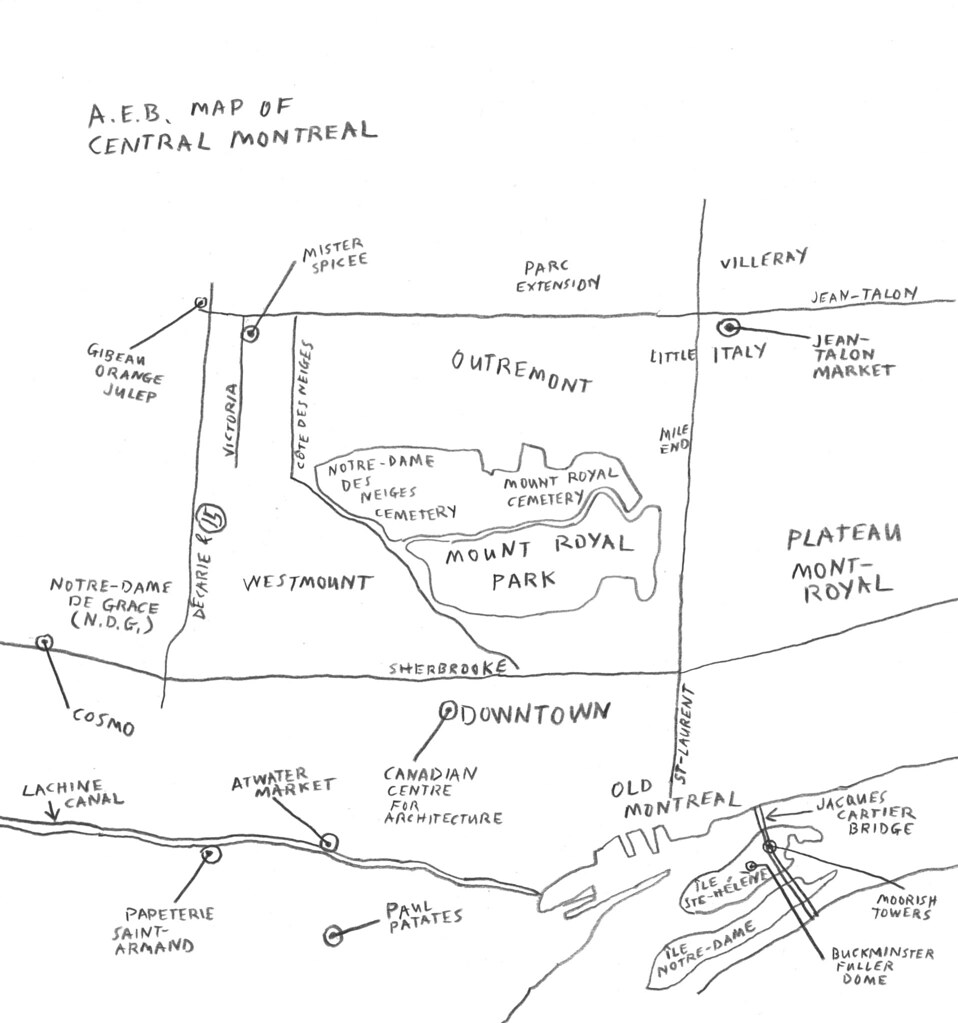
We were lucky enough to score an apartment in Paris this past August through an apartment swap (Thank you, Benoit! Thank you, Antoine!). We wound up with this wonderful apartment in the 17e not far from Place Clichy. Antoine, our co-swapper, got our rather large (especially by Parisian standards) Montreal apartment nestled in between the Plateau Mont Royal and Mile End, and two highly affectionate cats. We had about two weeks in Paris and we tried to make the most of it. The following are just some of the culinary highlights:
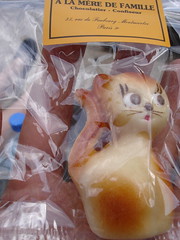
• Confiture aux mirabelles, bergamot candies, honey candies, tea candies, spice cake, and marzipan kitty-cats from
à la Mère de Famille (9e): We didn’t actually know anything about à la Mère before chancing upon it during our tour of the passages couvertes. We found out later it was quite famous. We appreciated the fact that it looked as though it hadn’t changed in at least 100 years—both inside and out. We just knew it had to be good. The range of treats they carried—chocolates, fruits confits, candies, nice bottles of wine, spice cake, etc.—was impressive, and everything we tried was amazing, but it was the confiture aux mirabelles that really blew us away. It was as if we’d never tasted plum jam before. With a fresh baguette and some of that lovely French butter every morning for breakfast, we polished that jar off in a matter of days.
• Teas, gelées de thés, and tea sandwiches from
Mariage Frères (4e). What can you say about the teas at Mariage Frères? There really aren’t too many other teas anywhere that even come close. Their balance—of flavors, of perfumes—is so perfect. “Eros,” appropriately enough, was our first Mariage Frères love, but we discovered quite a few other loves after visiting the flagship store: “le Voyageur,” “Afternoon Tea,” “Marco Polo,” “Alexandra David-Neel,” “à l’Opera,” “Jamaique,” etc. On our first visit together, I took Michelle for afternoon tea and we went all out. We had two pots of tea, some of their amazing sandwiches de thés (pain blanc et pain Matcha, avec crabe, saumon, foie gras, et terrine de poulet, et une salade composée), and a scone and madeleine duo with their impeccable gelées de thés (“Marco Polo” and “Bourbon”).
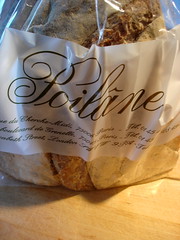
• 1/4 loaf of sourdough bread from
Poilâne (6e). Even after a death in the family and a shift in business philosophy, a sourdough to be reckoned with, and one that is definitely an inspiration behind our own experiments with sourdough. I still remember learning about Poilâne’s sourdough from an article in Smithsonian magazine back in 1994-1995. This was a trip that was long overdue.
• Carrot pickle, “Cheewa” couscous, and duck tajine with fresh figs, apricots, honey and almonds at
Le Souk (11e): this tip came from Hermine and we’re eternally grateful. Le Souk is a truly fantastic Moroccan restaurant. It’s rich in atmosphere and the cuisine is truly superlative. The couscous was plentiful and expertly prepared, with a very nice assortment of condiments, and the duck was to-die-for, but even the carrot pickle left us speechless.
• Sandwiche “le Chaland” at
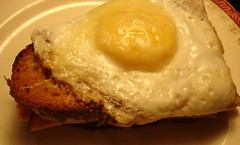
le Chaland (10e): one day I dragged Michelle on what appeared to be a(nother) crazy excursion, this one involving the Rotonde de la Villette. On our way back south we followed the length of the Canal St. Martin, and somewhere along the canal we ducked into a nice little café called le Chaland. We were famished and thirsty and le Chaland looked like a nice little local café. We ordered the house sandwich and a couple of Leffe beers. When we received our sandwich we were rather impressed. This wasn’t the kind of plain saucisson/butter/baguette sandwich so typical of Parisian cafés. Here, instead, was a beautiful sandwich made with duck terrine (with pistachios), cornichons, and oignons confits. We talked about that sandwich for days, and we made sure to buy a jar of oignons confits from la Grande Epicerie de Paris so we could try to make our own versions of “le Chaland” when we got back to Montreal.
• Ice cream from
Berthillon (4e): “plombière” (vanilla with fruits confits and eau de vie), “praline de pignons,” “praline de citron et coriander,” “chocolat mendiant,” rhubarb, and strawberry. OK, OK: it was hot for days on end and ice cream was the only thing we craved for dessert and somehow, by some strange twist of fate, we kept winding up on Île Saint Louis.
• Boudin blanc avec pruneaux from
le Roi du Boudin (5e). It was late one afternoon and we’d decided that we were going eat dinner at Antoine’s place that night. Our menu had already been chosen, but then we passed a place that not only claimed to be the best boudin makers in town, they also claimed to have won a couple of international competitions for their sausages. We couldn’t resist. We decided to buy just one (!) and share it (!!) when we got home (what were we thinking?). Michelle came out of le Roi du Boudin minutes later with a strange expression on her face. She’d just bought the most expensive link of sausage either of us had ever paid for. On the Metro ride home we talked about that awful feeling you get when you order something blindly then find out it was much more expensive than you ever would have guessed. When we got home we set the table and laid out our dinner, then I started to fry up the boudin. Michelle hadn’t told me she’d gotten a boudin with prunes in it, so I was left wondering why this sausage wasn’t pure white. A few minutes later I decided to check to see if it was cooked through, and when I split it open its aroma really filled the air. And what an aroma! I never would have imagined that boudin blanc avec pruneaux could be so tantalizing. In fact, I’m not sure I would have had the courage to pick that type myself. Then I tasted it—suddenly everything fell into place. What a beautiful marriage of flavors. Even so, when we served it I still couldn’t imagine having it with mustard. There was something about prunes and mustard that didn’t quite make sense to me. I had the first two bites au naturel, and promptly declared this sausage to be the best I’d ever tasted. Then I decided to have a bite with mustard. The flavors just exploded. When flavors come together in unexpected ways sometimes the results can be revelatory. This was one of those times.
• Dinner at
à la Biche au Bois(12e). Michelle had read about this wonderful bistro on E-Gullet. Everything she’d read indicated that this place was a must. We passed by one afternoon in late August to check out the menu and we instantly knew that this was “the one.” Plus, they were just about to reopen after their August vacation. On the night of August 26 we had the terrine au porto, recette du chef (served with a green salad), and a salade Niçoise as our appetizers, the coq au vin and a filet poêlé, sauce poivre, avec frites as our main courses, and a sorbet pomme verte with Calvados and a feuilleté poire poché, sauce au chocolat, as our desserts. We washed everything down with a delicious Côte de Brouilly. Everything was absolutely fantastic (the service, the preparation, the execution, the presentation), and calling à la Biche au Bois generous would be to put it mildly. The portions were substantial, the prix fixe was under € 25, and when you take into account the wonderful cheese plate that preceded the dessert, you’re left with a phenomenal value. We’ve rarely been so satisfied after a meal. Afterwards, we drifted back towards la Bastille in a state of bliss and caught a late Metro “home.”
aj