Thursday, June 16, 2005

Not for kids


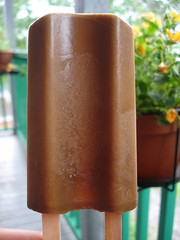
Vietnamese coffee popsicle
Originally uploaded by michelle1975.


I have been trying all sorts of ways to make Vietnamese coffee ice cream without completely modifying the simple recipe: strong coffee + sweetened condensed milk. All of my efforts have ended up with granité, which has been delicious, but not the point. I wrongly supposed that condensed milk was closer to cream than milk, and found out it didn't have enough fat to stay creamy. I could always make an anglaise-based version, I guess, but then why not call it coffee ice cream?

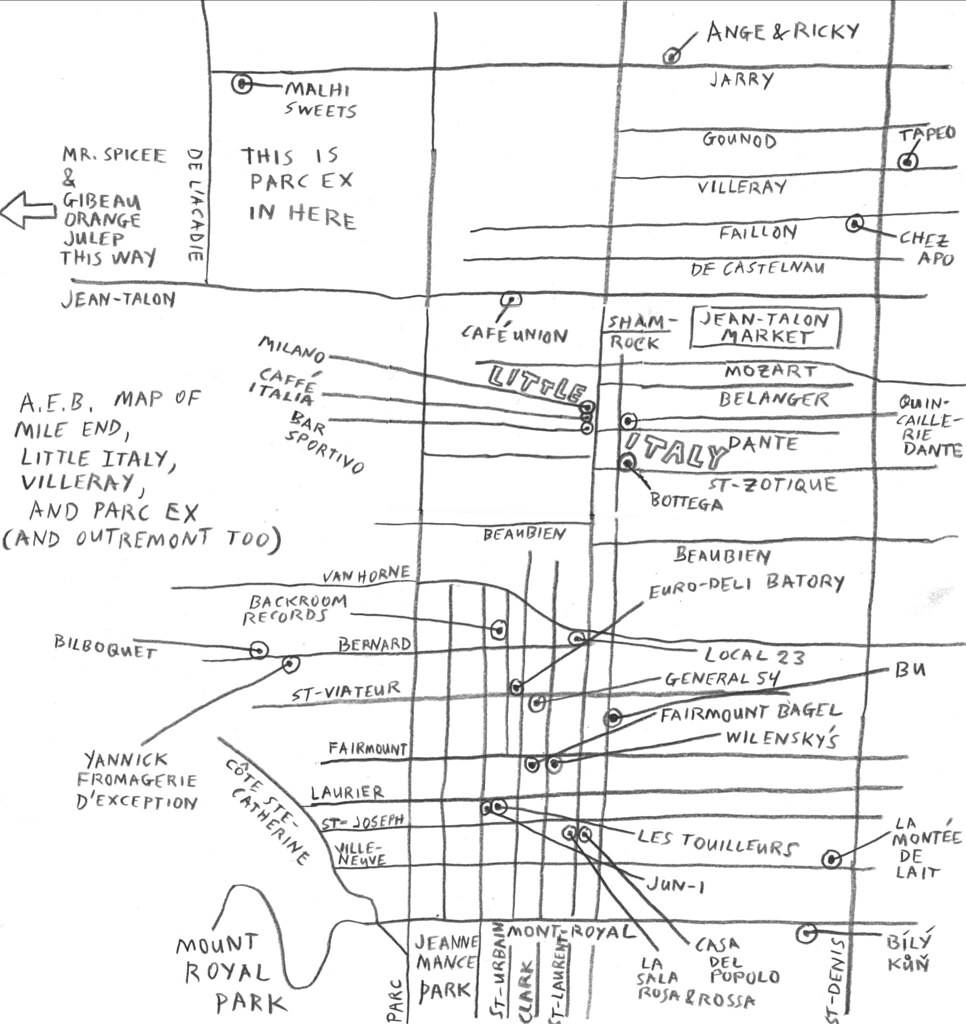
The other day while returning home from the dentist $350 the poorer, I passed by Les Touilleurs and weakened at the sight of a popsicle mold which mimicked the ones from my childhood. I always had the tubular ones from the dollar store, and my mom used those to make her famous banana creamsicles, but there is something more authentic about being able to break your popsicle in two...

As you can see from the picture above, I buckled under the pressure and bought the thing. I filled them with Vietnamese coffee and froze them solid. Perfect pick-me-ups on a summer's day.

m

Tuesday, June 14, 2005

Pretty in Pink


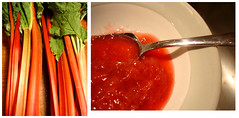
I have been slow to get on the rhubarb train this season. I'd been seeing bunches of rhubarb at the market for the last few weeks, but hesitated each time. Just last week, though, I finally found the perfect bunch: young, firm and pink. I have nothing against green rhubarb, in fact, I prefer it from time to time. The only thing is, when canning green rhubarb tends to look more like the vegetable it is.

Camilla mentioned that she'd made the rhubarb-grapefruit jam from Chez Panisse: Fruits and that it was outrageously good. I made it as soon as I could, even though it's been so hot and humid that having a huge pot of water at a rolling boil seemed like folly. It was worth it. Like other great combinations, the two together brought out more of each other than if they were alone. It is extra rhubarb-y, extra pink and grapefruit-y. Perfect for breakfast with toast and butter. Imagine crepes with icing sugar and creme fraiche. If only it were Sunday morning and not Monday night...

m

Monday, June 13, 2005

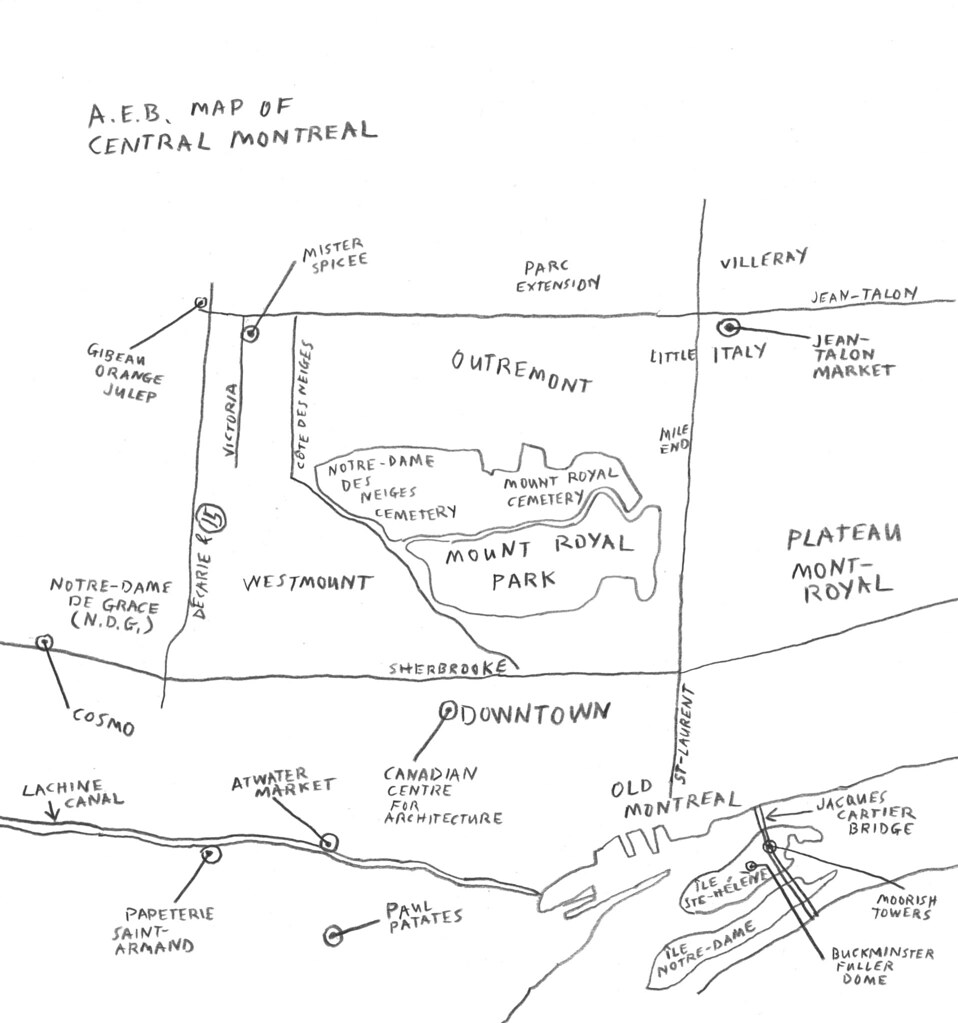
Never Mind the Biosphere, Here's the Gibeau Orange Julep!


Few things bring back memories of the 1970s for me like an orange julep. Going out for an orange julep was among our rituals when we traveled to Florida from Ottawa to visit my grandparents back in the day. We generally went down to Florida to escape Ottawa’s long, bleak winters for a spell, and orange juleps were one of the tastes I associated with the warmth, the sun, and the ocean. Orange juleps are also among the flavors that seemed to have gone into hiding or even disappeared completely from the map soon after the arrival of the 1980s, along with things like Ovaltine and Carvel ice cream.
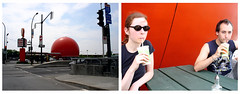
Few things are as integral a part of summer in Montreal than Gibeau Orange Julep. An iconic part of the Montreal cityscape since the 1940s, the massive orange globe that houses Gibeau Orange Julep was built by Hermas Gibeau and was intended to house him and his family above his already successful roadside drive-in. Then as now, the orange julep was both tasty and good for you, chock full of vitamin C, supposedly fat-free, and loaded with enough carbohydrates to make all those Atkins types run screaming. These days one gets the impression that the top 80% of the structure is a massive holding tank for the frothy orange beverage that shoots down from the ceiling of the restaurant through clear tubes, into a dispenser, and then into your cup. There’s something almost vintage sci-fi about the whole set up. In any case, that big ole orange has a way of lifting one’s spirits when temperatures are chillier—and its surreal dimensions also liven up the otherwise god-awful Décarie expressway—but during the summertime it becomes a full-fledged hang-out, a 24-hour social scene that draws Montrealers from all walks of life to grab a hot dog, fries, and a frosty orange julep, beat the heat, and occupy a location that’s become a postmodern wasteland.
Wednesday nights, in a nod to the car culture that gave birth to the Gibeau Orange Julep, local hot-rodders descend upon the premises to show off their wheels. Go ahead: adjust your pompadour, throw on your bobby-sox and make the scene.

Gibeau Orange Julep, 7700 Décarie, 738-7486

aj

Saturday, June 11, 2005

Pintxo


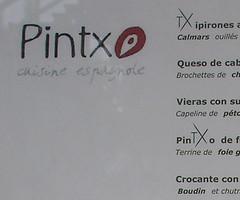
the menu at Pintxo (detail)
Originally uploaded by ajkinik.


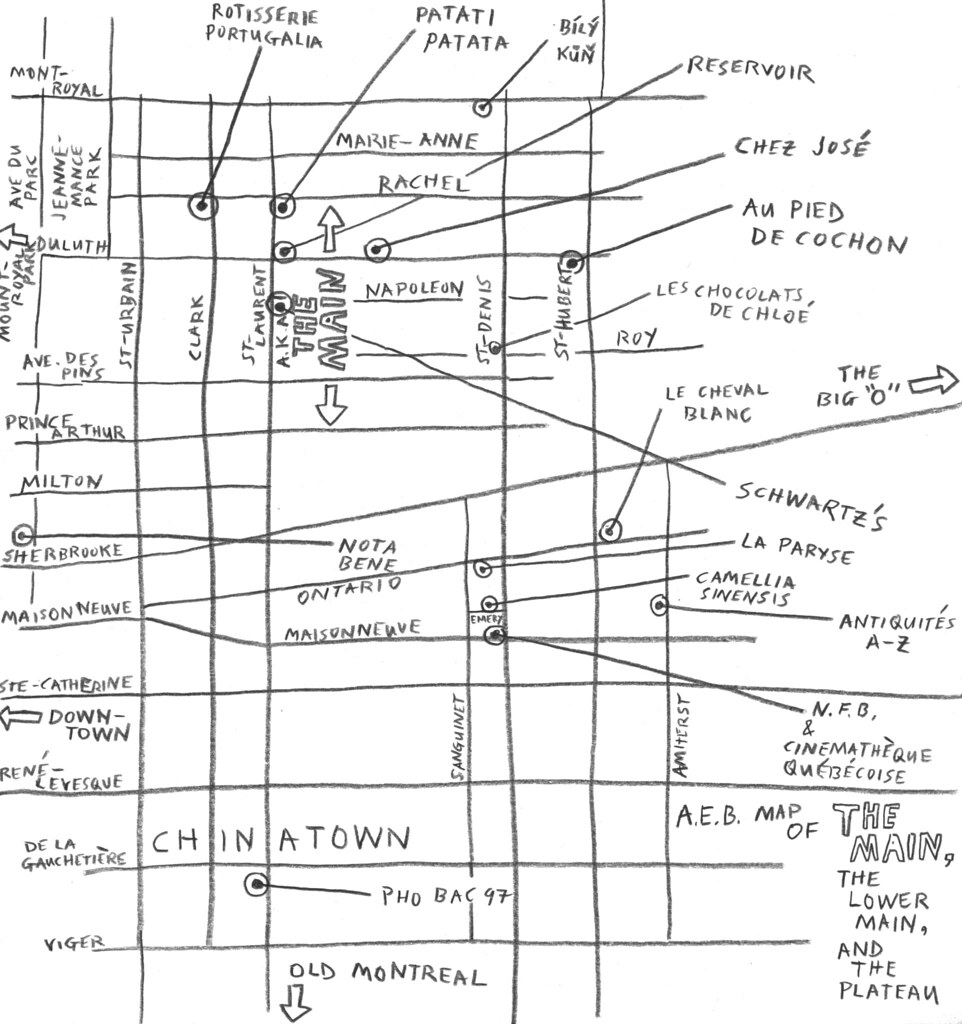
So, Wednesday night I had the pleasure of accompanying some friends to Pintxo, a recently opened restaurant on Roy, right in the heart of the Plateau. There’s no question New Spanish cuisine is very hot right now. The number of articles I’ve come across in the last year or so that detail Spain’s regional cuisines and the crop of bright chefs, young and old, who are busy reinventing and reinvigorating the Spanish culinary scene right now has been staggering. One of the regions that’s attracted the most attention is Spain’s Basque country, and the best article I’ve read on New Basque cuisine was one by R.W. Apple, Jr. in a May 2004 issue of the New York Times. There, Apple discusses everything from the impact of Juan Mari Arzak, “the founding father of modern Spanish cuisine,” to the virtuoso grilling he discovers in the mountains between Bilbao and San Sebastian, but one of the most interesting sections is the one where he details the elaborate rituals involved in going out for pintxos (a word which is the Basque equivalent to tapas) in San Sebastian. These include the accompaniment of your cuadrilla--a large group of friends (up to 20) with whom you’ll remain loyal throughout most, if not all, of your adult life—a circuit of some 10-15 stops, and a limit of one drink and only one or two pintxos per stop. Modern-day Basque pintxos include everything from classics like “the Gilda,” which combines medium-hot guindilla peppers, olives, and briny anchovies, an ensemble that was said to be as spicy as the Rita Hayworth film of the same name, to what Apple calls “creative pintxos.” Pintxos have been a mainstay of Basque culture for ages, but the emergence of the “creative pintxos” has been something of a phenomenon, encouraging former 3-star chefs to drop-out of the high-end restaurant scene and to show off their eye for detail as pintxo chefs, and introducing many new ingredients, many new flavors to the Basque palate along the way. And it’s this “creative pintxos” scene that is the inspiration behind Pintxo here in Montreal.

Because of the prices—$3-$4 per dish—we asked our waiter if the pintxos they had on offer were the size of typical tapas dishes. He specified that these dishes were more like amuses bouches and really only amounted to a “bite.” He was right, they were smaller than most tapas dishes I’ve had in Montreal, but, oh!, what lovely little bites they were. The flavors came at us in intriguing combinations, and, for the most part, each of these pintxos was created with the artistry and attention to detail of fine sushi. We ordered quite a few of the 11 pintxos on the menu, and we found it easy to share most of these items between the three of us. Each of our bites was small, but tasty. Our selections included txipirones a lo pelayo (calamari with oignons confits), vieras con su txapela (pan seared scallops with roe), and txampis relleno como me enseño Arzak (mushrooms stuffed with duck confit served in a manner that apparently was learned from Arzak himself). My favorites, though, were the Bonito en cama de pisto (a piece of tuna served rosé on a bed of ratatouille), the tartar de salmon del rio Bidasosa (a delicately spicy terrine of salmon), and the Pintxo de foie con su cebolla confitada (a wonderful dish made with foie gras, oignons confits, nuts, and fruit). The only selection we made that was disappointing was their Alcatxofas con Jamon Serrano (stewed artichoke hearts with bits of ham), a dish which seemed promising but in fact was uninspired.

One of the things that Apple makes quite clear in his article is that while there exists no hostility between the high-end restaurants and those that specialize in pintxos (as proof, he notes that Arzak handed him a list of his favorite pintxos houses completely by surprise as Apple was leaving his 3-star restaurant), restaurants don’t try to specialize in both. It was somewhat unsurprising, therefore, that Pintxo’s main dishes, while good, didn’t really live up to the expectations created by their pintxos. My recommendation: bring your cuadrilla and stick to Pintxo’s strong suit, their lovely pintxos, then make good use of their excellent wine list.

Pintxo, 256 Roy E., 844-0222

aj
Thursday, June 09, 2005

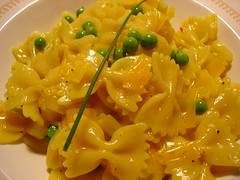
There is a God, or Saffron Farfalle with Fresh Peas and Basil


"There is a God"? Yes, because a) I was shocked that I actually got to cook some of Michelle's fresh peas this time around, and b) this pasta dish was so damn good.

OK, so we adapted this recipe from Deborah Madison's The Savory Way, a cookbook that I'm just getting to know, but which I'm already very impressed by. Madison's recipe actually includes the recipe for the pasta, too, but we went ahead and bought some Barilla farfalle to save time, and the dish turned out fantastically just the same. I'm sure it would have been even better with fresh pasta, but, trust me, this version, with freshly shelled peas, the delicate flavor of sautéed leek, and the warmth of the saffron, was more than adequate.

1/4 cup unsalted butter
3 small leeks, white parts only, sliced into thin rounds
salt
2 generous splashes of dry white wine
1 1/2 cups of freshly shelled fresh peas
freshly ground pepper
6-8 basil leaves, torn or sliced
freshly grated Parmigiano-Reggiano
1 lb farfalle pasta
12-20 threads of saffron, freshly ground in a mortar

Put water on for the pasta. Melt the butter in a large pot. Add the ground saffron and stir. Add the leeks and sauté over medium heat until tender, about 10-20 minutes, adding a splash of wine to help steam them along. Salt and pepper to taste. Cook your pasta until al dente, then drain and set aside. While the pasta is cooking, add the peas and the basil to the leek mixture, as well as another splash of white wine. Cook until the peas are just tender, about 3-5 minutes. Toss the pasta with the pea and leek mixture, mixing them together well. Add a about 1/4 cup of grated Parmagiano and toss once more. Serve in a shallow bowl, with a bit of extra grated Parmagiano sprinkled on top.

Serves 4 as a main dish, or 6 as an entrée.

aj

"They Say I'm Different"


this year's supply of fresh peas fig. a:  this year's peas

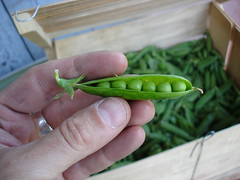
OK, we've all got our dark secrets, our skeletons in the closet, right? Well, I hate to be the one to "out" Michelle, but I've got two words for you, dear reader: fresh peas. She'll tell you all about it later today, I'm sure, but it all has to do with some childhood memories of hers, or something. In any case, Michelle has been known to eat fresh peas by the proverbial bushelful, but this year, with access to wholesale produce through Les Chèvres, she actually acquired something close to a bushelful (check out the size of the crate in the background of the photo above!). Maybe it's a good thing that her birthday is in March, because if it was in June, at the height of the fresh peas season around here, I'm sure that'd be all she'd ask for, and things might get out of hand. Anyway, I'm not complaining at all, I just hope that they last long enough that we actually get to cook some this time around. I'm thinking some kind of a pasta dish with fresh peas...

aj

Believe it or not, the peas are almost gone. I have had the crate for 2 days, eaten an insane amount of them raw, eaten them for dinner, passed on a bagful to my mom, shelled a few for the freezer, and finally, this morning, I felt the first pangs of a stomach ache. With these pangs comes peace, for I can now assure myself that I took full advantage of the too short pea season, that I lived life to the fullest, that I have won.

m

Tuesday, June 07, 2005

Mile End Birthday Auxiliary


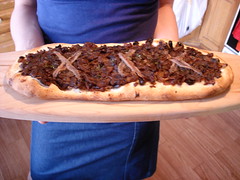
Pissaladière a la Niçoise
Originally uploaded by ajkinik.


Yes, after weeks and weeks of failed plans and missed opportunities--none of which was helped by the sudden and untimely demise of Niu Kee--we finally got a chance to celebrate Kazi's birthday on Sunday. Michelle whipped up a lovely Pissaladière a la Niçoise (see above and below), Hermine brought a fresh and tasty Bourgogne Aligoté, and we descended upon a tiny little park on the edge of Mile End for an apero and appetizer picnic/get-together/birthday party. Pissaladière is a Niçois specialty that features caramelized onions, black olives, anchovies, and herbs on a thin crust pizza-like dough. Michelle had never had it before, but that didn't stop her from experimenting, and everyone was glad she did because it turned out amazingly. She made two slightly different kinds. Everyone's favorite was the one with a bit of fennel seed added to it--it cut the brininess of the anchovies and even provided a hint of sweetness. We used a recipe from Cook's Illustrated and it worked like a charm.

The traditional way to caramelize onions is to slow-cook them for about 2 hours over low heat. The Cook's Illustrated recipe suggested another quicker method, one that only takes 1/4 of the time, and the onions turned out perfectly. This will definitely be my new method for caramelizing onions. Here it is:

2 tbs olive oil
2 lbs yellow onions, sliced 1/4 inch thick
1/2 tsp salt
1 tsp brown sugar
1 tbsp water

Heat the oil in a 12-inch nonstick skillet over high heat it shimmers but hasn't started to smoke yet. Stir in the onions, salt, and brown sugar and cook, stirring constantly, until the moisture from the onions has been evaporated, and the onions have begun to brown, about 10 minutes. Reduce the heat to medium-low and cook, stirring frequently, until the onions have softened and are medium golden brown, about 20 minutes longer. Remove pan from heat and stir in water. Transfer to a bowl and set aside.

For the life of me, I can't figure out why it's so rare that one finds Pissaladière outside of Nice (well, outside of France, at least). When I start my very own pizza truck complete with wood-burning oven Pissaladière will definitely be one of the offerings.

aj

Several books and magazines I'd been reading lately featured pissaladière as the perfect food for summer. I must agree with them. It didn't take much time, especially since I made the dough in a -- gasp! -- food processor. (Yes, I still don't have a standing mixer.) It worked perfectly. Anthony caramelized the onions until they were candied. We placed a layer of chopped anchovies, a layer of Niçoise olives, fresh thyme, the onions, and extra anchovies on top as a garnish. It only took about 10 minutes to bake. The difficult part was mustering up the willpower to resist the call of the out-of-the-oven pissaladiere and carry it all the way to the little park where we were meeting some friends for a (post-)birthday picnic. You can use any pizza dough recipe if you like, or use the one we did from Cook's Illustrated:

2 c. flour
1 tsp. instant yeast
1 tsp. salt
1 Tbsp. olice oil
1 c. warm water

Mix dry ingredients, add oil and water and mix until a ball forms. Let rise 1 hour. Divide in two, shape into balls and let rise 10 min. Stretch dough out into long ovals, brush with oil, add toppings and bake.

Serve with a salad (preferably one with greens fresh out of the garden) and wine.

m

Monday, June 06, 2005

City Guides!

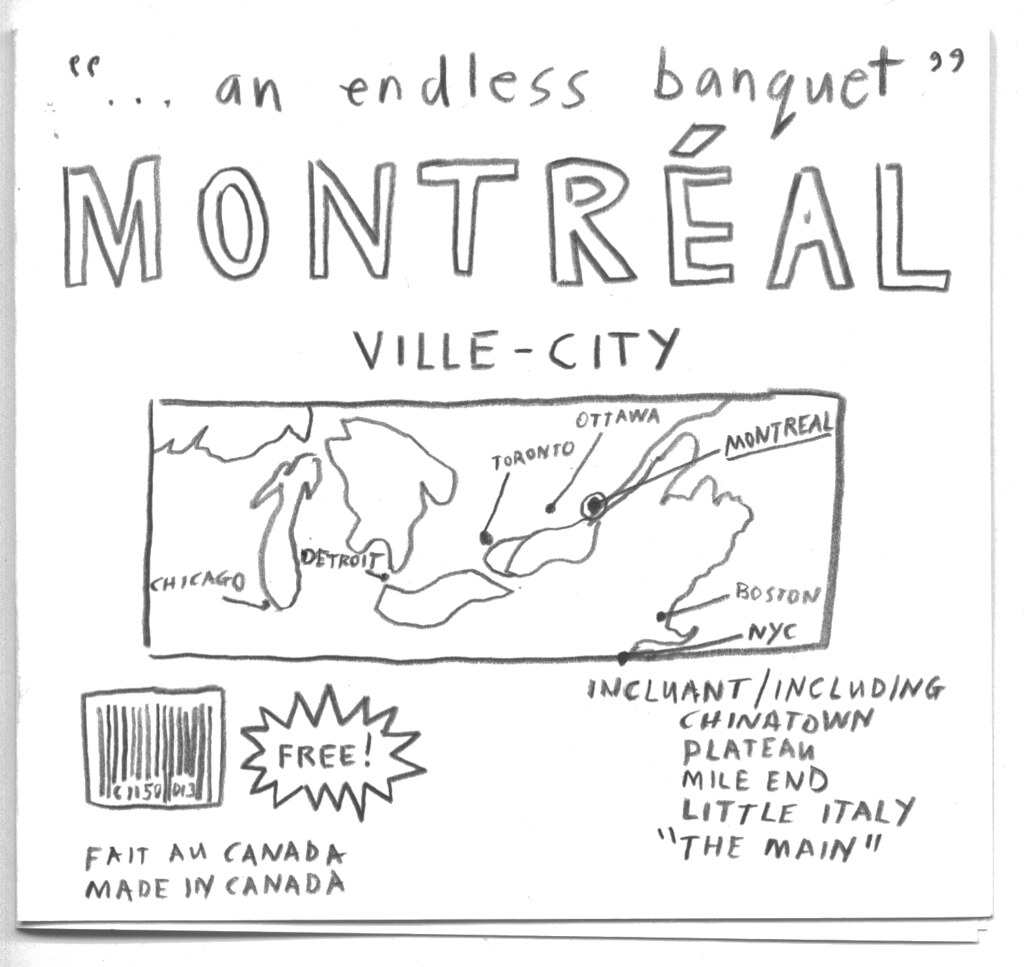
Our Montreal Food Guide is now reachable via our sidebar, so you don't have to go digging through our archives to find it. You'll find both the A-M half and the N-Z half under a heading that reads "City Guides." As this heading suggests, the Montreal Food Guide is the first of a number of food guides that we'll be posting on "...an endless banquet" over the next few months. Stay tuned for food guides to New York, San Francisco, Paris, Toronto, et cetera, et cetera... And if you have any hot tips for any of these cities (or for Montreal, for that matter), send 'em along and we'll try to check out as many as we can as soon as we can.

eds.

Friday, June 03, 2005

Summer of salad


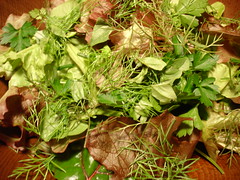
our first garden salad
Originally uploaded by michelle1975.


Our first salad composed entirely of things from our garden is a sign of good things to come. Some of the plants are still babies, so I was careful not to take too many leaves from any one plant. May they grow to be strong and productive. I predict this will be the salad of Summer 2005. It is composed of red and green oak leaf lettuce, arugula, watercress, swiss chard, green and bronze fennel, basil, chervil, parsley, chives, and tarragon. The bronze fennel was the standout. I love fennel, both the bulbs and fronds, and the bronze version made the green one seem tasteless. This autumn, I will save the seeds and grow it in profusion next year. Both the arugula and the watercress were delightfully strong in flavour. I'm going to have to plant successive sowings in the next few weeks to keep us in greens. We dressed it with olive oil and balsamic vinegar and ate it in under one minute. Highly recommended.

m

Thursday, June 02, 2005

Hello, June!


Wow, after a rather phenomenal April, followed by a somewhat lackluster May (that's putting it mildly), June has come in like a true tiger! The sun is out, there isn't a cloud in the sky, and the temperatures are wonderfully toasty here in Montreal. Among other things, this means the streets are hopping, the terraces are packed, there are line-ups out the doors of the city's ice cream shops, and people all across the city are dining al fresco. It also means it's officially time for summer beverages. A week ago I convinced our friend Hermine that it was time to start thinking in terms of gin and tequila, not, say, scotch, in spite of the chilly, soggy, generally miserable weather we were having. I'd like to think the gin and tonics we put away late last week helped drive out the dreariness once and for all.

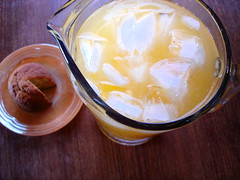
Orangeade is a nice way to usher in the balmy temperatures. Just juice whatever oranges, lemons, and limes you have around the house in whatever ratio suits your tastes, then pour the juice in a large pitcher. Add water to fill up the pitcher. Then sweeten the mixture according to your tastes using the Simple Sugar Syrup recipe below (you'll never encounter that "adding granulated sugar to a cold drink" problem again). Add a bunch of ice cubes to give the orangeade a nice chill, then serve. A sprig of mint as a garnish is always nice.

We served our first orangeade of the season with a small piece of these little Honey-Ginger Pound Cakes Michelle made last night at Les Chèvres.

Simple Sugar Syrup

8 tablespoons of white sugar
1 cup of water
1 small piece of fresh ginger (optional)

Add ingredients to a saucepan and bring to a boil. Turn the heat down and simmer the mixture for 5 minutes. Let it cool before adding it to your favorite summer drink, be it iced tea, lemonade, orangeade, or whatever. You can keep the remaining syrup in an airtight jar in the refrigerator for your next batch.

Enjoy.

aj