Saturday, October 12, 2013

As Easy as 3-2-1, rev. ed.

2013 was definitely the summer of ribs around here.  We started with ribs (among other smoky delicacies, like brisket and sausages) back on a chilly afternoon in April when Szef Bartek and I kicked off our outdoor BBQ season,
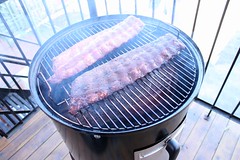
ribs & shoulder fig. a:  ribs & brisket

and the enthusiasm for baby backs and spare ribs never really abated.  And now, with this incredible fall weather we've been having, the festival of smoke & ribs continues.  It seems unlikely that it'll last much longer, but you never know.  In the hopes that it will...

I've been making slow-smoked, ultra-tender "dry"-style ribs for a number of years now, and I've always been open to trying out new techniques--including "wet" styles--from time to time, but my "dry"-style ribs remained my preferred model.  This year, however, I started working with a hybrid "competition"-style approach that appeared in Saveur's "BBQ Nation" issue a couple of years back (July 2011), and I really liked the results.
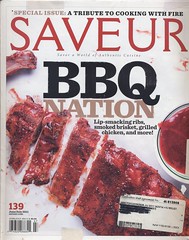
BBQ nation fig. b:  BBQ nation

The method, which comes from a Richmond-based BBQ competition veteran named Tuffy Stone, starts "dry" (just dry rub, with a bit of misting), makes great use of a "crutch" (where you wrap or house your BBQ to accelerate the cooking process and add both moisture and flavour), and finishes "wet" (where sauce is used to baste the BBQ).  I'd become a little more open to a "wet" finish because I'd finally developed a tomato-based barbecue sauce of my own that I was really happy with (one with plenty of bourbon in it), and I found that it married well with this "competition" approach.

The technique in question is what's known as the 3-2-1 approach.  You can find all manner of commentary on this method throughout the most BBQ-obsessed regions of the Internet, but the essentials are pretty simple.  Basically, once you've applied a dry rub to your ribs, you smoke them for three hours, misting them every 30 minutes; then you remove them from your smoker, slather them with a magic elixir, wrap them in foil, and put them back on your smoker for two hours; and, finally, you unwrap your ribs, and return them to the smoker for one hour, basting them with your BBQ sauce after 30 minutes.  Hence, the 3-2-1.

In case you can't picture it, this is what they look like going into that final stage:
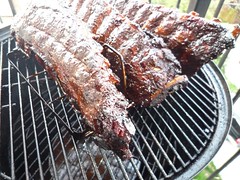
final stage fig. c:  entering the final stage

If you can't tell, the results are fantastic.  In fact, you might find dinner guests hoisting half-devoured ribs up into the air and proclaiming, "Now, THIS is what I call a rib!," after which they'll likely dip their rib into a little more sauce and finish the job--with gusto.  My only caveat:  make sure to make enough.  I recommend a few racks if you're serving them as an appetizer to a crowd, and roughly half a rack each if you're serving them as a meal.  Plus, you definitely want at least a few as leftovers.
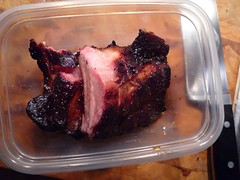
leftovers fig. d:  leftovers! 1

In fact, you might even want to think about having some for breakfast the next morning.
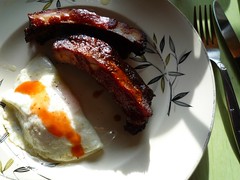
ribs for breakfast fig. e:  leftovers! 2

Definitely not the worst idea...

I've made variations on this method numerous times over the last several months, and I've found it foolproof.  Well, maybe not exactly.  Like all good barbecue, it takes some advanced planning and preparation and plenty of TLC.

A few pointers:

1.  Maintaining a consistent heat, one suitable for slow-and-low smoking, is key to all great barbecue, of course.  I like to keep things hovering around 225º throughout the entire process.  You definitely don't need a fancy smoker to pull these ribs off.  You don't even need a smoker at all--a good ole Weber barbecue will do the trick.  It'll just require a little more attention to the heat on your part, and you'll have to be a little more clever when it comes to creating indirect heat.

2.  Use an aromatic, complementary wood to smoke with.  Stone recommends apple wood for his ribs; I'm partial to hickory.
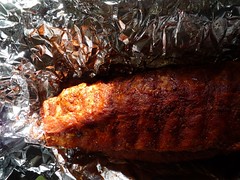
rubbed fig. f:  rubbed

3.  Stone's dry rub is excellent, but any kind that has a basis in sweet paprika, salt, black pepper, and brown sugar will work well here.  His recipe recommends rubbing the ribs shortly before beginning to smoke them.  I prefer rubbing them the night before to let the flavour sink in.

4.  Mist the ribs with apple juice (following Stone's lead) or some kind of sweet & spicy vinegar-based concoction.  Do so every 30 minutes for that first 3 hours.
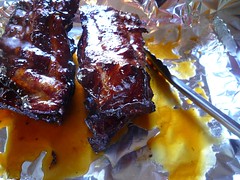
drizzled fig. g:  drizzled

5.  Stone's magic elixir that he drizzles his ribs with is a combination of butter, honey, and light brown sugar.  I swear by the butter, but you can play around with the sweeteners.  Maple syrup, for instance, is pretty ideal--and it also lends a little local/regional flavour to the mix.

6.  Use a premium BBQ sauce to finish the ribs with, preferably one of your own design.  Stone's, once again, is very good, but I'm partial to my bourbon-laced sauce.

Serve your ribs with your premium BBQ sauce and a vinegar-based BBQ sauce, if at all possible.  Have plenty of BBQ-friendly sides on hand, too.  I'm thinking cole slaw, baked beans, potato salad, and possibly even some corn bread.

Now dig in, and keep on smokin' in the free world!

aj

Friday, September 27, 2013

Plum Assignment

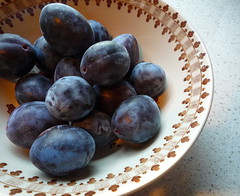
fall plums fig. a:  fall plums

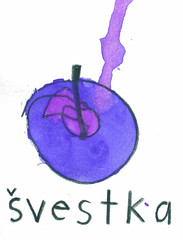
Michelle is back in the pages of Urban Expressions discussing one of her absolute favourite topics:  plums.  She's of Czech heritage, after all.  And there's a reason she named our line of preserves Švestka.

svestka fig. b:  Czech plum

Anyway, it's definitely the season for them, those beautiful Italian and Mont-Royal plums are the last of the year's stone fruits, and they're so versatile:  you can prepare them so many different ways across the sweet to savoury spectrum, from compote, jam, jelly, and butter, to cake, torte, tart, and pudding, to chutneys and pickles.

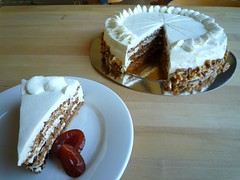
The featured recipe is for Michelle's beautiful plum and walnut torte.

czech torte fig. c:  Czech plum torte

It's described as being for a "more adventurous baker," and, yes, it is a little involved, but it's absolutely worth the effort.  And if you decide the torte's too much trouble, you could always just make a batch of plum compote--the recipe is included.

Once again, you can find the article and the accompanying recipe here.

Now all you have to do is get out to one of our friendly neighbourhood farmers' markets to pick up a bunch of those plum dandies.

aj

Friday, September 20, 2013

Top Ten #51

CC 2

P1030622

P1030630

IMG_0902

1.  Cape Cod!

2.  Adam Leith Gollner, The Book of Immortality (Doubleday Canada)

3.  dinner for seven at Impasto, Mtl

4.  Steve Gunn, Time Off (Paradise of Bachelors)

sample track:  "Lurker"


(And if you're lucky enough to live in the NYC area, or to be just passing through, be sure to catch Steve Gunn, along with Endless Boogie and Tom Blacklung & the Smokestacks @ 285 Kent in Brooklyn on Monday, September 23rd.)

museum_hours_film_still_a_l

5.  Museum Hours (2012), dir. Cohen

(watch the trailer)

6.  late-night revelry at Le Vin Papillon, Mtl

7.  Faces, Long Player (Warner Bros.)

sample track:  "Maybe I'm Amazed"


8.  AEB chicken paprikash + sourdough caraway rye (Igen!)

9.  Girls (season 2)

farm-to-table VT

10.  Farm-to-Table VT (including Misery Loves Company, Pistou, and Vergennes Laundry)

aj

Thursday, September 12, 2013

Win-win-win, rev. ed.

2 burlington farmers' market LO fig. a:  Burlington Farmers' Market

The Green Mountain State's Green Revolution continues to flourish, and it's transformed our diminutive neighbour to the south into a leader when it comes to small farming, organic agriculture, and sustainable land management.  This has resulted in a teeming farmers' market scene, a thriving network of cooperative grocery stores spilling over with local organics, and a vibrant (and talented!) farm-to-table dining scene.  Everyone's a winner:  farmers, chefs, and food lovers.

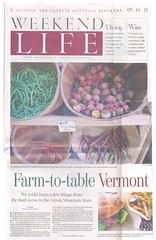
You can read all about it in my latest contribution to the Montreal Gazette.

farm-to-table VT fig. b:  print edition

Want to check things out for yourself, live and in-person?  The article comes with a concise guide to farm-to-table Vermont, plus write-ups about some of our favourite new dining spots in Vermont's Champlain Valley,

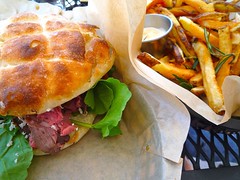
3 misery loves company LO fig. c:  roast beef sandwich, Misery Loves Company

like Winooski's Misery Loves Company,

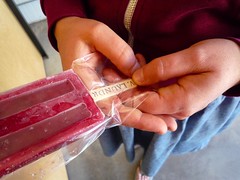
vergennes laundry plum pop LO fig. d:  roasted plum pop, Vergennes Laundry

Vergennes' Vergennes Laundry, and Burlington's Pistou, all of which are doing particularly delicious things with that farm-to-table ethos.

We've expressed this numerous times before, but it bears repeating:  welovermont!

Check it out!

And if you like that article, you might want to check out this oldie-but-goodie, too.

aj

Sunday, September 08, 2013

Cape Cod Capers

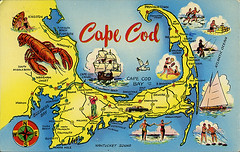
CC 3 fig. a:  geography

Ah, Cape Cod!  Your sandy features and abundant coastline hold so many opportunities, so many pleasures!  And your lobsters are so disproportionately large (and tasty)!

scan fig. b:  nostalgia

We're already so nostalgic for you.  It's only been a little over a week since we returned, but it feels like decades.

P1030622


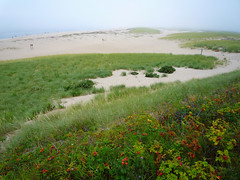
fig. c:  dunes


We miss your sand dunes and your foliage,

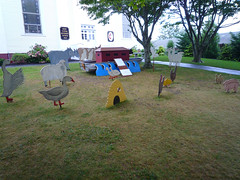
P1030619 fig. d:  ark

your quaint little towns and villages with their whimsical sense of style,

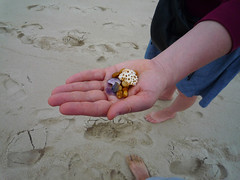
P1030627 fig. e:  shells

and your abundant beachcombing opportunities.

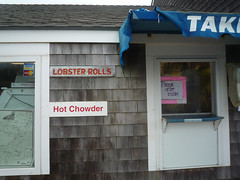
P1030632 fig. f:  lobstah & chowdah

But most of all we miss your seafood stores and markets.  Places like Hatch'sMac's, the Chatham Fish Pier Market, and George's (motto:  "George's plaice has sole."), with their lobster rolls, their beautiful fresh and smoked fish, their briny, inexpensive Wellfleet oysters, and their luscious littlenecks

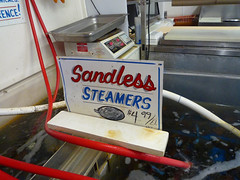
P1030630 fig. g:  steamahs

and succulent (and sometimes even sandless!) steamers.  Because of you, we ate plentiful seafood each and every day, and in every possible way:  raw, steamed, grilled, pan-fried, etc.

We knew we'd miss your seafood, so we brought some home with us

IMG_0915 fig. h:  sea food

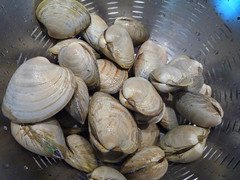
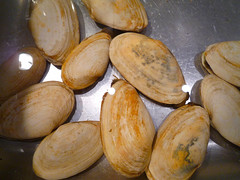
in those lovely lined bags of yours.  We brought back delicious flounder and smoked bluefish, but we were especially excited to be bringing back clams:

P1030647 fig. i:  littlenecks

both littlenecks

P1030651 fig. j:  steamahs

and steamers.  You see, we had it in mind to make some real clam chowder, so we made sure to pick up the other essentials that are so critical to good, old-fashioned chowder-making:

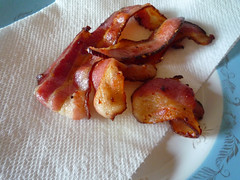
P1030649 fig. k:  bacon

smoky bacon (from New Hampshire),

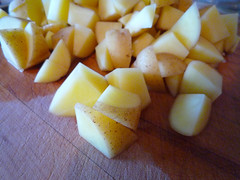
P1030650 fig. l:  potatoes

seasonal potatoes (from Quebec), and milk and cream (from Vermont).

You can find clam chowder all up and down the Cape, of course, but it's a little difficult to find one to our liking.  The regional preference is for starchy, even stodgy, clam chowder that's heavy with thickeners, but we prefer ours thinner and lighter, with any and all starchiness coming strictly from the potatoes and any crackers or pilot biscuits you might choose to top it off with.  The trick is to chop up your potatoes "thick/thin":  in irregular shapes that are narrower at one end and that cook irregularly.  If you chop 'em and cook 'em just right, the potatoes themselves will thicken your chowder just so.

Clam Chowder 
36 littleneck clams*
125 ml high-quality clam juice [like Bar Harbor] (optional)
4 strips smoky bacon
1 sweet onion, finely chopped
water or high-quality clam juice
9-10 small-medium potatoes, cut thick-thin
1 1/2 cups whole milk
1/2 cup cooking cream
salt and freshly ground black pepper to taste
common crackers (optional, but highly recommended) 
If you want a particularly rich clam broth, pour 250 ml of clam juice in a large pot, add the clams, cover the pot, and bring to a boil.  When the liquid comes to a boil, lower the heat, and steam the clams until they've all opened (about 6-10 minutes). 
If you don't have access to a high-quality clam juice, just use the same amount of water instead, and follow the directions above. 
When the clams have opened, use tongs to place them in a bowl.  And when the clams have cooled enough to handle, remove the clam meat from its shell and chop finely. 
Strain the liquid in the pot along with any broth in the bowl through a fine strainer lined with a paper coffee filter, or just pour it off carefully, leaving the grit behind. 
Fry the bacon in a pan until crispy.  Pour the bacon fat into a pot and sauté the onion until translucent.  Meanwhile, dice the bacon.   
Measure the amount of broth and top off with water or clam juice to make a generous 2 cups.  Add this to the pot with the onion, as well as the diced bacon.  Add the potatoes, bring to a simmer, and cook until they are still firm but done.  Stir the milk and cream into the broth and add salt and pepper as necessary.  If your clams are fresh and briny and if you've used clam juice, you shouldn't need much, if any, salt. 
Bring the broth back to a gentle simmer and add the clam meat.  Do not let the chowder boil.  Cook the chowder at the barest simmer for another 2-3 minutes. 
The chowder will be at its best if you age it briefly, keeping it warm, but not hot, for an hour or so.  Afterwards, just bring the chowder bring it back to temperature, adjust the seasoning, and serve, preferably with common crackers (especially common crackers that have been split and toasted in the oven.) 
Serves 4-6 as an opening course. 
[recipe based closely on a recipe from John Thorne's Serious Pig
* You can also make a nice clam chowder with steamers, but we saved our steamers for, well..., steaming.
The other revelation of our Cape Cod excursion had to do not with fruits de mer, but with fruits du bord de la mer.

Michelle had read about Cape Cod's legendary beach plums years ago.  When we we got an invitation to vacation there, she tried to find out some more about them and discovered that we'd be there at the height of their season--mid- to late-August.  The thing is, how do you go about finding a fruit that's totally wild and that you can only procure from foragers?  Especially when the foragers in question are known to keep their sources secret--like mushroom hunters and their troves of prized chanterelles and morels.

We had no idea how we'd find beach plums, but we were determined to keep our eyes peeled for them.  And, in the end, it took us less than 24 hours to score both beach plums and another wild coastal fruit we had no idea even existed:  wild apricots.  But we found in them in a most unlikely spot:  at a flea market (!).

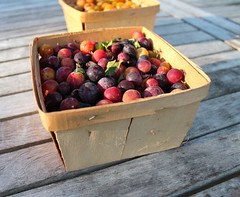
We'd been told that the weekend flea market at the Wellfleet Drive-In was a must--and it was!--but we had no idea that there'd be a grizzled old hippie selling foraged fruit along with his carved wood C.R.A.P.**  God bless him!  He had an amazing array of carved driftwood whales and other folk art treasures, and his beach plums and wild apricots were beautiful (much, much smaller than we would have imagined, but beautiful nonetheless).

IMG_0902


fig. m:  wild beach plums & apricots

When we got them back to our beach house,

P1030612


fig. n:  sorting


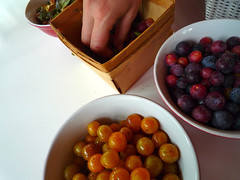
Michelle set about sorting through them.  And the next morning she made an exceedingly precious

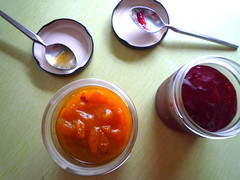
P1030653 fig. o:  preserves

small batch of wild apricot and beach plum preserves.  Fresh, both fruit were a little too tart to be pleasant--but sweetened and cooked, they turned into the deepest, most delicious preserves.  The beach plums almost had a wine flavour to them, while the apricots were redolent of almond.

We brought back numerous souvenirs from our trip to Cape Cod,

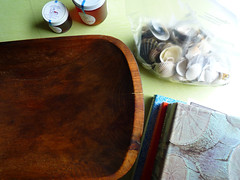
P1030644 fig. p:  souvenirs

P1030646 fig. q:  ole no. 69

but there's no question the most highly prized were those two jars of beach house-made preserves.

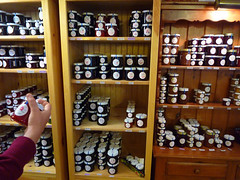
Of course, there are other, more conventional ways of scoring traditional Cape Cod preserves, like beach plum.  And some of them are quite excellent, indeed.  Take the Chatham Jam and Jelly Shop,

P1030633 fig. r:  jams & jellies

in (you guessed it!) Chatham, where you can find dozens upon dozens of house-made jam & jellies, including a whole assortment of wild fruit preserves.

We kept the small batch we made at the beach house for ourselves, but we brought back extras to stock our pantry and give to our friends and family.

Ah, Cape Cod!  We miss you so.

aj

** The acronym stands for Cape Recycled Art Project, if memory serves me right.

p.s. TY to R & MA for making this happen--such a great time!

Saturday, August 24, 2013

Gone fishin'

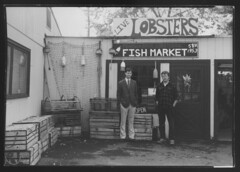
CC 2

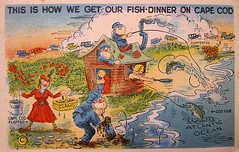
This is how we're hoping to get our fish-dinner on Cape Cod.

Stay tuned...

aj

Friday, August 16, 2013

Omnivores among us

omnivore Montreal fig. a:  aaah! they're back!!

They're back!  That wacky band of Parisian bon vivants has returned to our fair city to put on another food festival, Omnivore Montreal 2013, and, once again, they've not only tapped many of Montreal's best chefs, they've brought along a whole bunch of talented friends as well.

maudits soupers fig. b:  maudit barbu!

Participants in their tag-team-style Maudits Soupers include such vedettes culinaires as Jeremiah Langhorne of Charleston's legendary McCrady's (tonight! with Derek Dammann!! at Maison Publique!!!).

And, once again, the Société des arts technologiques' Foodlab is right at the centre of the action.  The SAT is where all of Omnivore's cooking demos will be taking place (in the tripped-out confines of the SATosphere, their multimedia dome).  The SAT is where Saturday night's Omnivorious bash will be held.  And the Foodlab will be the site of the festival's closing night Maudit Souper on Monday:  a collaboration between Michelle & Seth, and Nicolas Darnauguilhelm of Brussels' highly acclaimed Neptune.

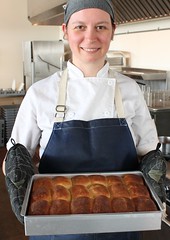
bring on the bukty fig. c:  buchty, mmm...., buchty!

Both Michelle and Seth will be giving demos this weekend, with Michelle's covering the use of cheese in desserts (including her remarkable farmer's cheese- and fruit-filled buchty,* which you can see pictured above, fresh out of the oven).  You can catch Michelle's demo on Saturday, at 3:40 p.m.,** while Seth's will take place on Sunday at 12:20.  Demos run from 11:00 a.m.-1:30 p.m. and 3:00 p.m.-5:30 p.m. on both Saturday and Sunday.

Omnivores of Montreal, unite!

aj

* If you haven't had the pleasure, buchty are traditional Czech yeasted buns that are stuffed with fruit or cheese, and sometimes (as in this case) both.

** BTW, she's making enough buchty for everyone who attends!

Monday, August 12, 2013

Coffee time. Nice!

Nice Coffee Time fig. a:  hot off the presses!

Liz Clayton is a world-renowned coffee expert and a hardcore coffee lover.  She also writes, knits, loves cats, plays pinball, takes a lot of photographs, and travels extensively, sometimes in the company of a rock 'n' roll band or two.

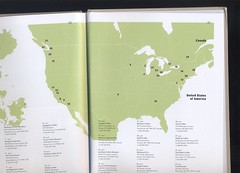
She's just published her first book, and it documents (in photographs and words) an international coffee odyssey that took her as far east as Nordic Europe (Iceland, Denmark), and back and forth across the United States and Canada, from Boston to San Diego and Victoria to Atlanta.

coffee odyssey fig. b:  odyssey

And all in the space of a single year (!).

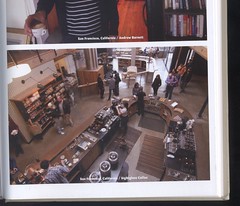
The photographs capture recommended coffee establishments in all of the far-flung cities, towns, and regions Clayton visited (Reykjavik!  Santa Cruz!  Oklahoma City!), as well as intimate portraits of fellow coffee enthusiasts in their abodes, either fixing up a cup of coffee, or fixing to enjoy one.  Together with the text, they provide some sense of the scale of the Third Wave Coffee International (at least the roasting, brewing, enjoying aspects of the industry), as well as some sense of the surprisingly mellow, well-adjusted, and good-natured people who inhabit this highly caffeinated scene.

SF coffee time fig. c:  415

You might be asking yourself if Ms. Clayton made more than a token effort to cover Canada as part of her survey, and the answer would be, "Yes!  Clayton is something of a Canadianophile and Canadian cities are covered in some detail."*  In fact, Clayton visited favourite cafés in Victoria, Vancouver, Toronto, and Montreal.

You might also be asking yourself what the test kitchen at "...an endless banquet" looks like, as well as what method Michelle uses on those rare occasions when she brews a cup of coffee in it.  (Seems highly unlikely that such questions would be crossing your mind, but you never know.)

Mtl coffee time fig. d:  514

Luckily for you, all you have to do is pick up a copy of Nice Coffee Time to find out, because Michelle is featured right above a photograph of Café Myriade (natch!), and right next to an account of Clayton's adventures in the Montreal-Boston corridor.

Is Michelle an example of "the surprisingly mellow, good-natured people who inhabit this highly caffeinated scene"?  Why, yes, she is.  As long as she gets her morning fix.

You can find Nice Coffee Time in select coffee shops and bookstores now, as well as on Amazon soon.  It brings new meaning to the phrase "coffee table book."

aj
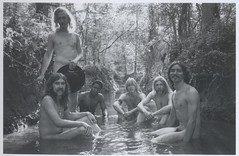
* She also holds a Canadian passport, if I'm not mistaken.

Friday, August 02, 2013

Top Ten #50

summer escape


1.  summer escapes

allman brothers

2.  v/a, Delta Swamp Rock, vol. 1 (Soul Jazz)

sample track:  Cher, "I Walk on Guilded Splinters"

cherry pie


4.  Majical CloudzImpersonator (Matador)

sample track:  "Childhood's End"

runaway creek farm

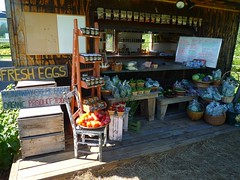
5.  Runaway Creek Farm, Arundel, QC

jj

6.  Monterey Pop (1967), dir. D.A. Pennebaker + Big Brother & the Holding Company, Cheap Thrills (Columbia)

sample track:  "Summertime"

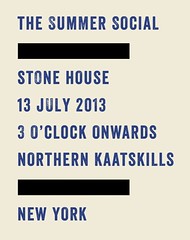
summer social poster (redacted)


john cale

8.  John Cale, Paris 1919 (4 Men With Beards)

sample track:  "The Endless Plain of Fortune"

9.  Girls, season 1

reading time w: audrey

10.  Miss Audrey (2001-2013), R.I.P.

Audrey was regularly featured on "...an endless banquet" right from the start, and with good reason:  she was a darling girl and a true superstar.  You can find two of our favourite Audrey-related posts here and here.

aj
note:  none of them ever are, really, but, as you may have guessed already, this special edition Top Ten list (#50!) is definitely not in any particular order--eds.