Tuesday, August 05, 2008

Special Edition Top Ten 1: Ghent

panorama of ghent fig. a: panorama of Ghent

Why Ghent? Well, I got hired to do a little song-and-dance there, and Michelle decided to tag along for the ride to try to parlay this into something of a holiday. We’d passed through Belgium before on a high-speed Thalys train together, but otherwise Michelle had never been to Belgium. We got a few quizzical looks in the weeks leading up to our trip when we told people where we were going, but we could hardly wait to get there. Beer, waffles, gin, fries--what's not to like? The weather was, well, Northern European (cool, a fair bit of rain, oftentimes gray)* for much of our time in Belgium. But the weather was more than compensated for by the hospitality we received from the moment we set foot in Ghent.

welcome wagon fig. b: Day 1: welcome wagon

The food, drinks, treats, sights, events, and cultural attractions didn't hurt either.

mustard shop 3 fig. c: Mostaard Fabriek 1

1. Vve Tierenteyn-Verlent Mostaard Fabriek, Groentenmarkt 3

mustard shop 1 fig. d: Mostaard Fabriek 2

Beautiful, beautiful shop.

q: what lurks within? fig. e: mostaard 1

Beautiful packaging.

a: mustard fig. f: mostaard 2

And quite possibly the world’s best mustard too. With a flavor so bold and intense you feel like it’s been laced with a particularly potent horseradish (one quite capable of giving you a mad "wasabi" rush), but it’s just the mustard seeds. The first time Michelle visited, thinking Vve Tierenteyn might be something akin to the mustard boutiques you sometimes find here in North America, she asked the owner, "So, how many types of mustard do you have?," and the woman just gave her a stern look and said, "We only have one type of mustard." That's when Michelle realized, "These people are serious."

When we went back a few days later, having become True Believers in the meantime, we told the owner, “We love your mustard! It’s the best!!,” she just looked at us with quiet confidence and said, “I know.” Then she started rattling off recipes we could make with her mustard [stay tuned…]. Other treats at Vve Tierenteyn include a wide variety of spices and herbs, assorted candies, and homemade chutneys, pickled capers, and piccalilli, but it’s their mustard that’s their bread and butter. Jars (glass or ceramic) are filled to order. The recipe has remained unchanged since 1790 and it's kept under lock and key.

2. Het Hinkel Spel Cooperatieve Kaasmakerij, a.k.a. “the dairy co-op,” F. Lousbergskaai 33

raw milk fig. g: raw milk

Two words: raw milk. The best I’ve ever had—by a mile.

belgian artisanal butter fig. h: raw milk butter

Raw milk butter (pictured), cheese, and yogurt, too, all of them lovely, and all of them brought to you courtesy of a totally right-on cheese co-op.

mokabon 3 fig. i: Mokabon 1

3. Mokabon, Donkersteeg 35

mokabon 2 fig. j: Mokabon 2

Easily our favorite “salon du café” in town

mokabon 1 fig. k: Mokabon's coffee

and also our favorite coffee. The standard issue (pictured) comes with a generous dollop of homemade whipped cream on the side. We quickly took to using the whole dollop. Max, just around the corner, is probably the city’s most famous waffle restaurant (in fact, they’re one of a small handful of restaurants in Belgium that claim to have invented the Belgian waffle), but we actually preferred the waffle at Mokabon: better flavor, better texture, and it came with more of that whipped cream.

max apple beignets fig. l: Max's apple beignets

However, we did love the apple beignets at Max.

beginjhof fig. m: inside the Klein Begijnhof

4. Klein Begijnhof, adjacent to Lange Vilettestraat belowTweebruggenstraat—If you’ve never heard of a begijnhof or a béguinage or the Beguines I highly recommend picking up a copy of Norman Cohn’s masterful The Pursuit of the Millennium. If you’ve never experienced the serenity of a béguinage, Ghent’s Klein Begijnhof is a good place to start. Added bonus: an underground cinema called OffOff that specializes in experimental fare and that also houses an attractive little bar with great beer.

vosselare put 1 fig. n: Vosselare Put

5. Vosselare Put, a.k.a. “the swimming canal”--Just outside of Ghent sits what was once a roughly 10-km bend in the Leide, a roughly 10-km bend that was bypassed in the interests of commerce way back when, a roughly 10-km bend that is now a beautiful "swimming canal." At Vosselare Put you'll find a tiny Belgian café that serves good beer and light snacks and that operates a "beach" complete with slide, diving board, and lifeguard.

vossalare put 2 fig. o: Vosselare picnic

It's also kind of perfect for picnics.

6. S.M.A.K., a.k.a. “the contemporary art museum”--We tried to find the one-man show by one Guillaume Bijl, the Belgian installation artist, but all we found were

smak 3 fig. p: SMAK 1

an exhibit on cave paintings,

smak 2 fig. q: SMAK 2

an impressive collection of twentieth-century artifacts (including Gandhi's glasses, Rainer Werner Fassbinder's motion picture camera, and Josephine Baker's handbag)

smak 1 fig. r: SMAK 3

and the site of the Miss Flanders Beauty Pageant (which, judging by the empty champagne bottles we found backstage, had taken place earlier that evening).

Nice building, though. And a café that serves light meals by Grade, a fine local fine dining and cocktail bar hot spot.

ice cream garage fig. s: ice cream garage

7. Ijssalon Talamini, a.k.a. “the ice cream garage," Maaltebruggestraat 9--Michelle had gone to the fabled "ice cream garage" three times, but, through a series of unfortunate mishaps (mostly having to do with her inability to read Flemish numerals), she'd come up empty each and every time. The fourth time turned out to be the charm, though. We snuck in five minutes before close on our last night in Ghent. And it was worth all the effort. Icy and excellent.

8. Het Huis van Alijn, Kraanlei 65--The van Alijn House Museum, a museum dedicated to the social history of Flanders, was our favorite museum. Ghent's got no shortage of great museums, but we loved the van Alijn House's displays on birth, death, marriage, family life, childhood, and, yes, cooking and eating through the ages.

belgian kitchen fig. t: flemish kitchen

belgian pantry fig. u: flemish pantry

belgian table fig. v: flemish table

belgian cuisine fig. w: flemish cookbooks

They also had the city's best postcards:

deen fig. x: deen

When you're done visiting the van Alijn House,

temmerman fig. y: temmerman

Temmerman, just down the street, is one of the city's best confiseries,

neuzen, caramel fig. z: neuzen, caramel

famous for their neuzen, the purple "noses" you see in the background, among other specialties (like salt licorice).

9. Gentse Feesten--The city's 10-day civic festival is a total blow-out. Some 40 years ago, the party started as just a tiny neighborhood affair sponsored by one of the city's central churches. Now it's a huge, sprawling affair. Many of the city centre's streets are closed to traffic, stalls (beer, food, etc.), sound stages, and other attractions fill the streets, beer gardens flourish, crowds throng,

gentse feesten fig. aa: gentse feesten

and the party lasts till dawn each and every night. It's such a shindig, in fact, that the city experiences a collective lull both before (in anticipation) and afterwards (out of exhaustion).

Michelle was particularly thrilled about Gentse Feesten because it gave her another chance to sample some real, honest-to-goodness pannekoeken direct from a street stand before our 6:00 am departure the next day.

10. Gentse stoverij--Our hosts were a little surprised that we gravitated towards local specialties like Gentse stoverij, the local version of carbonnade à la Flamande, but one rainy evening at the oddly named Brasserie Café des Arts (Schouwburgstraat 12), just before going to catch a film, that was exactly what we wanted. The fact that it was made with abbey beer and that it came with a "bottomless" bowl of fresh frites only sweetened the deal. Sorry, no photo, but that's only because photos and a recipe will follow...

ostende fig. bb: oostende

Bonus: Oostende--Bruges and Antwerp are both closer, but it being summer, getting to the coast was a priority.

Basically, we went to Oostende in the hopes of having a swim in the North Sea and getting some fresh seafood, and we were successful on both counts. Our swim in the briny waters of the North Sea was bracing. The skies were gray, the waters were a bit choppy, and there wasn't a single other soul in the water, but it was all in a day's work for the Gentse Ijsberen ("Ice Bears," a.k.a. Polar Bears) Auxiliary.

After we'd warmed up again with a fish soup, Michelle decided it was time for a sugar fix, and Oostende's boardwalk vendors were happy to comply.

candy ostende fig. cc: candy vendor

Riding high on candy, for a second there we thought we were seeing things.

magic tricks fig. dd: mysterious black boxes

Hundreds of identical black boxes all marked with strange titles, names, and dates.

magic trick fig. ee: "cigarette manche, Karell (sic) Fox, 1975"

Turns out there was a magician on premises who was willing and capable of performing each and every one of these legendary tricks, and, it being our lucky day, he was doing them for free that day. We and a few dozen others had our minds blown, and then we moved on.

Later that day we had a hankering for some more seafood.

fish market ostende fig. ff: oostende fish market

We found the Oostende Fish Market and examined the fine specimens on offer.

petites grises fig. gg: petites grises

But what really caught our eye were the stands selling petites grises, those teeny tiny shrimp that are one of the great delicacies of the North Sea. We chose a stand--they had to be good, the fishmonger working the stand was eating his way through his pile of shrimp like there was no tomorrow--and bought 1/2 kg. I'm not sure if you can tell just how miniscule those shrimp are, but we estimate that that 1/2 kg. added up to at least 500 shrimp. At least. Petite grises are so small that you really have to work on your technique to get the full experience--after about 50 shrimp each, we'd gotten the hang of it. Late that evening, back in our B & B in Ghent, we were still working on our haul. It took us another 1 1/2 hours and a few beers to finish them off, but we ate each and every one of them. Why bother with something so finicky? Because they have the sweetest, most wonderful flavor imaginable.

doorbell fig. hh: doorbell, Ghent

End of the first European adventure.

Helpful hint:
Cobblestones aside, Ghent is something of a cyclists' paradise--tons of bike paths and bike routes, free access to virtually any street (in either direction), few hills, and Ghent is so compact that everything is cycling distance. The best place we found to rent bikes for cheap (15 euros per week, 20 per month (?)) is Max Mobiel, Voskenslaan 27, not far from Ghent St-Pieters train station. Nice bikes, too.

aj

* We had a conversation with a guy in Brussels about the un-summer-like weather we were having at the time (little did we know it was more or less the same in Montreal at the time). According to him, this was typical summer weather. With one or two exceptions it had been like this here every year since he moved to Brussels from West Africa. "Yes, it’s always like this in Belgium during the summer," he told us. "No one knows why.”


Thursday, July 31, 2008

eat your greens 1

AEB portuguese kale fig. a: AEB Portuguese kale

It's never been all that difficult to get us to eat our greens, but ever since about March, we've been completely ga-ga for the green stuff. Part of it had to do with the long, snowy winter we had. Our poor bodies were crying out for additional nutrients and the Swiss chard and Belgian endives at our local supermarché started looking better and better (even if they were getting trucked in from California). But mostly it was because that's when we started making gombo zhèbes, that mysterious dish known in some circles as "the queen of gumbos."

Why "mysterious"? Well, gombo zhèbes (a.k.a. gombo aux herbes, gombo z'hairbes, and green gombo) may be "the queen of gumbos," but she's not your typical gumbo. In fact, she breaks with the two most hallowed tenets of gumbo- or gombo-making: she contains no okra and/or okra-like consistency (courtesy of gumbo filé) and she contains no roux.

If you had to boil it down (and some recipes require you to), Gombo zhèbes is a Creole version of that Southern staple "greens and pot likker," the principal difference being the addition of significant amount of herbs to the already heaping quantities of fresh greens, and a degree of complexity. In the Creole kitchen, gombo zhèbes was a dish associated with early spring--it was essentially a restorative dish, one that took advantage of the arrival of the newest greens, and it also was easily adapted to the Lenten diet (although sometimes it sure was hard to tell, because many traditional recipes included such extravagances as veal brisket in addition to the traditional ham).

Anyway, from the time we tasted gombo zhèbes' combination of greens, herbs, ham, garlic, green onions, and hot red pepper we were hooked and we immediately started planning our garden with gombo zhèbes in mind. That was the only problem with our earliest versions--we were living in Quebec and not Louisiana, we were still under a blanket of snow. But we knew that would soon change, and when it did we wanted to be ready. So we made plans and mapped things out, and in early May we broke with tradition (mostly tomatoes and peppers) and planted mostly herbs and leafy greens--savory, basil, thyme, and parsley on the one hand, oak leaf lettuce, mustard greens, cavolo nero, and Portuguese kale on the other. And now, we're happy to report, we're swimming in greens, and though this isn't the only way we've been enjoying our bounty, we've been eating a lot (a lot) of gombo zhèbes and gombo zhèbes-like creations.

AEB cavolo nero fig. b: AEB cavolo nero

gombo zhèbes

Greens: choose a sizable bunch per person from the following list: mustard greens, cavolo nero, Portuguese kale, spinach, endives, watercress, arugula, chicory, kale, collard greens, rapini, etc. The more elaborate the mix, the better. Just remember to make (at least) the equivalent to one bunch per person.

Herbs: a bay leaf, a healthy handful of parsley, and then whatever you like from the following list: basil, savory, thyme, oregano, marjoram, sage, tarragon, etc. Again, the more the merrier.

Aromatics: 2-3 cloves garlic, 1 medium sweet bell pepper (preferably red, yellow, or orange), 4-6 green onions (and/or chives, shallots, onions), 1 small hot red pepper (fresh or dried), Tabasco sauce, etc.

le vrai bacon fig. c: "le vrai bacon"

Finishing touches: 2 tablespoons olive oil, 1-2 teaspoons wine vinegar, 1/4-lb smoked ham (or bacon), and 1 cup uncooked white rice.

Equipment: one large skillet, one large pot.

Method: Cook the rice. When it's done, keep it in a warm spot on the stove. Clean, stem, and mince the herbs, leaving the bay leaf whole. Mince the garlic. Dice the sweet pepper (having already seeded and cored it, of course). Trim and finely chop the scallions. If using ham, cut it into slivers. If using bacon, cook the bacon in a large skillet until it has rendered its fat and become crispy. Remove the bacon and set it aside, and proceed using the bacon fat instead of olive oil. If not using bacon, heat the olive oil in a large skillet. When hot, add the ham, scallions, and sweet pepper. Cook these for a few minutes and then add the minced herbs, the bay leaf, and the crumbled hot pepper. Stirring regularly, cook over medium-low heat for another few minutes, until the herbs have all wilted. Now mix in the garlic and remove from the heat.

Pick over the greens, discarding the stems and any damaged portions. Tear the larger leaves into pieces. Wash carefully, using several changes of water if necessary. Put a cup of unsalted water in a large pot and bring to a boil. Add the greens, cover, and, when the water begins to simmer again, lower the heat to low. Cook until wilted and tender, about six to ten minutes, forking them over from time to time. Do not let the pot boil dry, of course, but at low heat there should be no risk of that.

Using a slotted spoon, transfer the greens into the skillet, spooning some of the pot likker overtop as desired. (The resultant mixture should be "wet" but not "swimming.") Cook everything together briefly until everything is hot and well blended. Taste for seasoning, adding the wine vinegar or lemon juice, along with salt and freshly ground pepper. Discard the bay leaf. Serve in bowls over the rice.

[recipe adapted from John Thorne and Matt Lewis Thorne's Serious Pig, with a little help from The Picayune's Creole Cook Book]


This makes a fine, healthy, and light meal on its own, but it's also a great accompaniment for a whole range of dishes, especially seafood (New Orleans "BBQ" Shrimp comes to mind). Obviously, this recipe can also be easily adapted into a 100% vegetarian version--the method is a keeper. We've found that as our greens have gotten better and fresher we've been adding fewer and fewer extras, so if you're making gombo zhèbes for the first time, and you're using top-notch greens straight from the farmers' market or, better yet, straight out of your garden, you might want to tone down the amount of vinegar/lemon juice and ham/bacon so that you can get the full greens experience. Then again, if you're making gombo zhèbes for the first time, you might very well want to stay close to the script--it's hard to argue with that combination of flavors.

aj

Saturday, July 26, 2008

We have a winner!

Belgian waffle truck fig. a: Belgian waffle truck, Brussels

We've always said that our readers are the sassiest, smartest readers in the world,* but this is ridiculous. You guys are good. Not only did we get a bunch of excellent and generally highly plausible guesses via comments and email, but the very first response was absolutely right. Congratulations to Saleema! Send us an email with your address, Saleema, and we'll happily send you a special AEB European Vacation 2008 prize.** And thanks to everyone else who participated (including two other competitors who got both the country and the city right but failed to beat our winner to the buzzer--better luck next time!).

What about the trip? Where exactly did we go? What delicacies did we find along the way? Be patient. We just got back, and we're not very big on mobile blogging and all that jazz, so it might take us a few days to start getting our reports out. Stay tuned...

aj

* What we did to deserve them, we'll never know...

** Please, no impostors.

Saturday, July 05, 2008

we're hitting the road

mystery truck

That's right, AEB is taking the show on the road again. Can you guess where our first stop is? (Yes, the picture above is a hint--it was taken just outside the train station in the city in question a few years ago.) Guess the right country and we'll be reasonably impressed. Guess the right country and city and we'll send you a souvenir. (And, no, the answer is not "Detroit, USA" [much as we love the Motor City].)

aj

Saturday, June 21, 2008

les plateaux Mont-Royal

Just a few weeks ago it seemed like Au Pied de Cochon's summer seafood extravaganza was still just getting off the ground. There were lobsters and shellfish of all sorts, but they and an outrageous roasted mahi-mahi* with fiddleheads and ramps combo were on offer strictly as off-menu specials.

PDC seafood platter fig. 1: Le Plateau PDC

Just last week, though, Au Pied de Cochon's seafood was back in full effect, as evidenced by the platter of coquillage you see above.

That's the "small," the "Plateau PDC." It runs just under $50. This year Au Pied de Cochon offers four more seafood platters, and each one gets more plentiful, and more intricate. They also get kinda tall--we passed one on our way in that looked like the Eiffel Tower. There was talk of lobsters and seared fish with some of the bigger platters. I can't even imagine what the biggest and baddest of the lot--"Le Gros Verrat"--entails. Its price tag? $350. Our "Plateau PDC" made for a very substantial appetizer for three (along with some cromesquis, of course), so I guess "Le Gros Verrat" would make a very substantial appetizer for you and twenty of your friends? Who knows? All I know is that the quality is unbeatable. So is the creativity.

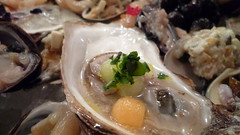
Au Pied de Cochon has its novelty dishes, of course (Duck in a Can, Foie Gras Poutine), but it's not really a place you associate with molecular gastronomy. That said, the most pleasant surprise of the night came with one of our massive oysters (but not the one you see in the picture). This is one had a mysterious pale translucent cube nestled next to the oyster. I really had no idea what to expect. Could have been lychee jelly for all I knew. Turns out it was something way better, and way more clever: sea water. Eaten together, the sea water jelly just melted in your mouth and mingled with the oyster, taking the natural brininess of that lovely Atlantic oyster to a whole other delectable level.

Sure, we live along a Seaway, but sometimes the Atlantic seems awfully distant. If you've gotta be landlocked, this is definitely the way to do it.

aj

* Apparently it was Atlantic mahi-mahi and the Novia Scotia fishermen who landed it had never seen one before (they don't generally make it this far north [!]), so Picard & Co. got it for a good price.

ps--TY, Jr.!

Thursday, June 19, 2008

Après-brunch

Speaking of minimalism. Get a load of this:

summer line fig. a: summer line

If you're not sure what you're looking at, they're macarons. Real Parisian macarons.

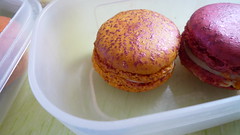
I'm not sure what we ever did to deserve her, but C., god bless her soul, came back from Paris and within 24 hours she was sitting at our breakfast table sharing some of Pierre Hermé's summer line* of macarons with us. We could hardly believe it. She even brought them in these cute little specially designed macaron travel-packs.

hermé macarons fig. b: l-r: Céleste and Ispahan. Beautiful, non?

I don't know how many people eat Pierre Hermé macarons for brunch with a cup of coffee, but I highly recommend it.

I should clarify, though. We had them as an après-brunch dessert.

And, no, we're not in the habit of having dessert with breakfast or brunch, but we know when to make exceptions. I mean, just look at them.

And then there's the way they taste... What's the word? Well...

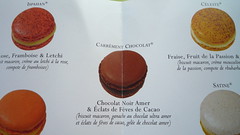
Ispahan: rose-infused crème au letchi (a.k.a. lychee cream) and raspberry gelée de fruits--Hermé's signature creation gone miniature--no rose petal on top, but...

Macaron Mandarine & Baies Roses (a.k.a. Nameless Mandarin Wonder): this poor thing doesn't have one of those fancy trademarked names for some bizarre reason, but its combination of mandarin orange and pink peppercorn was nearly as exotic as the Ispahan

Céleste: passionfruit crème de mousseline, rhubarb and strawberry gelée de fruits--relatively straightforward but perfectly balanced

Satine: cream cheese crème de mousseline, orange and passionfruit gelée de fruits--that cream cheese crème de mousseline made this one the most surprenant of the lot--beautiful white satin finish

Carrément Chocolat: as the name suggests: chocolate to the max--ultra-dark chocolate ganache, candied cocoa nibs, and ultra-dark chocolate gelée--it's become known around here as Plus-que-parfait Chocolat


And then, in the blink of an eye, they were gone.

afterwards fig. c: après the après-brunch dessert

Makes me want to go to Paris and hang out in Place St-Sulpice. Or better yet: the Jardin du Luxembourg. Hmm...

aj

ps--TY, C.!

* That's right. In Paris pâtisseries apparently have spring, summer, fall, and winter lines. I guess there's some degree of seasonality to the baked goods at our local pâtisseries (pumpkin pie around Canadian Thanksgiving, et al.), but seasonal lines?

Sunday, June 15, 2008

keep it simple

'Cause I'm easy, yeah, I'm easy...--Keith Carradine, "I'm Easy"

I guess if you always have access to the best quality meat, well, then you can be as adventurous as you want with it. Kind of like cooking with wine--I'm sure everything tastes even better if you happen to be in a position to cook with high-quality wines, but most of us have had limited experience (if any) with doing so. As a result, when we, here at "...an endless banquet," get our hands on really good meat, our tendency is to, yes, keep it simple (just as when we get our hands on a really good bottle of wine our tendency is to, well, drink it--we're kind of old-fashioned like that). The point is, in both cases, we want to really taste the difference.

So when we were lucky enough to get a gorgeous pork rib roast that had been sourced, slaughtered, and dressed by a friend of ours (!),* we turned to our friends from London's River Café to give us a little guidance on pork and minimalism.

ca cook boo fig. a: Ca Cook Boo!

If you're not familiar with Rose Gray and Ruth Rogers' River Cafe Cook Book Easy and Italian Two Easy: Simple Recipes from the London River Cafe, you love Italian and Italian-inspired cuisine, and you're a believer in keeping it simple, well, you really ought to be. As the titles suggest, most of their recipes require a minimum of ingredients, a minimum of time, or a minimum of effort, and some fall under all three categories. Some of our favorites contain literally three ingredients and take just minutes to prepare. Seriously. And don't let the vaguely glam cover of River Cafe Cook Book Easy throw you: the minimalism of the content is mirrored by the minimalism of the books' design. Virtually every photograph is taken from directly overhead, and many feature a stark white background. Seriously perfect.

lemons fig. b: lemons on their way to the grill

The one we chose on this particular occasion requires two ingredients, just a few more if you make a salsa verde to go along with it (and we highly recommend that you do).

Pork chops with lemon

4 pork chops
1 lemon

Preheat a large cast-iron pan over medium-high heat. Preheat the oven to 400º F (200º C/Gas 6).

Season each chop generously with salt and pepper (okay, you need two more ingredients), put the chops in the pan and sear them on each side quickly, no more than 30 seconds per side. Take the pan off the heat.

Cut the lemon in half. Squeeze the lemon juice over the chops, and place the squeezed lemon halves in the pan along with chops. Roast in the oven for 10 minutes. Press the lemon halves on to the chops and baste with the juice. Roast for another 10 minutes or until firm to the touch.

note: if you don't have a cast-iron pan that's large enough to fit four chops, sear them in batches in a cast-iron pan, and then transfer them to a preheated oven tray and continue with the recipe above.

[recipe from River Cafe Cook Book Easy]


Now, the oven recipe works like a charm, but it being BBQ season, a few weeks ago we decided to adapt the above recipe for the grill.

We rubbed a little bit of olive oil into the chops before generously seasoning them. We took a small cast-iron pan, added a tablespoon of olive oil to it, and brought it out to the barbecue with us, and we cooked the lemon halves in the pan on the grill while we grilled the meat over a hot flame. Before flipping the chops we used tongs to pick up a lemon half and rub it all over the chops. Total cooking time was almost the same as above and we tried to flip the chops as little as possible. The lemons got nice and caramelized and we served them alongside the chops and drizzled a little of the delicious sauce they'd created overtop.

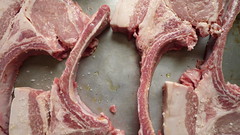
When we started our chops looked like this:

raw fig. c: raw

When we finished cooking them they looked like this:

cooked fig. d: cooked

And minutes later they'd been picked clean.

This recipe really doesn't need anything additional--the flavors are honest and clean and pretty much perfect as is. All you really need to finish the ensemble is a vegetable side, a salad, and a glass of wine. But, if you wanted to dress them up just a little, you can't go wrong with this salsa verde:

Salsa Verde

2 tbsp parsley leaves
1 tbsp mint leaves
1 tbsp basil leaves
extra-virgin olive oil
1 garlic clove
1 tbsp capers
3 anchovy filets (1 or 2 will do, if you're using salt-packed)
1 tsp Dijon mustard
1 tbsp red wine vinegar
black pepper to taste

Finely chop the herbs, put into a bowl and cover with olive oil. Chop the garlic with the capers and the anchovies. Add to the herbs and mix together. Stir in the mustard and vinegar, season with black pepper and add more olive oil to loosen the sauce.

Serve a spoonful over your chops. Also excellent with steaks--grilled or roasted.

[recipe from River Cafe Cook Book Easy]


aj

* TY, S.!

Saturday, June 07, 2008

The Face of Gen F

fruit hunters launch fig. a: Adam & the Miracle of Fruit

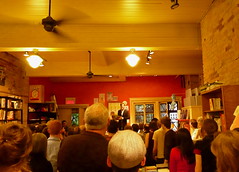
As you can see, Adam & the Miracle of Fruit played to a full house the other night at Librairie Drawn & Quarterly.

It's kind of hard to tell from the snapshot above, but at the time Adam was well into the second half of his show, the half dealing with the mystery of "the lady fruit," a fruit whose appearance is just as suggestive as its name,* a puzzle that took him from Thailand to Montreal, Montreal to the Seychelles, and back again. Hence, the rapt audience.

coco-de-mer fig. b: the mysterious "lady fruit"

"The lady fruit" has a number of lurid nicknames (even more lurid than "the lady fruit," that is), but its official name is the coco-de-mer, its native habit consists of two remote islands in the Seychelles, and if you want to know what it looks like up-close, you can see a kid-friendly, G-rated photograph of it directly above (complete with official coco-de-mer permit).

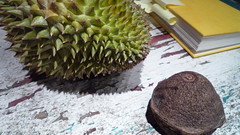
The long and short of it is, throw together apricot beer by McAuslan, cupcakes by Reema, cocktails by Michelle, ribald tales by Adam, some Paradise Nut husks, a hollowed-out Coco-de-Mer, and a ripe--and I do mean ripe--durian fruit and what you get is a good time--an ultra-exotic good time.

durian, paradise nut husk, book fig. c: still life with durian

Seriously, when was the last time you attended a book event and the crowd bounced a fresh durian up to the front of the stage like a beachball?

I thought so.

One more thing: for a sneak peek into the magical mystery tour that resulted in The Fruit Hunters (or if reading your copy of the book has left you starved for visual accompaniment) check out Adam's website/photo-journal.

Actually, I changed my mind: one more thing: more photos of the launch (including a couple provocative ones) can be found here.

aj

* Describing the plant's whole bewildering apparatus, Adam writes, "It's almost pornographic, yet so natural."

Tuesday, June 03, 2008

Generation F

fruit hunters fig. a: The Fruit Hunters

Only one week in print and already Adam Leith Gollner's The Fruit Hunters: A Story of Nature, Obsession, Commerce, and Adventure (Doubleday Canada, Scribner) has gotten itself embroiled in a full-blown tale of, well, nature, obsession, commerce, and adventure. Yes, The Fruit Hunters has been receiving all kinds of accolades from the likes of The Montreal Gazette, The Toronto Star, The National Post, and The New York Times since its release, but over the weekend Mr. Gollner and his book helped generate a craze the likes of which the fruit world has not seen since Kiwimania. Within hours, not only had a New York Times story on miracle fruit (one of The Fruit Hunters' featured fruits) shot to the top of their "most emailed" list, but the Miracle Fruit Man, North America's best (only?) source of miracle fruit, was totally sold out of these little red taste-enhancers.

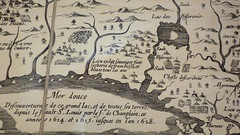
new france fig. b: From New France (a.k.a. "[le] lieu ou les sauvages font secherie de framboise, et blues tous les ans"*)...

brazil fruit store by Adam Leith Gollner fig. c: ...to Brazil

But there's more to The Fruit Hunters than mere hype. Much more. Mr. Gollner's book is encyclopedic in its scope (Borneo to Budapest, coco-de-mer to Calville Blanc d'Hiver, fruitarians to fruit detectives, Ah Bing to St. Hildegard von Bingen), and utterly devoted to giving the wide world of fruit--and the bizarre characters who populate it--its due. It also happens to be a rollicking ride that's nearly impossible to put down.

Regular readers of "...an endless banquet" might recognize Mr. Gollner as a long-time associate and recurring character in our own ongoing tales of adventure, where he's carried the monikers "A.," "Adam," and "the Fruit Guru." We thought it might be nice to do an interview with him in anticipation of the official Montreal launch of The Fruit Hunters (details below), and he was kind enough to take the time from his whirlwind book tour to answer some of our questions.

AEB: A noted gourmand** once wrote an essay entitled simply “Food.” The first section bore the heading “Fresh Figs” and it began like this: “No one who has never eaten a food to excess has ever really experienced it, or fully exposed himself to it. Unless you do this, you at best enjoy it, but never come to lust after it, or make the acquaintance of that diversion from the straight and narrow road of the appetite which leads to the primeval forest of greed. For in gluttony two things coincide: the boundlessness of desire and the uniformity of the food that sates it. Gourmandizing means above all else to devour one thing to the last crumb. There is no doubt that it enters more deeply into what you eat than mere enjoyment.”

Reading The Fruit Hunters, it seems pretty clear that the pursuit of fruit eventually led you to that primeval forest. If so, when did you get there, and what was the fruit involved?

AG: That quote has an almost alchemical quality. It transmutes the base sinfulness of gluttony into a golden promise of hope, the hope that your greed is somehow aligned with God’s inner wishes for humankind’s happiness. It almost absolves the gluttons amongst us of our boundless desires. Nature is infinite in its diversity, it seems to suggest; shouldn’t all our banquets therefore be endless?

The forest – from the latin foris, meaning outside – has always been a place for outsiders. I have long been fascinated with all things sylvan (not entirely excluding Sylvain Sylvain LPs, although as I type this I grow momentarily wistful; it is as though I can just make out the soft contours of a grove near my childhood home, its swamps rippling with reeds and tadpoles, its trees teeming, I was convinced, with gorillas).

But let’s stick to the figs. This “noted gourmand,” with her (his?) essay on fresh figs, reminds me of the self-professed “fignatics” in The Fruit Hunters. Perhaps it’s true: if you’ve never eaten a food to excess maybe you’ve never really experienced it, never attained that transcendental merging of hunter and hunted. This argument helps dissipate the guilt swirling around some of my own more indulgent fruit experiences. The author might argue that I wouldn’t have been able to understand the lure of fruits without overdosing on them. A seductive notion. Nevertheless, I still recall the moment of moments where I hit my nadir – or was it my zenith? It matters not; that moonlit revel in the treetops of my own primeval greed forest took place on a trip to Borneo.

I was staying in the hotel Telang Usan, which is run by members of the Orang Ulu tribes. I’d been gifted a chempedak, an army-green, rugby-ball-sized fruit filled with honey-sweet orange chunklets of syrupy deliciousness [to even begin to understand the alien splendour of the chempedak you have to see it to believe it--ed.]. Chempedaks, I wasn’t yet aware, also happen to give off a putrid stench that befouls any enclosed space. It does this as a way of luring apes and jungle cats in the hopes of being eaten and thereby having its seeds dispersed.

That afternoon, I’d taken a couple of tentative bites. Unimpressed, I left the fruit on the nightstand of my third story hotel room, alongside a bunch of other weird fruits I had no idea how to eat. Some of them resembled pink cupcakes covered in op-art swirls; one other unwieldy aberration looked just like a punching bag when I discovered it hanging off a tree.

I’d been spending my days going to all sorts of obscure fruit markets in pursuit of a pitabu that I’d heard tastes like orange sherbet and raspberries. Unfortunately, it wasn’t in season. As a result, I was making feverish plans to come back to Borneo. Poring over guides to the fruits of Sarawak, I was making lists of all these obscure fruits I just NEEDED to experience. I distinctly recall photographs of tampois with pearly, transluscent interiors that made me almost tremble with desire. My guides from the Malaysian department of agriculture insisted that I’d need to come back at least three or four more times in order to taste them. Even then, there’d still be some fruits I wouldn’t be able to get to. The world’s greatest authority on the region’s fruits, Voon Boon Hoe, hadn’t even tasted them all, and he’d lived in Borneo all his life.

After dinner at the hawker stand nearby, I came back into my hotel in an obsessed stupor, dizzy from the tentative scheduling and list-making. As soon as I walked into the lobby, my nostrils were smacked with a penetrating funk of sulfurous decay. My chempedak! Its gaseous third-floor emanations had overrun the Telang Usan. The gentle tribespeople on night-duty at the reception area didn’t seem to mind (in fact, one of the hotel employees – a descendent of the Iban, also known as the Sea Dyaks, a once-ferocious tribe that practiced head-hunting – ended up taking me to eat langsats near her grandma’s longhouse, which had the motto “We believe in infinity.”)

I was mortified about my fruit-bomb, and quickly smuggled it out of the room. Escaping through a rear entrance, I sat down in a vacant lot covered in stray greenery and started pulling the fruit’s sections apart. The smell was actually quite pleasant here in the open air. I will now enter the present tense and quote from The Fruit Hunters:

“Crouching under a streetlight as the moon wavers in the thick haze, I dig in. Its flavor has improved since the afternoon – it seems to be at its apex of ripeness. The taste is somehow familiar, yet elusive. With every bite I try to place the flavor. Then it hits me: Froot Loops! Tasting it triggers a recollection of how, as a child, I’d use my allowance to buy boxes of Froot Loops. I’d sneak away and covertly eat bowlfuls in bed under the covers while reading Archie by flashlight. Soon all that remains is the skeleton of a chempedak at my feet. I’ve eaten it all, my hands tearing it apart, the fleshy globules offering themselves to me. I can still feel fructose crystals coating my teeth like icing.”

I had entered the temple. Luckily, within a few days, I snapped out of my temporary fruit insanity. Realizing that I too believed in infinity, I came to accept the impossibility of experiencing every fruit out there. The recognition that fruits are never-ending was a sweet release from the need to find them all. From then on I could focus on what I needed to do: tell the story of fruits and humans.


AEB: The impression one gets from The Fruit Hunters is that the world of the fruit-obsessed is a world of raw fruitists. Is the world of ultraexotics necessarily edenic? Is there another fruit underground, one obsessed not only with exotica but with cooking, preparing, or otherwise transforming their finds?

AG: Yes, and her name is Michelle Marek, bless her soul. [Aw, shucks!--ed.]


AEB: In the book’s discussion of the modern marketing of fruit, you point out that analysts create pie charts to detail the percentages of consumers who like their fruit “firm, soft, juicy, tangy, sweet, dry or moist.” Conspicuously, “ripe” is missing from this list. Is this because “ripe” would place control back in the
hands of farmers and put fruit marketers out of a job? Pardon the Sex and the City-like phrasing, but is “ripe” the new ultraexotic?

AG: Yes! Although fruit marketers do come up with interesting fruit slogans like “delicious handful of goodness” or “the snack that quenches,” so they aren’t all bad.


AEB: On a related note: The percentage of the general populace who have tasted a ripe fruit off the tree is abysmally low. Is there any hope of de-exoticizing ripeness? Is there any hope of there being a future demographic known as Generation Fruit, one that places a high priority on ripeness and seasonality? What would it take to get there? An apple tree in every yard?

AG: You are speaking of nothing less than a fruit revolution. Could it happen? I hope so! Generation Fruit sounds like a sweet, strange generation. Whether or not we can reclaim seasonality remains to be seen. It’s imperative that we continue supporting local farming communities, but what about bananas, mangos, pineapples, citrus fruits, etc? Buying them in coming years will offer crucial support to developing nations, with their economies dependent on agricultural exports. But what about all the oil needed to transport and grow them? As Generation Fruit knows, solving the food crisis entails solving the fuel crisis. Are Montrealers prepared to give up fruits for eight months of the year? Fruits don’t grow here between November and June. How will members of the progressive community get their five-a-day fix of different colored fruits? It’ll be interesting to see what posterity has up its sleeve. Fruit trees instead of manicured lawns would be an excellent start. To eat the best fruit you need to grow your own. Kids: plant the seeds now! Join Generation Fruit! Who knows how things will change? Nobody could have predicted five years ago that miracle fruits would become a flavor-tripping trend sweeping the nation. The point is, things are always changing. Despite the doomers prognostications, maybe we’ll find viable alternatives to fossil fuels. I hope that Generation Fruit will find a way.


AEB: In the book, you mention returning underwhelming fruit to supermarkets for a refund. Do you think this practice might encourage the large supermarket chains to source better fruit? Is that possible on such a large scale? Do people even want good fruit? (I’m thinking of the “peach breeder for the Ontario Ministry of Agriculture” who likes his peaches crispy.) Is it possible to get beyond convenience?

AG: Some people like their peaches crunchy. I don’t think they’ve ever tasted a proper peach; certainly not anything like those Baby Crawfords the three of us sampled in Morgan Hill a few years ago. There are some innovative breeders, like the Zaiger family, who are working on improving the fruits we eat in our supermarket chains. Floyd Zaiger is convinced that good fruits can be mass-produced. As he told me, “If we look hard enough, we will find them.” He creates hybrid fruits in an all-natural way, without any genetic modification, simply by mixing flowers together, birds-and-bees style. I don’t write off all commercial fruits. Honeycrisp apples and Tulameen raspberries are pretty good, aren’t they? I think things have improved in many ways over the past century. Ask your grandparents what fruits they ate in their childhood: most of them didn’t have any fresh fruits. An orange was an inconceivable luxury. Bananas were rarer than blond morels. I do like the idea of returning subpar fruits and getting a refund, although I don’t ever do this at Jean Talon. Big stores, however, always comply. It sends a message. Plus it’s kind of like the fruit-world equivalent of “culture jamming.” Perhaps soon we’ll see Generation Fruit flash mobs.


AEB: What’s your own personal fruit holy grail, the one that got away, the one that’s still out there?

AG: For me, it’s the paradise nut. It’s a fruit container that looks like a bran muffin. It contains seeds that apparently taste like Brazil nuts, only far superior. They’re called sapucaias in Portuguese. They were proof, to early European missionaries, that Brazil was literally paradise on Earth. Even though these paradise nuts captivated me from the start of this fruit adventure, I never did end up tasting one. I’m ok with it, though. As Emily Dickinson once wrote, sagely: “Heaven is what I cannot reach! The Apple on the Tree.”


Adam Gollner brings the miracle of fruit, if not the miracle fruit, to the Montreal launch of The Fruit Hunters, Thursday, June 5, 2008, 7:00-9:00 PM, at the Librairie Drawn & Quarterly (211 Bernard West, Montreal).

For more information: (514) 279-0691.


aj

* Rough translation: "The site where the savages make dried raspberries and blueberries annually."

** The "noted gourmand" was Walter Benjamin. His essay "Food" was originally published in 1930. Occasionally Benjamin liked to quote himself in his essays, attributing these citations to "a perceptive critic," or something to that effect.