Sunday, November 29, 2009

The Red and the White

the red & the white fig. a: the red & the white

There’s no way I can pin this date down exactly, but I’d venture a guess that this is the 20th anniversary of my relationship with red beans & rice. Love affair, actually. Passionate, even. This is going to make me sound like some kind of Legume Lothario, but I’m kind of crazy about the beans. Black, brown, white, speckled, black-eyed, green. You name ‘em. But I’ve got a special place in my heart for red beans. A staple of enormous cultural significance all across the Southern United States and a good portion of the Caribbean, red beans & rice have never really caught on and been commodified in the same way that black beans and pinto beans have. (Apparently some things are sacred. Praise the Lord!) Our relationship has never grown stale, it’s never become banal. Somehow they still taste special.

And they’ve been tasting especially special recently, because after years of my home recipe being a perfectly respectable vegetarian version, this year (to mark our 20th anniversary?) I finally started experimenting with that combination of herbs, spices, and pork (!) that is so central to the Southern tradition of red beans & rice. And the version that’s been blowing my mind recently is a version that includes the spicy tang of homemade pickled pork (!!).

All great dishes have their schools. Old and new. Public and private. Conventional and experimental. Red beans & rice is no exception, and (in the South, at least) one of these schools is the Pickled Pork School.

The bottom line is that if you want to make a true Southern version, it’s gotta have that herbal quality, it's gotta have some heat, and it's gotta involve some pork--nothing fancy, just a ham bone, or some ribs, or some sausage (and maybe all three). In other words, the kind of "scrap" cuts that were essential to African diasporic cuisine in the antebellum South (read: the remarkable, against-all-odds cuisine of the slavery era). The resultant dish is one that’s rich in protein and vitamins. Make a true Southern version and it’ll also have that luscious quality that has made the dish one of the most soulful of Soul Food dishes for a good 200-300 years.

The following red beans & rice recipe makes great use of your very own homemade pickled pork (spare ribs, specifically). Feel free to add a ham bone and/or some smoked sausages (Cajun, kielbasa) to the mix. Also, feel free to use this red beans recipe as the basis for your very own vegetarian version. It's a lot more fully rounded that your standard issue red beans & rice recipe (it's definitely more herbal than the version I'd been making), and you won't be disappointed.

Pickled Pork

1/2 cup mustard seed
1 tbsp celery seed
1 dried hot pepper
1 quart distilled white vinegar
1 bay leaf
1 tbsp kosher salt
12 whole peppercorns
6 cloves of garlic, peeled and crushed
2 1/2 pounds spare ribs, cut into individual ribs (you can also use boneless pork butt, if you prefer)

Combine all the ingredients, with the exception of the spare ribs, in a non-reactive pot and bring to a boil. Simmer for 3 minutes and let cool. When the pickling liquid has reached room temperature, place the pork in a deep crock or bowl and cover it with the liquid. Stir with a spoon to make sure that all the air bubbles have been released. Place a small plate inside the crock or bowl to keep the meat below the surface of the liquid. Cover with plastic wrap and place it in the refrigerator to cure for at least 3 days, stirring occasionally. A longer cure will result in a tangier pickled pork. Three to four days is about perfect for me. Use within two weeks.

[note: you only need half this recipe for the red beans & rice recipe below, so you may want to cut the recipe in half if you're not sure what you might do with the remaining pickled pork. I've found mine to be versatile--think Southern-style greens, Southern-style stews, etc.]

peppers thyme fig. b: the red & the green

Red Beans & Rice

1 pound of red kidney beans (preferably the smaller variety), soaked overnight and cooked until just tender (this will depend on the beans; recently the beans I've been using having been cooking in under 2 hours; for further instructions look here)
1 tbsp bacon fat or vegetable oil or olive oil
2 medium onions
2 large bell pepper, one red and one green, chopped
2 medium carrots, peeled and diced
2 celery stalks, diced
1 bunch flat-leaf parsley, finely chopped
1 bunch green onions, finely chopped, including the green tops
4 cloves of garlic, minced
1 sprig fresh thyme
1 or 2 bay leaves
at least 1 small hot red pepper, finely chopped
1 - 1 1/2 lbs pickled pork
salt and freshly ground pepper to taste
enough cooked rice to feed all comers

Heat the fat or oil in a large pot over medium heat. Sauté the onions for 3-5 minutes, then add the bell pepper, the carrots, and the celery and cook for another 5 minutes, until the onion has begun to turn translucent, the other vegetables have softened slightly, and the flavors have begun to meld. Add the parsley, half the green onions (reserve the rest for serving time), the garlic, the thyme, the bay leaves and the hot red pepper, stir and sauté for another minute. Add the prepared beans, the cooking liquid, and the pickled pork. Bring the cooking liquid to a simmer and taste for seasoning. Add salt and pepper to taste. Simmer the beans for another 1 1/2- 2 hours, checking the liquid occasionally and adding more water if necessary. When you check the beans from time to time, use a wooden spoon to smash some of the beans against the side of the pot, then stir them back into the mixture, creating a thicker, richer broth.

When your beans are just about ready--the legumes ultra-tender, the broth thick and luscious--remove the thyme spring and the bay leaves and cook your rice. Let the rice sit on the stove for an additional 5 minutes after it’s finished cooking to let the rice dry out a little, and to drive yourself even more insane with anticipation. Serve mounds of rice in bowls, covering the rice with generous ladlefuls of the red beans and their broth, and sprinkling some of the reserved green onions (remember them?) on top. Serve with a salad, a crusty loaf of bread or, better yet, some piping-hot cornbread, and a bottle or two of your favorite hot sauce to spice things up even further.

[thanks to John Thorne’s Serious Pig for the serious pickled pork recipe and for some serious inspiration (yet again)]


aj

Friday, November 27, 2009

lo-tech > hi-tech

AEB map cover

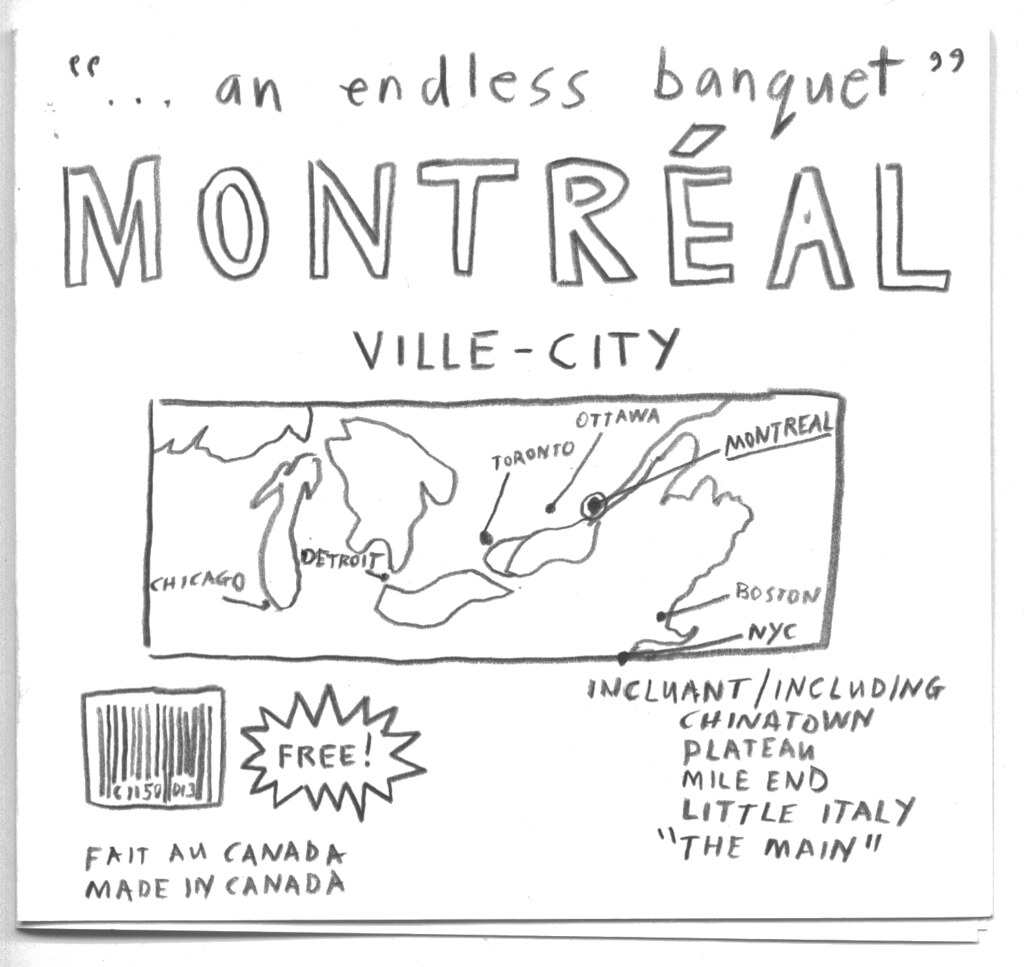
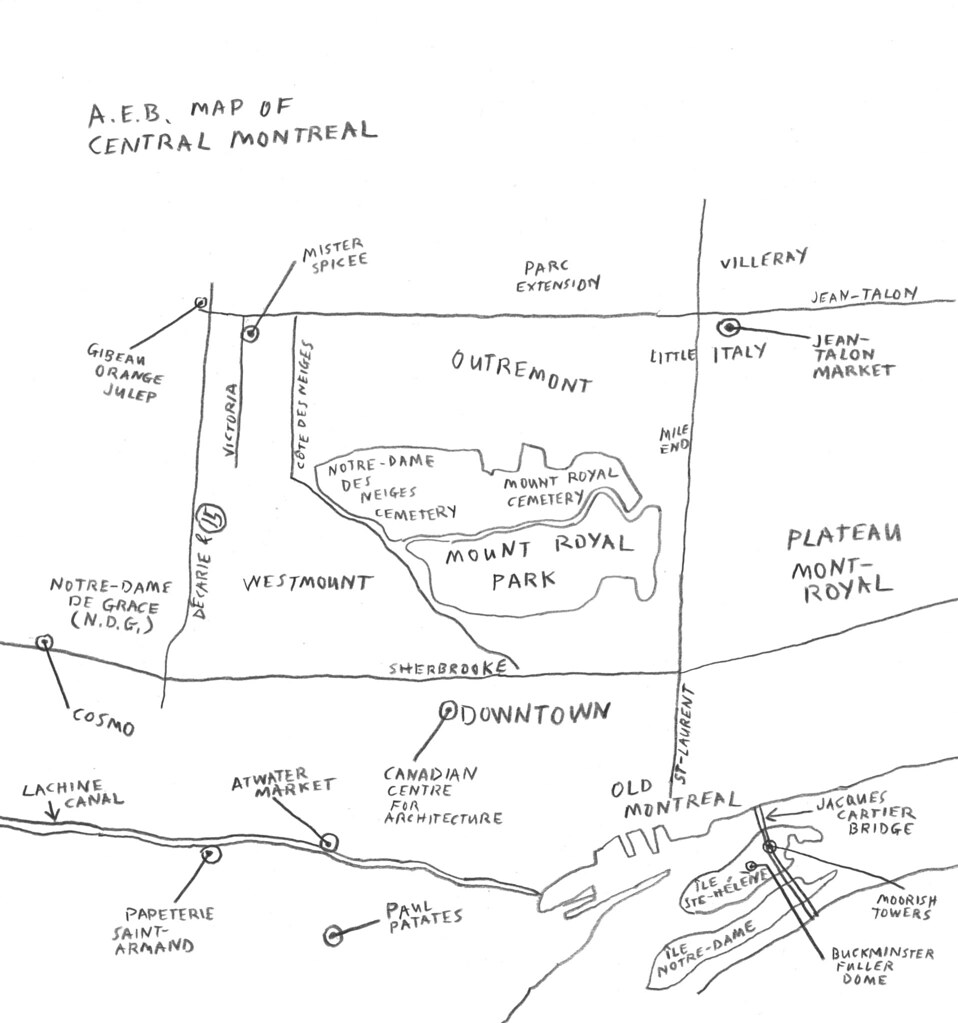
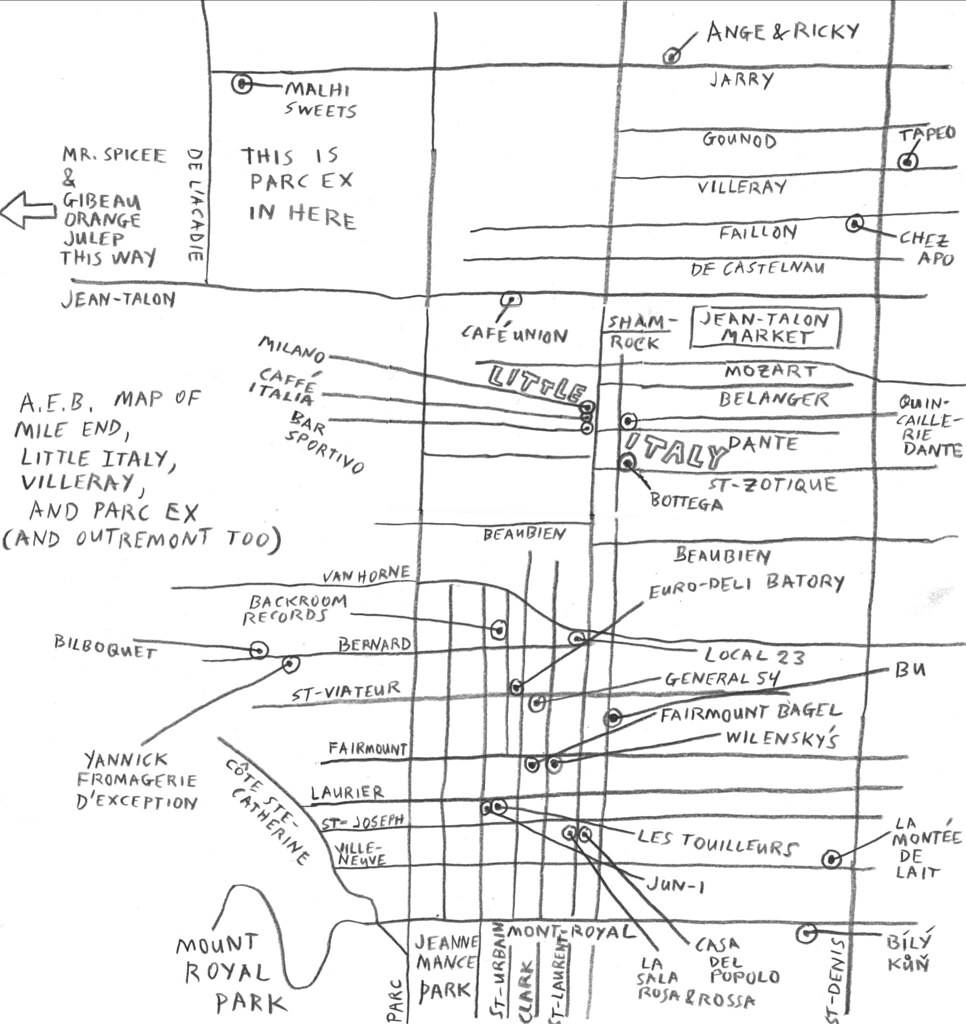
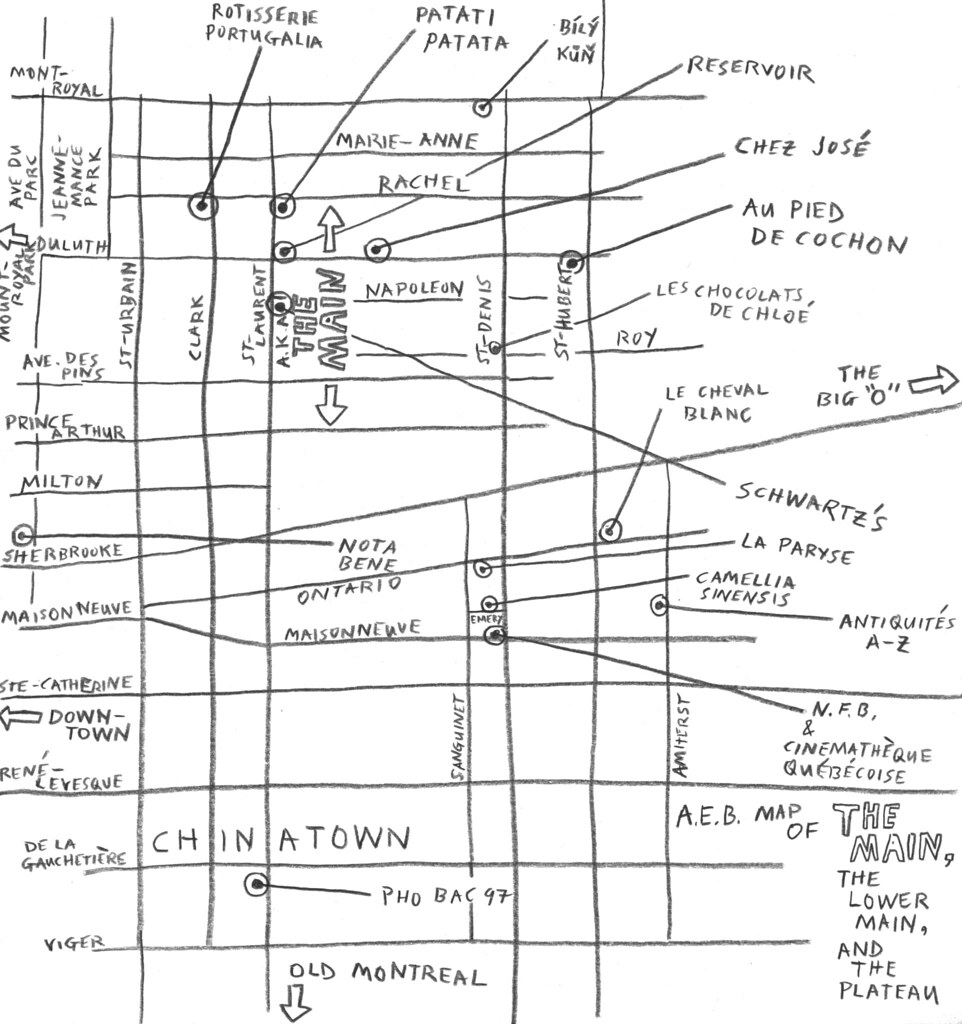
Remember our notorious AEB maps that we produced back in 2007 in conjunction with our "My Montreal is Better Than Yours" spread in Budget Travel?

Well, one of our readers was clever enough to take our precious, "handcrafted" maps and transform them into a high-tech, interactive map of Montreal. We didn't even have to ask him. In fact, we've never actually met him. He just went ahead and did it on his own. Seriously. Check it out!

TY, MM!

ak

Saturday, November 21, 2009

Top Ten #32

1. Bright Star, dir. Jane Campion

2. Hans Fallada, Every Man Dies Alone

3. red beans + rice

4. red flannel hash

fig. a: On Dangerous Ground

5. On Dangerous Ground, dir. Nicholas Ray

fig. b: Border Incident

6. Border Incident, dir. Anthony Mann

7. Dirk Bogarde, A Particular Friendship

8. King of Hearts Drink Book (1955) + Esquire Party Book (1965)

9. The Best of Everything, dir. Jean Negulesco

fig. c: Thanksgiving by Gourmet

10. Gourmet's final issue, November 2009

aj

Friday, November 06, 2009

Christmas in September

fig. a: the set-up (detail)

What can I say? The girl's on a tear!

First there was her 2-night gig at Les Touilleurs, and now this:

Michelle's in the new issue of Elle Québec, along with six other talented local chefs. The concept goes like: 1) you bring together a group of chefs in a top Montreal restaurant (say, La salle à manger), 2) you tell them to come prepared to make a special Christmas dish, preferably one that's dear to them, 3) you get them to cook their respective dishes, 4) and you finish off the occasion by having a spectacular Christmas meal with plenty of vino and other assorted spirits.

Sounds great, right?

Well, in September, when the shoot actually took place, it sounded kind of crazy. For one thing, it was hot. For another, Christmas seemed a long ways away. But everyone showed up, they came armed with recipes and mad skills, they made some pretty stellar dishes, the wine started to flow, and the event turned into quite the party. Michelle even got dressed up old-school Czech-style ("«la reine de Noël»!") to go along with her traditional Czech dessert.

fig. b: if you're going to Christmas in September...*

If you want to read the entire article, you'll have to go to your local newsstand. The issue is out now.

If you want to check out Michelle's recipe for "Les biscuits au chocolat, aux noix et au rhum" (Czech rum, walnut, and chocolate cookies), you can find it here on ellequebec.com. You can also find the highly international, highly tantalizing menu and all six of the other recipes there, including:

Les pastelles au merlan (Guinea-Bissau) de Julio Mendy, chef du Résident

La morue à la vizcaina (Mexico) d’Alonso Ortiz, chef du Pintxo

Les cigares au chou (Romania) d’Emilian Manole, chef du Picapica

La longe d’agneau (France) de Stéphane Modat,chef de l'Utopie

Le jeune canard sur os et les jambonneaux à l'érable (Quebec) de Samuel Pinard, chef de La salle à manger

and, Michelle's pick of the night,

Le salmis de pieuvre au girofle (Mauritius) de Stelio Perombelon, chef des Cons servent et du Pullman

ak

* ...be sure to wear flowers in your hair.

Wednesday, November 04, 2009

Hash Fiend 1, or Frying the Flannel

red flannel fig. a: red flannel

Lately, I’ve been cooking up a fair bit of hash. No need to worry, though. This hasn’t led to me rereading Steppenwolf, or resurrecting my old Jim “An American Poet” Morrison poster, or illuminating my room with black lights and lava lamps, and it’s not part of some kind of mid-life crisis. At least, I don’t think it is.

The hash I’m talking about is good old-fashioned hash-house hash, the kind of hash that consists of the combination of diced meat or fish, onion, and some root vegetables--usually potatoes, plus carrots, beets, or turnips. The kind of hash that was a North American staple for generations. The kind of hash that was much more than just a breakfast dish and that was largely displaced by fast food (especially the hamburger) and changing tastes in the early- to mid-twentieth century.

Now, as you'll see in subsequent posts, I've been making a whole host of hashes over the last couple months, but today I want to begin this discussion by looking at a colorful little gem called Red Flannel Hash.

I know, I know: sounds like the name of a grunge band circa 1992. Can't you just picture the poster?

rfh poster fig. b: Live! At the Hi-Hat!

rfh poster detail fig. c: Live! At the Hi-Hat! (detail)

[As it turns out, there is a band that goes by the name of Red Flannel Hash, but my gut feeling tells me they've never shared a bill with either Mudhoney or Tad, let alone fIREHOSE. Check 'em out.]

Anyway, as I was saying, this concoction has more to do with the Northeast than with the Northwest. All indications point to the fact that the dish originated in New England--"authentic" versions of the dish are often described as Yankee Red Flannel Hash, and most of the tall tales that surround the dish's origins are set in lumber camps in Maine, or New Hampshire, or Vermont.

Look Red Flannel Hash up and you'll also find that it's one of those dishes that provokes controversy. We're not talking barbecue-size controversy, or pizza-size controversy, but controversy nonetheless. Everyone agrees that beets should be front and center, the main question is whether or not corned beef should also be a part of the ensemble. And what you find is that some of the most vocal experts on the matter, people who take the culinary foodways of the Northeast very seriously indeed, insist that red flannel should be corned beef-free. Not meat-free, mind you, but corned beef-free. According to this school, the combination of beets, potatoes, onions, and corned beef adds up to something altogether different: a Calico Hash. In a true Red Flannel Hash, the beets are the stars, and they have no fear of being upstaged. This doesn't mean that Red Flannel Hash is meatless. As with most other hashes, tradition says that bacon fat plays an important supporting role, and it's not uncommon to find some actual bacon in the cast, as well.* [Have an opinion on these matters? By all means, chime in.]

Our own version is one we’ve extrapolated from a few different sources. If you’re already a Red Flannel Hash fiend, you might take exception to this or that element, but this AEB version has all the essential elements--the onions, the beets, and the potatoes--and it makes for one fine hash. It's become one of our very favorite breakfasts here at AEB HQ, especially at this time of year, when beets of all types (red, golden, chioggia) are plentiful.

beets, candy-striped and otherwise fig. c: beets, candy-striped and otherwise

I’ve read recipes for Red Flannel Hash that don’t involve boiling your vegetables--some insist on steaming the vegetables instead--but boiled vegetables are an important part of most true hashes, and we’ve been pretty happy (ecstatic, actually) with the results here.

If you’re a vegetarian, you could easily omit the bacon and replace the bacon fat with a tablespoon of oil, and you’d wind up with a perfectly satisfying Red Flannel Hash, but there is something to be said about the marriage of those beets and that smoky bacon flavor, and it pays to hunt down top quality beets and bacon to match. If you’re a vegan, you could omit both the bacon and the whipping cream, and you’d still be left with a perfectly acceptable (and delicious!) hash--the cream is optional, but (highly) recommended. If you’re a raw foodist, though, I’m sorry, this isn’t the dish for you. It’s just not a Red Flannel Hash if the flannel hasn’t been fried.

AEB Red Flannel Hash

2-3 strips of smoky bacon
5 small beets (mixed varieties, if available), peeled and diced
2 medium potatoes, peeled and diced
1 small carrot, washed and diced
1 small parsnip, washed and diced
salt and black pepper to taste
1 small onion, peeled and diced
1 clove garlic, minced
1-2 tbsp parsley, minced
1/4 cup whipping cream (optional, but recommended)
sour cream (optional)

Add the diced beets, potatoes, carrots, and parsnip to a small pot, and add just enough water to cover the vegetables. Salt the water to taste and bring the water to a boil. Turn down the heat and simmer the vegetables for about 10-12 minutes, or until just tender. Drain the vegetables, making sure to reserve the liquid. [This broth is essentially a clear borscht. Adjust the seasoning, and you have yourself a great light meal.]

Meanwhile, fry the bacon in a frying pan or a cast-iron skillet until crispy. Remove the bacon with a slotted spoon or slotted spatula, reserving the bacon fat. Mince the bacon and set aside.

Fry the onion in the bacon fat over medium heat until the onions have softened and have turned translucent, about 5-10 minutes. Add the vegetables and sauté for a few minutes. Add the garlic, the parsley, and the reserved bacon and sauté for another minute. Add the cream, adjust the seasoning, and turn up the heat. Many hash fiends will tell you that you should turn the heat up to high and fry the hell out of it, so that the hash forms a blackened crust. This hash fiend will tell you that I’ve tried making my hash a number of ways, and that I prefer my Red Flannel Hash with the golden brown crust that one gets when one cooks the hash over medium to medium-high heat for a few minutes per side.

Serve a generous heap of the red flannel hash on each plate, with a poached egg or two perched on top, and maybe even a dollop of real sour cream.

Serves 2-4, depending on appetite/enthusiasm.

[major inspiration provided by John Thorne's Serious Pig]


aj

*Okay, enough with the extended metaphor.

Saturday, October 31, 2009

Another First

fig. a: Michelle's panforte

We've mentioned cooking classes here at "...an endless banquet" before, but who ever thought we'd have the occasion to mention our own?

That's exactly what happened, though: a couple of weeks ago Michelle gave her very first cooking classes. Well, not her absolute very first cooking classes. She's been known to host free "cooking classes" for small groups of our friends on topics like making and canning your very own tomato sauce. But these were her first professional cooking classes, and they took place at a very professional, very chic location: Les Touilleurs.

fig. b: Michelle's candied fruit

The agenda for the evening consisted of three things: 1) candying fruit, including oranges, lemons, and quinces; 2) using the candied fruit to make both a fruitcake and a panforte; and 3) making an autumnal preserve, the infamous l'autrichienne, with apples, raisins, and walnuts.

I know what you're saying: "Great! What's the point of telling us after the classes took place?"

We apologize for having been remiss in advertising these events, but, frankly, the two classes were fully booked months ago, and they got fully booked almost instantly--between the time Michelle made the final arrangements with our friends at Les Touilleurs, and the time she told me later that day (!). Suffice to say, Les Touilleurs' cooking class series is very, very popular.

Anyway, the classes went exceedingly well and Michelle hopes this is just the beginning, so, should there be a "next time," dear readers, we'll do our best to get the word out to you pronto.

For more about Les Touilleurs' cooking classes, give them a call: 278-0008

aj

Saturday, October 24, 2009

On and Off the Road 3, or KFC*

fig. a: Kaaterskill Falls

One of the prime attractions in the Catskills are the legendary Kaaterskill Falls. And when I say "legendary," I mean it. The cult of Kaaterskill Falls dates back to the early 19th century, when casual references to the Falls' breathtaking natural "amphitheater" in Washington Irving's "Rip Van Winkle" and in the work of James Fenimore Cooper turned them into a pilgrimage point for Thomas Cole and the Hudson River School. Cole and the Hudson River School not only devoted themselves to the region, they established the look of the landscape of the Catskills and did much to popularize it. “Irving had dealt with the Catskills in a mood of urbane detachment; Cooper had devoted only a few pages to them. But Cole passionately identified himself with the Catskills.”

By the late 19th century a number of hotels and a railway link had been constructed to handle the tourist traffic to the Catskills, and a great deal of this activity was clustered around the Falls. Not just any old hotels, either. Catskill Mountain House was built in the 1820s and it quickly became one of the most famous hotels of its day, hosting a virtual Who's Who of America's elite over the course of the century.

fig. b: Catskill Mountain House

The Kaaterskill Hotel was built in the early 1880s as the modern (electric light, elevators, etc.) alternative to the Catskill Mountain House, and it eventually expanded into a 1,200-room behemoth.

fig. c: Kaaterskill Hotel

And soon these impressive, ornate hotels were joined by others.

fig. d: Grand Hotel

The hotels are long gone, victims of changing tastes, neglect, and disastrous fires, but at the top of the Falls you can still see evidence of the observation deck that used to provide tourists with a stunning view of the valley,** as well as plenty of graffiti, much of it dating back to the lookout's 19th-century heyday.

geological graffiti fig. e: geological graffiti

And while access to the Falls, the "amphitheater,"

k falls 3 fig. f: the top of the "amphitheater"

k falls 2 fig. g: falls, "amphitheater," swimming hole

and the gorgeous swimming hole that sits within it, is not nearly as safe and established as it once was, it's just as impressive as it ever was.

What does any of this have to do with food? Well, making your way to the "amphitheatre" is hardly a long hike, but it's treacherous*** enough that you can work up a pretty nice appetite going there and back.

We didn't bring much food with us, when we visited back in August, just some cherries for a snack. But by the time we were done, we'd worked up a most unusual appetite for fried chicken. Which is a funny thing... You see, we didn't realize it at the time, but the reason that there were two major hotels in close proximity to Kaaterskill Falls was not only due to the heavy tourist traffic that was attracted to the Catskills during the 19th century, it was also due to the so-called "Fried Chicken War."

The story goes as follows: in the summer of 1880 a famous patents lawyer named George Harding was vacationing at the Catskill Mountain House, accompanied by his wife and his ailing daughter, Emily. Now, Emily was on a strict no-red-meat diet that relied on chicken for protein. One day, early in their visit, the Hardings were informed that the dish of the day was roast beef. Mr. Harding politely demanded that his daughter be brought an order of fried chicken instead, to which the waiter refused. “Other hotels might have their supper rooms and their kitchens staffed to prepare whatever a guest might want whenever he might want it. But not the Catskill Mountain House, where the old-fashioned ordinary reigned in all its anachronistic rigidity” [my emphasis]. Well, tempers flared, and eventually Charles Beach, the owner of the Catskill Mountain House, was brought in to settle the matter. Which he did. Mr. Harding must have been sure that he Beach would decide in his favor. After all, Mr. Harding had been a patron of the Catskill Mountain House since the 1840s, and, by the 1870s he was a veritable fixture at the hotel, a man who was widely regarded as the center of the summer social scene. Instead, Mr. Beach graciously informed Mr. Harding that if it was fried chicken he wanted, he should go ahead and build his own hotel. Which he did. Harding apparently received Beach's sarcastic suggestion in silence, but inside he must have been seething, for he promptly checked his family out of the Catskill Mountain House and decided to construct “a hotel that would dwarf Beach’s Mountain House by its size and eclipse it by its modernity," not to mention a hotel that, in all likelihood, would have the common sense to serve fried chicken. The very next year, Mr. Harding opened his Kaaterskill Hotel to great to-do, and the bitter hospitality battle that ensued became known as the Fried Chicken War.

The thing is, as petty and insignificant as this incident might seem to us today, it soon developed into a small-scale civil war, one which, in some ways, came to define an era:

At once, word of the Beach-Harding struggle traveled from town to town among the Catskills and to every trading center along the Hudson River... Fervent Beachites portrayed Geroge Harding as a malevolent associate of “Grab-all Cornell”**** motivated by nothing at all but a passion for crushing Beach and destroying the prosperity of Catskill. Hardingites saw Beach as a greedy and arrogant reincarnation of Rip Van Winkle who was determined to keep the modern world from penetrating the Catskills... The rivalry between Harding and Beach came to symbolize the changes taking place. The expansion of railroads, the multiplication of hotels, the change from the old simplicities to the comforts and sophistication of the final two decades of the nineteenth century--all became reduced to two men squabbling over a fried chicken.


No joke.

Our fried chicken feast was no joke either. We made plenty of good, old-fashioned Southern-style fried chicken, with cream gravy and all the trimmings, and then we took our positions and went to battle.

aj

Source: Alf Evers’ The Catskills: From Wilderness to Woodstock (1972) is both endlessly entertaining and authoritative. All quotes in the post above are attributable to Evers.

*Take your pick: Kaaterskill Falls Chicken or Kaaterskill Fried Chicken.

**If you look closely at fig. a, you can see the structure I'm talking about.

***As Paul Grondahl of the Times-Union put it, "[Kaaterskill Falls'] beauty is matched by its treachery." Earlier this year, the Falls claimed another victim. Making your way to the swimming hole is no high-wire act, but it's no cake walk either. If you're going to attempt the climb, you should be a seasoned hiker/climber, and you should definitely be wearing proper footwear.

****Famously, Harding had been the patents lawyer to Samuel Morse. Ezra Cornell, the founder of Cornell University, made his fortune in the telegraph business as an associate of Morse's (and, presumably, of Harding's).

p.s. Among the many good reasons to visit the Bronck Museum in Coxsackie, NY, is its Victorian Horse Barn, which houses impressive scale models of both the Catskill Mountain House and the Kaaterskill Hotel.

Wednesday, October 21, 2009

Mmmmyriade

myriade fig. a: cappuccino @ myriade

Lest one get the impression that Montreal is some kind of coffee world also-ran... Exhibit A: Café Myriade.

Without question, Myriade has been our café of the year--here, there, or anywhere. Montreal may not have its very own world-class coffee roasting operation, but at least we have people who know what to do with world-class beans when they see them.

Their formula? Top-notch beans, most of which come from Vancouver/Burnaby's ambitious and gifted 49th Parallel. Precision equipment, including a veritable arsenal of French presses, Nordic flasks, and super-high-tech Japanese siphons. Talented, meticulous, and ultra-attentive staff, all of whom appear to have been drilled in the art and science of proper coffee and tea brewing. And, get this: an in-house professional barista handbook author and an in-house competition barista who just placed second in the national championships. What's not to like? Hell, even their drip coffee is outstanding, because they make it to exacting standards and never allow it to sit any longer than 20 minutes before making a new batch.

The thing is, none of this would be worth a hoot to us if Café Myriade wasn't actually a pleasure to visit and its team wasn't so darned friendly. Which it is. And they are. In fact, sometimes, especially when the weather allows, and those big sliding glass doors are wide open, a seat at Myriade, with that perfectly prepared cappuccino (see above) sitting right in front of you, can be positively dreamy. As in: when I'm away from Montreal, as I am right now, Myriade is one of those places I dream about. A lot.

Café Myriade, 1432 Mackay, 939-1717

aj

p.s. full disclosure: thanks to our friend LC, we got to meet the above-mentioned competition barista/co-owner, Anthony Benda, a few months ago, and when Anthony found out that Michelle was a pastry chef, well, the two of them started bouncing ideas off one another. The result of those discussions was the signature drink that won the eastern regional championships and that was showcased at the national barista championships.

Now, Anthony happened to mention that he had collaborated with Michelle on his signature drink when he was interviewed by the CBC's "Home Run" a few weeks ago, and ever since people have been stopping by to request "Michelle's coffee drink." Let us clarify: the drink was absolutely, positively Anthony's, and, unfortunately, signature drinks tend to be competition-only affairs. But, that said, Michelle is thrilled that her collaboration with Anthony was such a hit (and she hopes to get a chance to taste it herself one of these days).

Wednesday, October 07, 2009

Technical Difficulties

We are presently experiencing technical difficulties.

Please do not adjust your set.

last photo taken before my camera went on the fritz fig. a: shot from the hip

This moody, purely accidental shot was the last photo I managed to take before our camera went on the fritz.

Too bad, too, because there's been a lot of good food prepared and consumed here at "...an endless banquet" over the last several weeks.

Regular programming will resume shortly.

--the management

Tuesday, September 29, 2009

Top Ten #31

1. W.W. Boyce Farmers' Market, Fredericton, NB

2. A.S. Byatt, Possession

3. Mad Men, season 2

fig. a: "Mark Whitacre" + Mark Whitacre

4. The Informant!, dir. Soderbergh + This American Life #168: "The Fix is In"

fig. b: NB tartan

5. The Loomcrofters, Gagetown, NB

6. Oscar's, Warrensburg, NY

7. Hans Fallada, Every Man Dies Alone

8. New Brunswick potatoes

9. diner-style hamburgers + I Am a Fugitive From a Chain Gang, dir. LeRoy

fig. c: Captains Courageous

10. cod cakes + Captains Courageous, dir. Fleming + chow chow

aj