Wednesday, March 30, 2005

When in San Francisco


Of all the writers, chefs and cooks I admire (and believe me, the list is long), there is one I hold nearest to my heart, though I have never met her, nor read anything she’s ever written. In fact, I’ve never tasted any of her wares. Maybe it’s because her name sounds like she’s a British folk singer from the sixties… She’s June Taylor, San Francisco’s jam-making queen. Working with local and organic fruits, she concocts amazing-sounding jams in small batches, selling them in local shops, markets and online. The fact that her workspace is called the Still-Room only adds to the already charming operation.
She produces small-batch preserves, which means making only about 30 jars per batch. To have a look at her catalogue, click here.
The New York Times Magazine recently had a story on her by Amanda Hesser. You can find it on her website linked above and read the whole story. That’s where I found the recipe for the Meyer Lemon and Grapefruit Marmalade that I made a few days ago.
It took hardly any time, and the results were amazing. I can only imagine what the jams she makes taste like.
This one, with its fine grapefuit peel shred and chunks of Meyer lemon, had enough texture to withstand being spread on toast without losing its integrity. The colour, a pretty pink with variations of yellow and orange, was jewel-like. The taste was perfectly balanced between sweet and tart. I highly recommend this recipe, and wish she'd share more of them with us, in a book, perhaps? And if you are ever in the San Francisco area, she gives workshops from time to time on jam-making. I can't imagine a weekend better spent.

Tuesday, March 29, 2005

Philippe de Vienne's Ras el Hanout


Saturday, Michelle and I wound up back at Olives et Épices (see “Plus ça change…”) and who should be there presiding, but Philippe de Vienne himself. We got to talking and found M. de Vienne to both unbelievably friendly and unbelievably generous with his encyclopedic knowledge of herbs and spices. We learned about everything from Kemiri Nuts (a staple of Indonesian cuisine) to Colombo Spices (a blend developed by Indian emigrants who were brought to the Caribbean). But what was perhaps the most fascinating topic of discussion of the day, not to mention the most fascinating culinary discovery of the day, was Ras-el-Hanout. Actually, it was Ras-el-Hanout that got us talking in the first place. Michelle had come across this spice blend while at Les Chèvres and was eager to learn more about it. She brought it up with M. de Vienne and it immediately seemed as though he was warming up to a favorite subject—he’s clearly an amateur of Moroccan cuisine, not to mention a bit of a scholar on Moorish culture in general.

Ras-el-Hanout is a spice blend that was developed by the Moors some time ago. The name means something along the lines of “top of the shop” and it is used by each spice merchant and spice shop in Morocco to refer to the finest spice blend they offer. As M. de Vienne informed us, even the most mediocre versions of this blend bring together some 13 or 14 different spices and herbs, but the best blends can consist of upwards of 27 or 28 different ingredients. The standard ingredients include things like cumin, coriander, turmeric, cinnamon, cardamom, and ginger, but better varieties can also include things like dried rose blossoms and lavender, and there was a time when the blends might also include hallucinogens and aphrodisiacs such as hashish, belladonna, and Spanish fly. The best versions of Ras-el-Hanout bring together both quantity and quality, and M. de Viennes’ blend includes between 23 and 24 ingredients (depending on what’s available at the time that he puts his batch together) all of which are of the best quality and are blended at peak freshness, and all of which are left whole. Ras-el-Hanout isn’t meant to be used as a base for any dishes, the way garam masala is used in Indian cuisine, for instance, it’s meant to be thrown in during the last stages of the preparation of a dish like a couscous or at tajine, where it serves as a kind of magical ‘secret ingredient’ that enlivens a dish, perks it up, puts a finishing touch on it. For those with imagination it can be used to add something mysterious to everything from a cheese hors d’oeuvre to ice cream.

By the end of our conversation with M. de Vienne, we could barely contain ourselves. We picked up a can and rushed it home to experiment with. He recommended that we grind the whole batch immediately, then keep it in its air-tight can in the freezer, and that’s exactly what we did. It looked a lot prettier when the spices were still whole (as they are in the photo above), but the aroma after we ground the blend was hard to describe and worth every penny. Later that evening I added just the tiniest touch to a “Moroccan” carrot soup I’ve been making recently, and, together with the crème fraîche we swirled into the soup at the last moment, it turned a very good soup into something rather phenomenal. I also added about 1/2 a teaspoon into my most recent batch of oignons confits and—it’s official—they’re now à point.

aj

Sunday, March 27, 2005

Happy Easter!


Czech Easter Egg
Originally uploaded by ajkinik.
Happy Easter from all (two) of us at "...an endless banquet."

We're not actually 100% positive that this egg is Czech, but we did get it at the Czech-Slovak Bazaar a few years back.

Here in Montreal, Spring is definitely in the air. Michelle's been lounging around in the sun like a big cat for at least 2 hours. Boris and Audrey often act like they think we're just two oversized versions of them. Now they're almost sure of it.

am/km

Saturday, March 26, 2005

Ugli Sherbert


Ugli Sherbert
Originally uploaded by michelle1975.


I spent yesterday morning at the Jean-Talon market with my sister looking for Meyer lemons. I was lucky to find the last four at Chez Louis, as Nino's had just sold out. I bought them and mentally I quartered the recipe that I had been planning on making. "So much for a year's supply of Meyer marmalade," I thought. As I was leaving the store, however, I spotted a basket of ugli fruit. I grabbed a few and headed home with my modest bounty.

Uglis aren't nearly as homely as their name might lead you to believe--I consider them unique looking. They are part of the tangelo family (mandarins crossed with grapefuits), and are encased in a thick, rough flesh. The fruit inside is very fragrant: citrus with honey and flowers. I first tried it at Les Chèvres, where it's used in a granité as part of a pre-dessert with pineapple confit and fromage blanc. The flavor literally took my breath away the first time I tasted it. It's really a perfect fruit for me, both sweet and tart, light and perfumed.

At home, I confronted the uglis. I had no idea what I was going to do with them. With Spring Fever in the air, though, a frozen dessert seemed like a natural. Something light, but not icy. Something like... sherbert. I had just bought some crème fraiche (thankfully, Liberté has finally introduced a local crème fraiche to this starved market) and I was in the mood to experiment. This is how I combined them:

3 uglis, juiced
some zest from an ugli
1 c. sugar
1 1/2 c. water
1/4 c. crème fraiche
1 tsp. gelatin
2 Tbsp. water

-Make a syrup with the sugar and first count of water.
-Pour over juice and zest.
-Add mixture to crème fraiche slowly, making sure it mixes in well.
-Soak gelatin in second count of water, then dissolve over low heat. Add to mixture.
-Cover and chill, then process in your ice cream maker.

Trust me, you won't be disappointed. I'm not the only one raving about it, both Anthony and Hermine love it, too.

Oh, and by the way: this is the way I'd serve Ugli Sherbert in my restaurant: in a shot glass with a tiny dessert spoon.

m

Friday, March 25, 2005

An Early End to Lent

Well, any motions we’d made towards following Lent this year got utterly destroyed early this week. OK, let’s face it, anyone who’s been reading “...an endless banquet” over the last several weeks knows full well that we haven’t really been making too many gastronomical sacrifices over the past month and a half, so there wasn’t much of a fall involved, but nevertheless, this week was about as far removed from Lenten abstinence as you can imagine. Between Sunday night’s surprise birthday party, a fantastic meal of Endives au Jambon and other delicacies at Hermine’s on Wednesday, and the meal I’m about to describe, this was definitely a week of feasting not fasting.

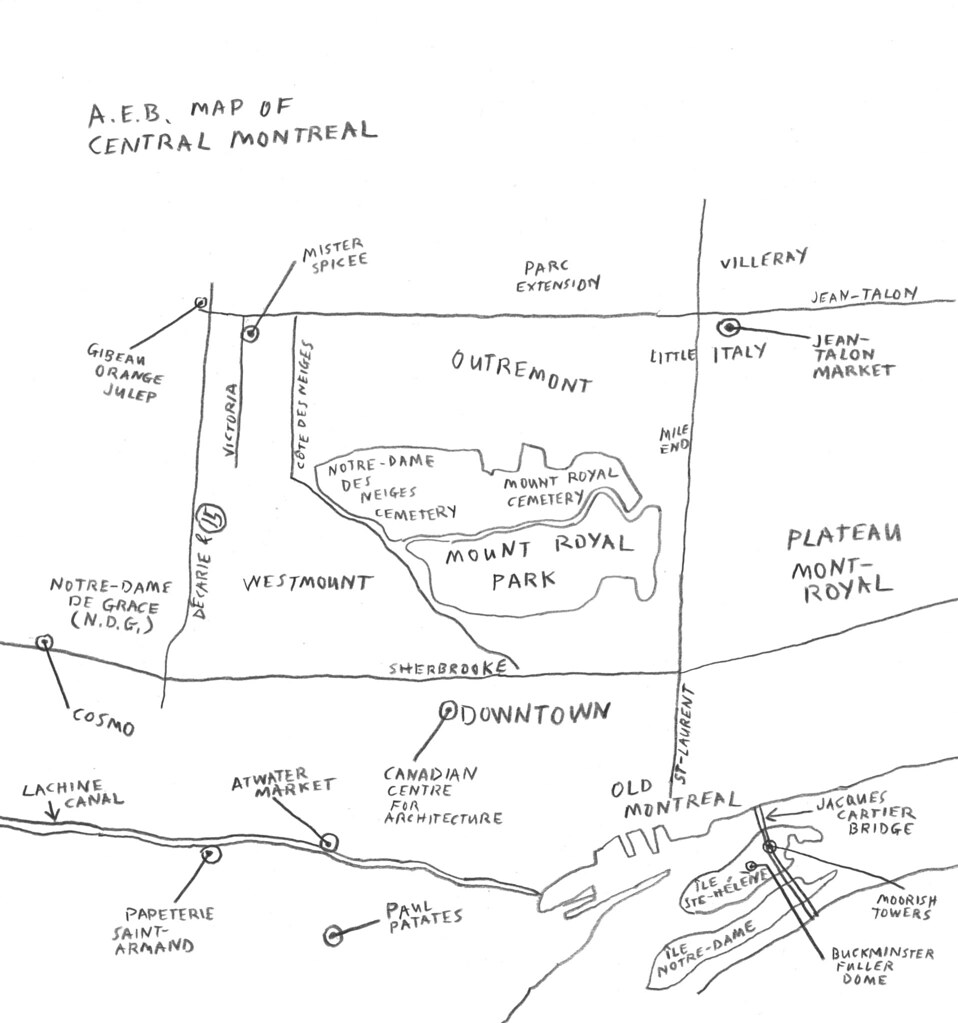
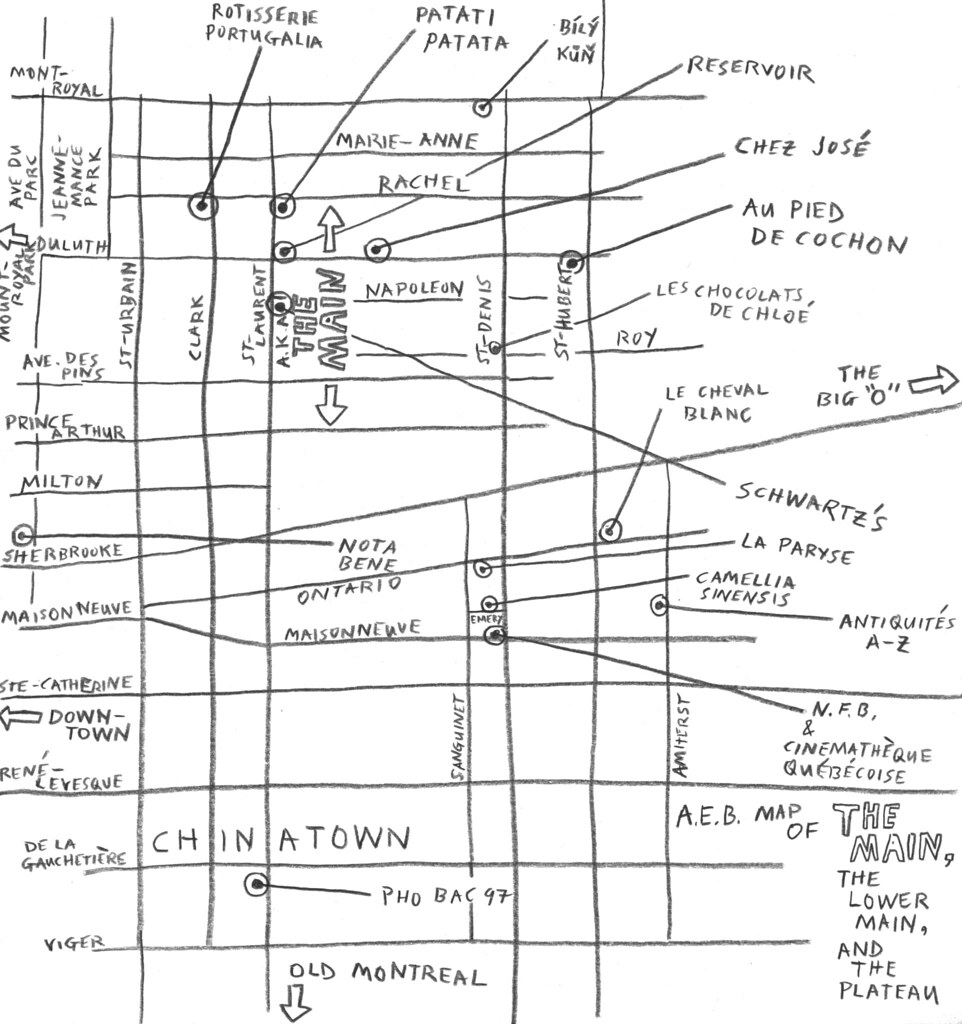
There’s a scene in Denys Arcand’s Les Invasions Barbares where an aging, defeated-looking priest ushers a woman working for a London-based auction house through a veritable graveyard of Roman Catholic antiquities in the basement of a Montreal cathedral. As he leads her through the assorted relics—a particularly Québecois cinematic nod to the closing moments of Citizen Kane—he explains to her that this pile of Catholic cast-offs was a product of that moment in the mid-1960s when, as the Quiet Revolution reached fruition, Quebeckers quite suddenly stopped going to church. As we found out on Tuesday, a trip to Au Pied de Cochon (536 Duluth East) during Lent provides just as telling an allegory of Quebec since the Quiet Revolution. Martin Picard’s restaurant is emphatically Québecois, reveling in the energy and the flavors of the terroir, but with its copious portions of rich, meaty fare and its irreverence, Au Pied de Cochon has very little to do with moderation, with propriety, or with rigid traditionalism, and just days before Good Friday and Easter, this place was packed to the gills, absolutely bustling.

Michelle had been to Au Pied de Cochon a couple of times before, but I had yet to experience its magic. We’d been discussing where we might go for a birthday dinner à deux for Michelle’s birthday (you see, Tuesday was her actually birthday), and Au Pied de Cochon had come up as a possibility, but after having listened to some of her colleagues at Les Chèvres wax poetic on its merits last weekend, Michelle made up her mind. She knew just how good it was, but that conversation made her mouth water afresh. Then we picked up the most recent issue of Gourmet magazine. Au Pied de Cochon has received a great deal of press since it opened a few years back, but in this month’s issue it receives the stamp of approval from none other than Anthony Bourdain, who ranks it at the very top of his list of new North American restaurants who’ve rejected the icy formality and the pedantry of the high-end dining room and embraced something a bit more down-to-earth, something that has less to do with attitude and more to do with food, something that’s actually fun.

We started off with two pints of the house blonde and two orders of the cromesquis. Au Pied de Cochon serves foie gras about a dozen different ways, but the simplest and least expensive way they serve it is deep-fried, as cromesquis. We were asked by the waitress if we knew how to eat these little gems when she brought them, and she explained that you’re meant to pop the whole thing in your mouth, shut your lips tight, then crack the cromesquis with your teeth, letting the whole thing explode in your mouth. And explode it does… Next up we had the beet and chèvre salad, which sandwiched a crumbled fresh Quebec chèvre between slices of marinated beets, then threw in a puree of roasted beets on the side to round things out and give the salad depth.

Things got somewhat more extravagant when we got to our mains. Michelle was having a hard time making a decision, so she asked our waitress a few questions about some of the menu’s items. Her first question had to do with their Potée du PDC, and she apparently hit the nail on the head. This was our waitress’ favorite dish on the menu, and though she made a point of emphasizing the fact that it was an “indelicate” dish, her description was more than either of us could handle. Michelle asked about a few other dishes on the menu, but we both knew her decision had been cinched. I mean, how can you go wrong with the house puree de pomme de terre—made with garlic, cheese, and lots of olive oil—layered with a link of sausage, a link of saucisson, a link of boudin noir, and a hunk of pork roast? If that wasn’t enough, when the waiter took Michelle’s order, he casually asked her if she’d like a piece of foie gras added to the mix, and without missing a beat Michelle took him up on his suggestion. I was the foil to Michelle’s full-on PDC “sugar-shack-style indulgence” experience (as Bourdain puts it), ordering the deer steak & frites in order to see how Picard & co. handle “the basics.” Michelle’s Potée was wild. This was comfort food pushed to the limits. The boudin noir was maybe just a bit more than she could handle, so she sent most of it my way, but otherwise she mastered her potée quite handily. The saucisson was expert but unexpectedly kielbasa-like; the sausage was like a high-grade knockwurst; the roast was flaky and full of flavor; the puree was sheer decadence, dripping in garlic, fromage en grains, and olive oil; and that extra slab of seared foie gras put an exclamation mark on it all. The steak was a healthy cut of rare deer meat, dripping in jus, and topped with a small mountain of sautéed mushrooms, which came with a lovely paper cone full of perfect frites, with just enough skin on them to give them real flavor.

We contemplated having dessert—Michelle swears that the pouding chaumeur is the best she’s ever come across, and the best dessert on the menu, and Au Pied de Cochon is also famous for its tarte au sucre, which is one of my all-time favorites—but by that time, a brisk walk was what we really needed. And, after all, it was Lent—we had to show some restraint, right?

I can’t wait to go back, but I think the next time we’ll be more strategic: we’ll take one, maybe two entrees, share a main course, and try to save room for dessert.

aj

Monday, March 21, 2005

Surprise!

Last night was Michelle's surprise birthday party. It wasn't quite her birthday, which added to the element of surprise. She had no idea. She was sure she was going to Mahli Sweets for Indian with her parents, Nicole and Ivan, and myself. Then a strange set of clues appeared mysteriously and she found herself on some kind of hunt for a "birthday surprise." After she figured out the answer to the final clue, she wound up at La Sala Rosa (4848 St. Laurent Blvd.) for a surprise tapas dinner and birthday bash.

We quickly formed "affinity groups" and began ordering tapas of all sorts. Mine was like "affinity group gone wild." We ordered about 32 different items under DJ Slutsky's stewardship. By now, many of you know that La Sala Rosa serves the best, most generous tapas in town. If you haven't had the pleasure of dining there yet, RUN. You won't regret it.

Q: What kind of birthday cake do you get for a girl who can bake (nearly) everything?
A: Ice-cream cake.

Michelle had been wondering out loud for weeks if Le Bilboquet (1311 Bernard W.) was open again. She was dying to have some of their legendary tire d'erable ice cream, which is only available during sugaring off season. Yesterday, she decided the two of us HAD to go for a cone. Problem is, I had already reserved a tire d'erable ice-cream cake for her birthday. Somehow I managed to convince her that I didn't "have the time."

Thanks to Kazi, Nicole, Helen and Michal for making last night's party possible. Thanks to Hermine and Thea for their little white lies. And thanks also to everyone else who made it out last night.

Our official paparazzo for last night's festivities was Ivan. Only one of the photos above wasn't taken by Ivan. It's the one of Ivan, taken by me.

aj

Saturday, March 19, 2005

Green Eggs and...


Duck Egg
Originally uploaded by ajkinik.


We swear by our local boucherie. Chez Vito (5180 St. Urbain) not only offers the highest quality cuts of meat, including an impressive array of organic meats, they're also the friendliest butchers either of us have ever met. These guys are so nice I'd buy anything from them. A couple of weeks back we noticed they had a special on eggs at the front counter. Turns out they were duck eggs. We asked what we should know about duck eggs and within a few minutes we'd gotten the whole picture: they don't give off that smell that chicken eggs give off when you fry them, they're lower in cholesterol than chicken eggs, the yolks are bigger than chicken eggs, and people who are allergic to chicken eggs generally don't have any problems with duck eggs. The most interesting part had to do with the green eggs, though. Some of them had this beautiful pale green hue to them, and we were told they were the most flavorful ones. When we got back home we had a 1/2 a dozen fresh duck eggs with us, including two green ones.

It's true, their yolks are more flavorful than those of your standard chicken eggs. They reminded us of the kind of chicken egg yolks we experienced in Germany: bright orange and rich in taste. We were less crazy about the whites: we found them a bit too light, lacking in character, even a bit rubbery. That pale green color sure was beautiful, though. We had fun just admiring them.

aj

Bagel Fantasy


A Fairmount Bagel bagel
Originally uploaded by ajkinik.


I used to do a radio show from 12:00 A.M. till 2 A.M. on Thursday mornings. The show that came on after us was a hip-hop show and we had a good rapport with those guys. One night the hip-hop guys came in to do their show and one of them, O., was raving about Montreal bagels. He asked us, “Do you know what the secret ingredient is in a real Montreal bagel? You know, like, those real hot and chewy Montreal bagels? Do you know what the secret ingredient is?” I said, “I don’t know. Love?” O. responded, “No, it’s malt dextrose.” We said, “Oh, yeah. Malt dextrose, huh?” O. continued, “I’ve got this buddy who works at Fairmount Bagel. He gave me a whole bag out of the back of the store. 'Cause you can't buy that stuff in any store. I’ve got this massive bag of the stuff sitting in my kitchen. You know what I’m gonna do? I’m gonna start baking 'em at home. That way, anytime I want ‘em, I can have fresh, hot Montreal bagels at home for next-to-nothing.”

Montreal may very well have the best bagels in the world. Torontonians swear by their Bagel World bagels as well as their Gryfe's. Bostonians, Connecticut Yankees, New Yorkers, and New Jerseyites all swear by their own styles of bagels, too. I’ve tasted all of these different varieties, and I’ve had outstanding bagels in each region, but Montreal bagels are still my favorites. I’ve been living in Montreal again for 5 years now, and every morning (and I do mean every morning) I still crave a Montreal bagel (make mine a Fairmount, mate). That’s how good they are.

We happen to live less than a 10-minute walk from three excellent, 24-hour bagel bakeries (two of them are under the same ownership) that’ll sell you a dozen “blacks” (poppy) or “whites” (sesame) for just over $5.00. Every time I buy bagels they’re not only fresh, they’re usually steaming hot (see the picture above). That’s what killed me about that conversation with O. In this town, anytime you want ‘em, you can get fresh, hot, world-class bagels for next-to-nothing.

[Fairmount Bagel is located at 74 Fairmount W. And, yes, O.’s bagel fantasy was probably drug-induced.]

aj

Thursday, March 17, 2005

Gianduja-filled chocolates


Gianduja-filled chocolates
Originally uploaded by michelle1975.


The chocolate exam is over. It was the first exam I actually broke a sweat over, although I had never had any problem tempering before. It took forever to get the chocolate tempered, and the room had a breeze, which didn't help. I over-heated it twice and ended up dipping my ganache in a little pool of chocolate in the crater of the hardened rest. Whatever. It's over. I got 100%. I am never going to temper chocolate in a bowl again.
These are gianduja-filled chocolates I made as part of my exam. Gianduja is a hazelnut-flavoured chocolate which is particularily smooth. These were good. I wish I could eat one right now...

m

Monday, March 14, 2005

Tonka bean ice cream, pt. 1


Tonka bean gelato
Originally uploaded by ajkinik.


I made this ice cream flavoured with Tonka beans last night and strange memories from childhood have come up for both Anthony and I. The taste is reminiscent of a candy of some kind… I am not conscious of ever having had Tonka beans before, whose taste reminds me of tarragon and hay with vanilla. I don’t know what it is but I like it.

When making ice cream, there is always the question of style: French, American, Mid-western, Italian? I like my ice creams very rich and tend to favour the cream-meringue and crème Anglaise variations, while Anthony prefers the lighter milky type. This recipe is one of his favourites, and with the addition of the Tonka bean it is very fresh and light.

Tonka Bean Gelato

1 1/2 c. cream
2 1/2 c. milk
1 c. sugar
7 tsp. cornstarch
1/2 tsp. grated Tonka Bean

Simmer cream, 1 1/2 c. milk and grated Tonka bean.
Dissolve cornstarch and sugar in remaining milk.
Add to hot mixture and stir until it thickens slightly.
Pour through a sieve into a bowl and cover with plastic wrap.
Chill several hours and churn in an ice cream maker.
Makes one quart.

m