Showing posts with label beans. Show all posts

Wednesday, August 31, 2011

In a Golden State 4: Big Sur, pt. 2

Missed Part One? You can find it here.

Kamping with Kermit

Unless you're doing serious back country camping--the kind where it pays to travel light--it's awful nice to bring a bottle of wine (or two, or more--perhaps a lot more) along on your camping trips. We happened to be staying in the East Bay for most of the time we were in Northern California, so not only did we have an impressive selection of top-notch wine stores to choose from, we were able to make a special trip to one of the very, very best: Kermit Lynch Wine Merchant.

klwm 2 fig. a: putting on airs

Michelle immediately went about putting on her wine-buying airs, but, the thing is, she didn't have to. Kermit Lynch Wine Merchant wasn't intimidating in the least. In fact, they were downright friendly.  Aided by our incredibly helpful wine agent (not Kermit, unfortunately, but we hit it off with this guy like we were long-lost friends) we picked out a really nice selection of wines (including some Rieslings and some Bandols), but when it came to choosing a camping wine, we were directed to a 2009 Pascal Janvier "Cuvée du Silex" Jasnières.  We love the Jasnières style, and we can get some nice ones in Quebec, but Pascal Janvier was new to us, and we were strongly encouraged to make his acquaintance.

Anyway, the nice thing about camping with wine, is that you're not in your own kitchen, you're not in a position to necessarily make everything perfect, and, generally, you have to improvise.  Most importantly, we had to try to find a way to chill our bottle of Jasnières.  Luckily, the stream than ran near our campsite came with a handy, dandy natural wine cooling contraption

chilling 2 fig. b: wine cooler 1

that looped around the bottle's neck and simultaneously kept the bottle wedged against the bank so that it didn't go tumbling downstream.

chilling 1 fig. c: wine cooler 2

Within 30 minutes, our bottle was sufficiently chilled and ready to quaff.

I don't think that Pascal or Kermit, or anyone else, for that matter, would have come up with the campsite meal that we had with that beautiful bottle of Jasnières,

camping fig. d: camping spread

but, like I said, that's kind of the beauty of camping with wine.  And you end up developing an entirely different appreciation for the wine.  Oftentimes you discover the wine's range.  You also discover the importance of setting.  And, let me tell you, Big Sur is a pretty ideal setting for wine-drinking.

Molera Time

big sur 17 fig. e: frigid

Our days began with an invigorating dip in the frigid waters of the Pacific. Real "Ice Bears"-style.

Most of the rest of our days were spent on a series of hikes. We saw all kinds of nice things--again, it's hard to go wrong in Big Sur--but our favorite hike of the excursion was Andrew Molera State Park, where we basically followed four trails (the creamery meadow trail, the ridge trail, the panorama trail, and the bluff trail) in order to form a nice loop that took the better part of an afternoon and that was also wonderfully varied.

It started off hot and dry.

big sur 15 fig. f: hot & dry 1

But as we moved from the Ridge Trail to the Panorama Trail we found a stand of redwoods.

big sur 14 fig. g: redwoods

When we got to the heart of the Panorama Trail things were pretty windy.

big sur 13 fig. h: windy

The vegetation on that part of the hike looked pretty other-worldly, too.

big sur 12 fig. i: other-worldly

We paused to take a breather,

big sur 11 fig. j: breather

and, off in the distance, we began to see evidence of a little Shangri-La.

big sur 10 fig. k: Shangri-La 1

The lure of the beach got us to pick up our pace a little, but the route was not only windy, it was also winding.

big sur 9 fig. l: long and winding

When we got close to the beach, we found a logjam blocking the way.

big sur 7 fig. m: logjam

No silly logjam was going to stop us, though.  Not for a beach this nice.  Plus, at the time we were there, this beach was totally private.  We had it entirely to ourselves.

shangri-la fig. n: Shangri-La 2

Michelle started feeling a little territorial.  She had the idea that this stretch of sand should be named Marek Beach.

private beach fig. o: Marek Beach

When we'd had our fill of Marek Beach, we moved on and found an incredibly lush little valley.

big sur 5 fig. p: lush

Up on the bluff, things got hot and dry again.

big sur 3 fig. q: hot & dry 2

We split up at a fork in the trail, but, luckily, eventually the two trails merged again, and we were reunited.

big sur 2 fig. r: reunited

When we finished our hike at Molera State Park, it was definitely Molera Time.  Actually, it was more like Pfeiffer Time, because we left Molera S.P., stopped in a convenience store to pick up some beers, and headed down the Sycamore Canyon Road to Pfeiffer Beach.

big sur 1 fig. s: Pfeiffer 1

There we sat on the beach and watched the waves crash through the natural bridge (and the tourists pose for photographs in front of it).

travel scrabble, big sur version fig. t: Pfeiffer 2

Then we pulled out our travel Scrabble set and got to work.

Return to Big Sur Bakery

That very same night, we went for our only non-breakfast meal at Big Sur Bakery, the meal that we'd planned as the climax of our Big Sur trip.  Things got started right with a lola rosa & mâche salad, with peaches, pistachios, and feta, as well as a plate of "seven lucky oysters" fresh out of Big Sur Bakery's wood-fired oven, and they never let up.

wood-fired oysters fig. u: oysters & co.

Our favorite dish was the butter-braised halibut in white wine with herbs and caviar, but everything tasted absolutely perfect that evening on Big Sur Bakery's deck,

hills of big sur fig. v: Big Sur Bakery view

and the views didn't hurt either.  We really enjoyed our Big Sur breakfasts at the bakery, but dinner was where they pulled out all the stops. Easily one of our top meals of 2010.

Return to the Bay Area

The next day it was time to return to our base of operations in Oakland, but we took a bit of a roundabout way--we had to make a few stops along the way.

First of all, a stop at San Carlos Borroméo de Carmelo Mission (a.k.a. Carmel Mission) to smell the roses,

mission carmel fig. w: rose

gaze at the stars, and soothe our souls.

mission carmel fig. x: constellations

Secondly, a stop in Castroville,

open for business fig. y: open

to pick up artichokes.

artichokes fig. z: 12 for $1

12 for $1. No joke. Lovely ones, too. (We had them later that night, braised, with pasta. And a steak.)

Thirdly, a stop in Morgan Hill,

Andy's fig. aa: Andy's

to pick up the best peaches and plums money can buy, at Andy's Orchard. (We ate plenty of them fresh, but the next day Michelle turned the rest into the best preserves.)

andy's by michelle fig. bb: Andy's by Michelle

And, lastly, a stop in Pescadero,

Phipps Farm beans fig. cc: Phipps' beans

to buy beans at Phipps Country Store and Farm, where they sell over 75 varieties of exotic and heirloom beans, many of which they grow themselves (check it out!). We were astounded by the selection. We bought a whole bunch of different varieties, but those Zuni Golds (pictured) were among our favorites. They made for some pretty tasty frijoles. (Many thanks to RP for the superb tip!)

Let me tell you, the fun never stops when you're in Northern California.

Kermit Lynch Wine Merchant, 1605 San Pablo Avenue, Berkeley, CA, (510) 524-1524

Big Sur Bakery, 47540 California 1 (Pacific Coast Highway), Big Sur, CA, (831) 667-0520

Andy's Orchard, 1615 Half Road, Morgan Hill, CA, (408) 782-7600

Phipps Country Store and Farm, 2700 Pescadero Road, Pescadero, CA, (650) 879-1032

aj

Thursday, January 11, 2007

The Land of Milk and Honey and Bacon and Cheese and...

The Goods

vt goods map

1. Shelburne Farms maple-cured, cob-smoked bacon
2. Dakin Farm maple-cured, cob-smoked bacon
3. Shelburne Farms honey
4. Flag Hill Farm Cyder
5. Amish butter
6. Ayinger Ur-Weisse Dünkel Weizen
7. Stratford Organic Creamery whole milk
8. Celebrator Doppelbock
9. Dakin Farm cob-smoked bacon odds and ends
10. Dakin Farm Maine blueberries, packed in water
11. Shelburne Farms smoked cheddar
12. Dakin Farm yellow-eye beans
13. Lazy Lady Farm "O My Heart"
14. Orb Weaver cave-aged farmhouse cheese
15. Orb Weaver Vermont farmhouse cheese
16. Bee Haven Honey Farm pure Vermont honey
17. Dakin Farm buckwheat pancake mix
18. Vermont Common Cheddar Crackers
19. King Arthur unbleached all-purpose flour
20. Jasper Hill Bayley Hazen blue cheese
21. Gore Dawn Zola blue cheese
22. Jasper Hill Constant Bliss cheese
23. Black Gilliflower apples, a.k.a. Sheep's Nose apples
24. Stevens Lady apples
25. Cabot Creamery salted butter

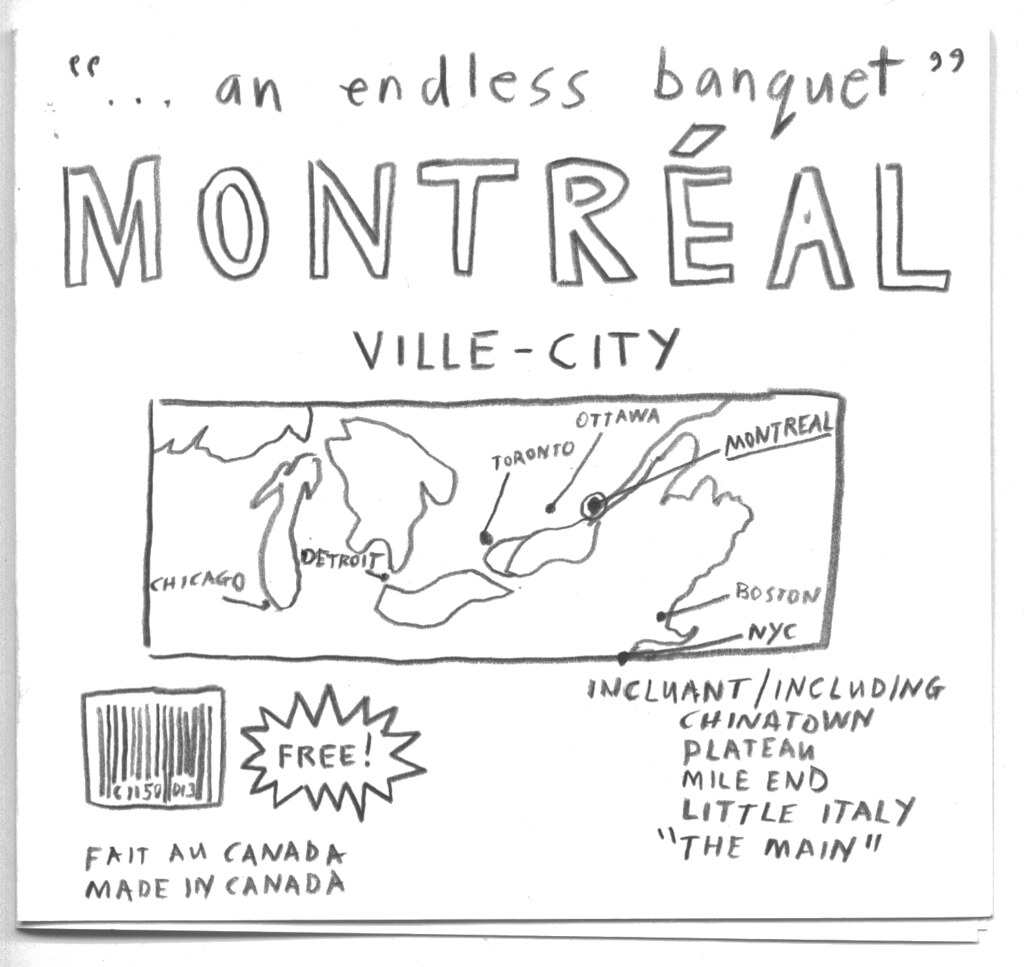
Yep, you guessed it. We just made another one of our famous cross-border shopping expeditions to Vermont. Actually, we went down on a weekend getaway, to get out of the city, go for walks, and have another nice meal at American Flatbread, but one thing led to another. "...An endless banquet" is digital proof that we've found Montreal to be nothing if not rich (in at least two senses of the word) when it comes to its food culture, but there's something about our friends to the south and the landscape they call home that never fails to impress us. And somehow this admiration of ours has a way of turning into a lot of little food expenditures. The reason for this has something to do with our weakness for dairy. Good dairy, that is. And what, exactly, is so special about Vermont's dairy? Well, that has something to do with the kind of pasture land you find in Vermont, with the fact that Vermonters, to a degree that's almost unheard of these days, continue to hold on to their farms, and with the fact that the number of people who keep cows in Vermont (even just one) is so much higher than the average. Noel Perrin said so much back in 1978 in First Person Rural: Essays of a Sometime Farmer, his account of small-time farming, and life among small-time farmers, in Vermont, and this situation has continued to hold until now. In fact, in Perrin's mind these factors helped explain why Vermont was better looking than its neighbor to the east, New Hampshire.

QUESTION: Why is Vermont more beautiful than New Hampshire? ANSWER: Because of Vermont farmers. Remove the farmers, and within ten years New Hampshire would surge ahead.

This is a serious argument. If you just consider natural endowment, the two states are both fortunate, but New Hampshire is more fortunate. It has taller mountains, it has a seacoast, it even owns the whole northern reach of the Connecticut River, except a little strip of mud on the Vermont side.

But New Hampshire's farmers mostly quit one to two generations ago and started running motels or selling real estate. The result is that most of New Hampshire is now scrub woods without views. Dotted, of course, with motels and real estate offices.

A lot of Vermont farmers, however, are holding on. Almost every farmer has cows, and almost every cow works night and day keeping the state beautiful. Valleys stay open and green, to contrast with the wooded hills behind them. Stone walls stay visible, because the cows eat right up to them. Hill pastures still have views, because the cows are up there meditatively chewing the brush, where no man with a tractor would dare to mow. (That's the other argument for butter besides its taste. I once figured that every pound of butter or gallon of milk someone buys means that another ten square yards of pasture is safe for another year.)


Sure, Vermont is suffering from sprawl and free-market economics these days in a way that it wasn't 30 years ago, but not nearly to the extent that most every other corner of North America is. And some things may have even improved over the last three decades, like the farmstead cheese scene. And the strength of the farmstead cheese scene has everything to do with the fact that Vermont has so many cows, and especially so many cows raised on small farms. And there is something to be said about Perrin's argument. I mean, as much as we love mountains and forest and that kind of thing, there's something to be said for pasture land and the views it affords. So maybe it all does boil down to this: four legs good.

You'll notice that we brought back a lot of Vermont dairy: organic milk, artisanal butter, and lots of farmstead cheese. We've hardly worked our way through our treasure trove of cheeses yet, but so far standouts include Lazy Lady's O My Heart, which is as creamy and as delicate as they get, and Orb Weaver Farm's cave-aged cheese, which has a wonderful caramel side to it. And let's not forget those Vermont Common Cheddar Crackers, made with real Grafton Village cheddar. Who needs Smartfood when you've got something as classic and as versatile as your Vermont Common Cheddar Cracker. Plus, who can argue with 175 years of experience? So cheese and cheese-based products were a hit.

But the other major discovery was Vermont bacon. Now, as much as I like bacon, I'm certainly not an all-out bacon fetishist, not the kind of person who left vegetarianism behind for bacon, not someone who'll take bacon any way they can get it. I've got some standards. Luckily, it's easy to get very good, high-quality bacon around these parts. Even our two local grocery stores--Sa & Fils and P.A.--have truly excellent bacon available behind their counters--throw in some of the city's premium boucheries/charcuteries, like La Maison du Roti or La Boucherie du Marché, or the city's amazing Eastern European charcuteries, like Charcuterie Hongroise or Slovenia, and you're laughing. But, believe me, you've never had anything like the bacon we found down in Vermont. Cob-smoked (as in corn cob-smoked), maple-cured bacon. Thick-cut, succulent, smoked and cured beyond perfection. I still can't get over it. We bought a couple of packs for our own personal, breakfast-time consumption--one pack of Shelburne Farms, one pack of Dakin Farm--and then we bought a couple of 1-lb. packages of Dakin Farm cob-smoked "odds and ends" just to cook with. We're talkin' heaven.

The next best discovery was beans, real New England baking beans, yellow-eyes and soldier beans. 2006 harvest. I know. You're thinking to yourself, "Beans?" You wouldn't believe what a difference it makes. They cooked to perfection in a fraction of the time the last batch I made did, and instead of being a characterless vehicle for the baked beans' other ingredients, they had a real flavor of their own, and cooking them created a rich pot liquor, just like it's supposed to. I can tell you one thing: I'll never use supermarket-bought navy beans ever again. That's it. It's over. Why would I ever go back? Together with a 1/4-pound of those Dakin Farm "odds and ends," I made the best damn batch of beans I've ever made. Seriously. Forget about "world-class." These were otherworldly.

Then there's the honey. Fantastic stuff, and at a fraction of what honey costs here in Quebec. I've still never quite understood the Great Price Hike of 2002 (or was it 2003?), the one that jacked up the price of honey by at least 60-80%. Whatever the cause, it doesn't seem to have affected Vermont's beekeepers.

And if that wasn't enough, we found apples, too. Somewhat rare stuff. Stevens Lady Apples, a tiny, perfectly colored, perfectly formed, slightly flattish variety, that, it's said, was kept tucked away in ladies' bosoms for safe-keeping until needed as a breath freshener. And Black Gilliflowers, a.k.a. Sheep's Nose apples, a cooking variety prized for its slightly spicy flavor.

Some people go on a trip and buy t-shirts and snoglobes and keychains, and that's cool. Other people go on a trip and buy milk and honey and bacon and cheese and beans and apples, and that's cool too. Trust me.

aj

[You can find out all about Shelburne Farms and Dakin Farm, etc. via the miracle of the Internet, and you can even order some of this stuff online, but wouldn't you rather go for a nice drive?]