Thursday, May 26, 2005

The Perfect Risotto


Risotto with "Summer Truffles"
Originally uploaded by ajkinik.


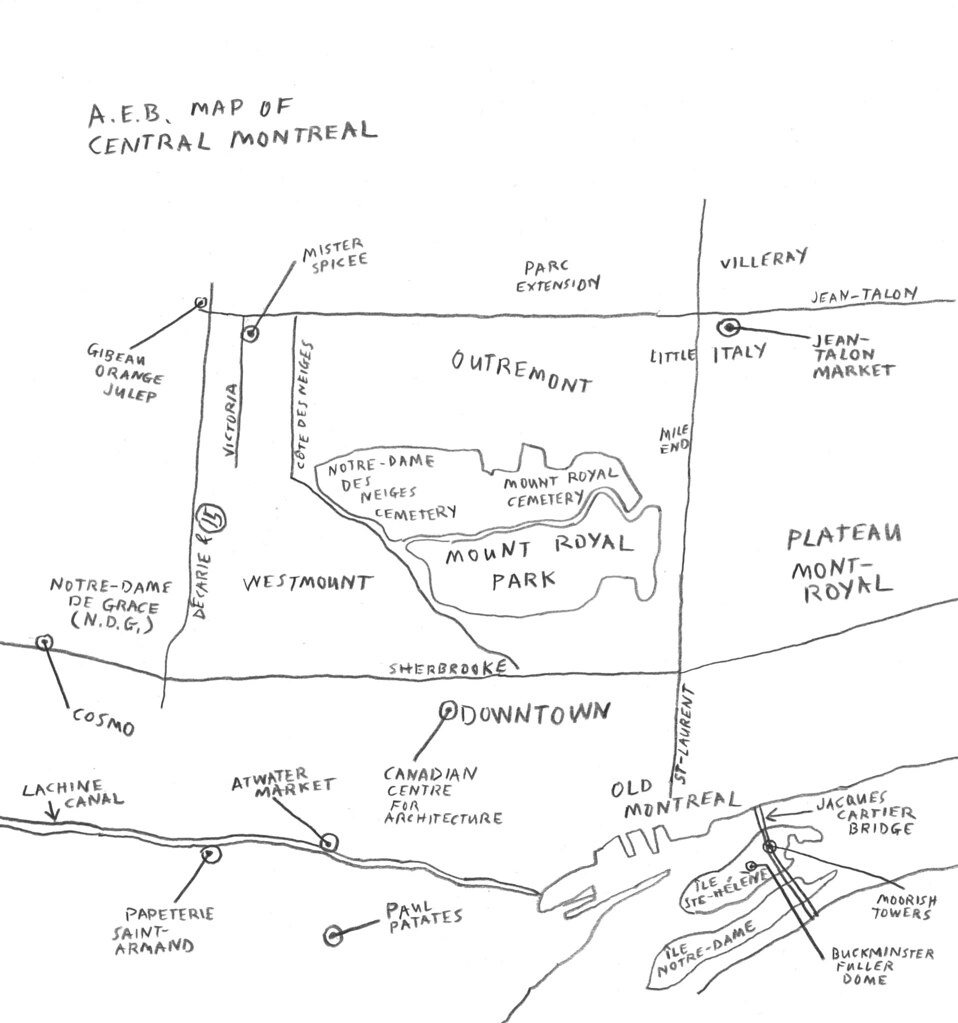
Monday was Victoria Day, and this year's version was awfully damp and cold here in Montreal. We had to do something to ward off the chill, so we decided to make a risotto.

I know it's spring and rain is good for the garden, but I can't help feeling impatient for the hot and sunny weather. This dampness makes me feel like I live in England, which makes me think of Ford Madox Ford and one of my favourite images from his many-volumed memoirs. He is alone in an old stone house somehere in the countryside. He lights a fire and begins his dinner preparations: peeling shallots, so many of them that patience is needed, cutting up the rabbit, opening a bottle of wine. The shallots are browned slowly, the meat is added and braised in wine... He makes a dark stew which sounds perfect. Its aroma warms the house. And he is alone.

Don't ask me which volume this story comes from. I read them all back to back one winter and can't distinguish one from the other. All I know is that he was a good, if cranky, man, and he wrote a perfect book: that is, of course, The Good Soldier.

Mushroom Risotto with Leeks, Fennel, and "Summer Truffles"

Tomato-Mushroom Stock (see recipe below)
1 black truffle, grated
2 tbs extra virgin olive oil
1/2 lb white mushrooms, washed and sliced
salt and pepper
4 garlic cloves, finely chopped
2 tbs unsalted butter
1 medium-sized leek, white part only, cut in half lengthwise, thinly sliced, and washed
1 medium-sized fennel bulb, quartered lengthwise, cored, and thinly sliced
1 1/2 cups Arborio rice
1/2 cup dry white wine
2 tbs coarsely chopped Italian parsley
Grated Parmesan cheese

Pour the stock into a saucepan, bring it to a boil, and reduce it to 6 cups. Keep the stock warm over low heat.

Heat 1 tablespoon of the olive oil in a large skillet; add the white mushrooms, 1/4 teaspoon salt, and a few pinches of pepper. Sauté over medium-high heat until the mushrooms are golden and crisp on the edges; add half the garlic. Sauté for another minute or two more and then transfer the mushrooms to a bowl.

Heat the butter and remaining oil in the pan and add the leeks, 1/4 teaspoon salt, and a few pinches of pepper. Sauté over medium heat for 3-4 minutes, until the leeks are wilted. Add the fennel and remaining garlic; sauté for 1-2 minutes. Add the rice and sauté for 2-3 minutes, stirring constantly. Begin adding the stock a cup at a time, allowing the rice to absorb each cup of stock completely before adding more. Keep the pan on medium heat and continue to stir.

When the rice has absorbed 3 cups of the stock, add the sautéed mushrooms and wine. Continue to add the stock, stirring constantly, until you have used 5 cups. Add half of the grated truffle. As you stir in the last cup of stock, add 1/4 teaspoon salt and a few pinches of pepper. At this point the grains of rice will be a little toothy and the risotto quite saucy; it's ready to serve. Stir in half of the parsley. Serve immediately in warm bowls. Sprinkle with the Parmesan, the remaining parsley, and the remaining grated truffle.

Serves 4-6, or two with some leftovers.

Tomato-Mushroom Stock for Risotto

2 quarts cold water
1 yellow onion, peeled and chopped
1 leek top, chopped
1 oz dried shiitake mushrooms
8 garlic cloves, crushed with the side of a knife blade
1 tsp salt
2 medium-sized carrots
1 large unpeeled potato, chopped
1/4 lb white mushrooms, sliced
2 celery ribs, chopped
1 28-oz can tomatoes with juice
6 parsley springs, chopped
6 fresh thyme sprigs, chopped
3 fresh sage leaves, chopped
2 fresh marjoram or oregano sprigs, chopped
1/2 tsp peppercorns

Pour 1/2 cup water into a stockpot and add the onion, leek top, garlic, and salt. Give them a stire, then cover the pot and cook vegetables gently over medium heat for 15 minutes. Add the rest of the ingredients and cover with remaining water.

Bring the stock to a boil, then reduce the heat and simmer, uncovered, for 1 hour. Pour the stock through a strainer, press as much liquid as you can from the vegetables, and discard them (I know, it's sad, but that's the way you make stock). Use immediately or cool and refrigerate or freeze. The stock will keep in the refrigerator for 2 days and indefinitely in the freezer.

[note: we improvised a version of this stock this time around, one without the shiitakes, the celery, and the thyme, sage, and marjoram/oregano, and our dish still turned out perfect. If you do follow this recipe, though, you'll get a stock that's even richer, even more complex, and well worth the effort. I suppose you could still make this risotto with another kind of stock, but this particular stock not only gives it all the right flavors, it also gives the risotto just the right pinkish tint.]

Both of these recipes come from Annie Sommerville's Fields of Greens: New Vegetarian Recipes From the Celebrated Greens Restaurant. (Actually, truth be told, the risotto recipe is our own variation on one of Sommerville's recipes.) We've said it before, but we'll say it again: Sommerville's cookbook is amazing, and these two recipes are yet more proof.

Serve with a crusty loaf of bread, a nice salad, and a good bottle of red wine. You can also throw in a nice dessert afterwards, if you like.

am/km

Sunday, May 22, 2005

On The Town, pt. 2


The whole reason for coming to NY, besides visiting Stephen and eating a lot of food I can't live without, was to attend a workshop with Sam Mason at the French Culinary Institute. Sam is the pastry chef at WD-50, a hot restaurant in NY. I had no idea what to expect from this workshop. I certainly did not expect an All-Clad whisk. The workshop started at 4:00, leaving plenty of time to eat way too much...

By the time we met up with Camilla, she had already gone to Magnolia Bakery, Chocolate Bar and I don't even know where else! We met at Lassi to eat something unsweet. Stephen and I had just eaten breakfast, and although I had just contemplated scarfing down a hotdog at Gray's Papaya, I really wasn't that hungry. We got a few things to share, including the Methi chicken, chick peas, beet-cardamom salad, rice, naan, and a lemon lassi. It was a great snack, and it all came in cute takeaway containers, perfect for a picnic. A bit on the steep side, though, if you ask me. I think our snack cost us $25. American.

We tried to go to Bonnie Slotnick, but she was closed. It's probably for the best. She runs a cookbook-only used bookstore. I can't afford to go into places like that.

We left Stephen and forged ahead to Fauchon. Thinking that it was one block from the subway stop we got off at, we had plans to go to a few more places afterwards, but it ended up being more like 6 blocks (long ones, at that). It was worth it, though, when we saw the spring collection of eclairs. Hot pink, bright yellow, green, and brown, these things were more than sparkly, and they called to us by name. Camilla chose the passionfuit one, but had a hard time saying no to the hot-pink raspberry. I got the raspberry tart with violets and balsamic vinegar. Both were excellent. I love that store. It's so pink!

Afterwards, we had to hurry back to Soho for our workshop. From the beginning of his demo, it was clear Sam Mason was not comfortable with this experience. I wouldn't be, either. It was held in a theatre, with a kitchen space in front. I felt like I was at a live cooking show. It was funny. He took us through a bunch of techniques and ingredients he uses, some of which are crazy. (e.g. versa-whip: turns juice into mousse.) It was full of shop talk and very fast-paced. We tried a lot of samples, some of which were good, like the miso ice cream. One was gross though: cumin caramel. I learned the most from his technique. He is super laid back and works intuitively as opposed to by the book. He is from the "looks good enough to me" school.

And as if that wasn't enough sugar for the day... We went to WD-50 to have the dessert tasting menu. Stephen met us there and we had a cocktail to start. Can I say how great the bartender was? I had a beet sangria with orange dust around the rim, delicious. Camilla had a quince cocktail, superb. Stephen got one of my favourites, a Pimm's cup, with cucumber foam--I think it was the standout, but I'm a bit biased.

We ordered a 5-courses dessert menu. Keep in mind, the only thing I'd had after the parade of samples at the workshop was a barbeque pork bun, which was super sweet. So much for balance.

First up was a fresh and light palate-cleanser in the form of a quenelle of grapefruit sorbet enveloped in grapefuit foam. We desperately needed our palates cleansed and it was excellent. Next up, a dessert simply called raisin toast: raisin puree with toast ice cream and a linzer-type crumble, accompanied by raisin toast paper. The ice cream was to die for. Quite funny and very good. My personal favourite, though, was the pine-braised pineapple with pinenut ice cream and pine gelee, with some outstanding micro cilantro. If you've never had micro cilantro, you've never had cilantro. Trust me. Next, an olive clafoutis with olive caramel, tangerine sorbet and a cherry-walnut emulsion. Good, but not great. The last course was a chocolate panna cotta with sweet corn streusel. The corn was delicious and worked very nicely with the chocolate. The whole combo was very well-grounded, earthy even. And then if that wasn't enough, as mignardises, they sent out some chocolate-covered marcona almonds. We ate them all even though by that time I couldn't even focus my eyes.

All in all, the desserts were excellent and not too sweet or rich. I must say that I was eyeing the savoury dishes as they went by, though, and if you make it to WD-50 for a dessert sampler, I would strongly recommend eating something savoury beforehand, not afterwards...

I had to take Stephen to my favourite dumpling/sesame pancake place for a non-sweet snack. We walked down to Dumpling House and ordered their unbeatable sesame pancake with beef. $1.50 gets you a warm, fresh sesame pancake sliced open and filled with thinly sliced beef, onion, cilantro, sauce and everything nice. A perfect nightcap. (Their chives and egg pancake is outrageously good, and is only $1. Don't overlook their dumplings, either. 5 for $1. I know, Fried Dumplings gives you a few more dumplings for the same low price, but these ones are tastier).

We crawled home and went to sleep.

m

Lassi, 28 Greenwich Ave, NYC, NY, 212-675-2688

Bonnie Slotnick, 163 W. 10th, NYC, NY, 212-989-8962

Fauchon, 442 Park Ave, NYC, NY, 212-308-5919

WD-50, 50 Clinton St., NYC, NY, 212-477-2900

Dumpling House, 118A Eldridge St., NYC, NY, 212-625-8008 (Open 7 days a week, 8:00 am-10:00 pm)

The World's Best Hot Sauce? (2nd rev. ed.)


Among the numerous other goodies that she brought back from NYC on Monday (and which I'm sure you'll hear about very soon, dear readers), Michelle came back with a bottle of Sachs Brand Garlic and Cumin Scotch Bonnet Pepper Sauce. She'd asked a clerk in a specialty food store about their selection of hot sauces, and this clerk claimed that Sachs Brand Garlic and Cumin Scotch Bonnet Pepper Sauce was "the world's best hot sauce." So she did the only appropriate thing and brought a bottle back home.

Now, I have to say, I was very excited about this purchase. I've been a bit a hot sauce fiend since I hit my late teens. It started with the basics--Tabasco and Louisiana--and then soon branched out into a whole range of other brands and styles, from Caribbean Scotch Bonnet Pepper sauces, to Southeast Asian varieties such as Sriracha. At times there's been upwards of 20 or so different types of chili-based sauces and pastes in my refrigerator. At present, there are 10 different types of hot sauce in our fridge, including the Sachs Brand:

Tapatío
El Yucateco Chile Habanero
NuPak Hot Pepper Sauce
Chipotle Paste
Harissa
Portuguese Calda de Pimenta Picante
Huy Fong Sriracha
Huy Fong Chili Garlic Paste
D&D Gold Hottest Sriracha

The verdict on Sachs Brand Garlic and Cumin Scotch Bonnet Pepper Sauce? Well, while I love Scotch Bonnet Peppers, garlic, and cumin, this sauce is both too busy and too thick for my tastes. The flavor is almost too complex, and the consistency is closer to something like Jamaica's famous Pickapeppa Sauce, which is delicious, but is essentially a chutney (and therefore works well with a litttle heft).

The first test for our bottle of Sachs Brand was with eggs over-easy. The eggs simply got overwhelmed, and it wasn't the peppers that did it, it was the cumin and the garlic. Tapatio Sauce has been the undisputed breakfast champ in our household for the last couple of years, and it looks like it's still got a firm hold on that crown.

aj

Saturday, May 21, 2005

On The Town, pt. 1


It was a bit of a whirlwind trip, but I managed to squeeze in a few of my favourite NY things.

Union Square market is a must for me. We went on Saturday after strolling among the throngs in Chinatown and browsing at the Chelsea Flea Market--two other perennial musts--and we were amply rewarded.

Though I love to eat out in NY, I also love to cook "at home." The same goes for any city I visit, it doesn't feel right unless I can shop for groceries and cook in some way. Even a riverside picnic counts. That evening we were planning to cook at Stephen's house.

I knew it was late in the season for ramps but I hoped against hope that some would be there. I speed-walked through the stands and scanned the tables. Only one farmer had any, and he only had three bunches left when I got to him. I bought a lovely bunch and relaxed a little. Now for dinner.

Stephen had gone off to find lilacs for the table, and I had no set idea about what to make for dinner. Then I spotted fresh horseradish. Suddenly things became clear. Steak with horseradish and potatoes, ramps, braised carrots, green beans and a salad. I found lovely fingerling potatoes--which are not readily available in Montreal for some reason--new garlic, perfect baby spinach and nasturtium flowers. I met back up with Stephen who was laden with lilacs and we crossed the street to the liquor store. There was a wine tasting which completely distracted me, and when I turned back Stephen had found a beautiful bottle: a Chateauneuf-du-Pape. Truth be told, the name meant nothing to me, but the label was nice and the woman who had helped him choose it assured me it would be perfect. It was.

We walked a block to a fancy grocery store and bought skirt steaks, cheeses (a blue, a camembert, and a semi-firm--sorry, I can't remember them exactly--I'm so bad with wine and cheese), carrots, green beans, and bread. It was hard to carry it all to the subway.

When we got home, we realized that neither of us had ever cooked steaks before. We threw them in a pan and seared them until they were medium rare. It was so easy. Dinner came together and was delicious. The wine was amazing. We got a chance to catch up and relax, and I met his friend Paige for the first time. It was a perfect evening.

m

Friday, May 13, 2005

Thank you, Dr. Price! (or The Joy of Early 20th Century Advertising Cookbooks)


Exquisite Colors by Dr. Price
Originally uploaded by ajkinik.


I just finished teaching a course on Advertising and Consumer Culture in the Film Studies Department of a certain university in Eastern Ontario, and one of the online resources that I used in my preparation for the course—and one that I referred my students to—is Duke University’s impressive "Emergence of Advertising in America: 1850-1920" archive. Check it out and you’ll find all kinds of texts and visual materials there documenting the birth of modern consumer culture in the United States—cigarette cards, flyers, posters, outdoor advertising, broadsides, postcards, and “Kodakiana”—you name it—it’s all there. One of the most amazing sections of this website, though, is the section dealing with "advertising cookbooks" from 1879-1929, the Nicole Di Bona Peterson Collection, which contains several dozen examples in full-text format including covers, title pages and illustrations. If you’re a fan of vintage cookbooks and recipes and/or vintage food illustrations, or you’re just interested in how American corporations and other institutions seized upon the cookbook as a vehicle for advertising and early branding, this is the place for you. You’ll find everything from the Best War Time Recipes of 1917, according to the Royal Baking Powder Co. of New York, to Knox Gelatine’s Dainty Desserts for Dainty People, to The Story of Coffee and How to Make It, as brought to you by the good people at Maxwell House, to How Phyllis Grew Thin with the help of the Lydia E. Pinkham Medicine Co. of Lynn, MA.

Among my favorites are:

Dr. Price’s almost hallucinatory selection of “harmlessly” and "exquisitely" colored desserts (see illustration above).

The lovely chocolates produced by our friends at Walter Baker & Co., Ltd. (established 1780!), including the ever-so-tantalizingly named Smith College Fudge, Wellesley Marshmallow Fudge, and Vassar Fudge.


exhibit A: Baker's chocolates
Originally uploaded by ajkinik.


exhibit B: Baker's chocolates
Originally uploaded by ajkinik.


And the Frigidaire Corporation of America’s Frozen Delights, which brings together home refrigeration, modernity, and flapperdom, creating a powerhouse combo.


Frigidaire Frozen Delights
Originally uploaded by ajkinik.


I’m including a scan of some of Frigidaire’s recipes for your perusal, dear readers. Personally, I’m a little unsure about adding Jell-O to my ice cream (especially lemon Jell-O), but I might just try the Maple Ice Cream or the Strawberry Ice Cream this weekend anyway. (Then again, my maternal Grandmother always used to insist that Jell-O was good for my bones.)


Frigidaire Desserts
Originally uploaded by ajkinik.


I’ll let you know how it turns out if I do.

aj

"Baby's goin' to New York City!"*

Michelle is off to the Big Onion for a whirlwind 48-hour weekend (including the bus rides!) of socializing, tasting, indulging, and workshopping (she's got a date with the French Culinary Institute).

She'll be back with photos and all the details on Monday.

Bon voyage!

aj

*part of an overheard conversation in Washington D.C.'s Kramerbooks/Afterwords: A Café, ca. 1993.

Tuesday, May 10, 2005

Chuletas de Puerco Adobados

So, Michelle came home late yesterday afternoon and it was so nice out that we decided we had to grill. I had picked up some basic Mexican fixings from Tortilleria Maya earlier in the day, so we pulled out Diana Kennedy's The Essential Cuisines of Mexico and took a gander. Michelle didn't really see anything on her first read-through, but I had a particular meat and a particular cut in mind (the pork chop), so I went right to that section of the book and quickly found Kennedy's recipe for Chuletas de Puercos Adobados (Pork Chops Seasoned with Adobo Paste), which we then altered for the grill.

Adobo sauce is one of the classic marinades of Mexican cuisine, but I'd never made it before. Kennedy recommends marinating the pork overnight if possible--like most other marinades, this is a sauce that's meant to tenderize a tougher cut of meat, after all--but we made it early yesterday evening and marinated the meat for about two hours and the results were fantastic. You need to have access to a Latin American specialty store, so that you can pick up some dried ancho chiles, but otherwise this is a very simple recipe. The only other specialty ingredient that the recipe calls for is dried Mexican oregano, but we didn't have any in stock, so we made do with Italian oregano. Philippe de Vienne has at least two different types of Mexican oregano for sale, one of which is hand-picked by an associate of his in the Yucatan (!). Next time we'll make this recipe with the real thing, and, believe me, there will be a next time.

Last night we served a chop each with rice, refried black beans, sour cream, hot corn tortillas, salsa, and chips.

4 large dried ancho chiles, seeds and stems removed
1/8 tsp cumin seeds, roasted then freshly ground
1/8 tsp dried Mexican oregano
3 sprigs fresh thyme or 1/8 teaspoon dried
1 tbsp salt
2 garlic cloves
1/2 cup mild white vinegar

6 pork chops

Put the chiles in a bowl and cover them with freshly boiled water. Put a lid on the bowl and allow them to steep until tender, about 10 minutes. Remove them with a slotted spoon and place them in a blender. Add the rest of the seasoning ingredients and blend into a smooth paste. Pour into a large mixing bowl.

Rinse and pat your pork chops dry. Place them in the mixing bowl with the adobo paste and toss them until they are well-coated with the marinade. Cover the bowl and place it in the refrigerator. Marinade the pork overnight, if possible. If you're short on time, 1-2 hours will do just fine.

Heat your grill. Place the pork chops on the grill and grill them about 5-6 minutes per side, depending on the size and thickness of the pork chops.

aj

Monday, May 09, 2005

The Return of the Sunday Chicken Club, Moroccan-style, Pt. II: Djej Mechoui

This is another fantastic chicken recipe from Paula Wolfert’s Couscous and Other Good Food From Morocco. It’s very simple, but the flavors are outrageous—the smells coming off the grill alone will be enough to put your neighbors to shame. If you really want to up the ante, throw a teaspoon of Ras el Hanout into the marinade/paste. The aromas'll get up and talk to you, as they say south of the Mason-Dixon line.

We served the chicken with saffron basmati rice, a spicy Eritrean lentil dish (for that pan-African feel), and a salad. I can’t wait to make this dish again.

Here goes:

3 scallions, white parts only, chopped
1 clove garlic, peeled
2 tbsp roughly chopped mixed herbs (coriander and parsley)
1 tsp salt
1 1/2 tsp sweet paprika
1 pinch of cayenne
1 1/2 tsp ground freshly roasted cumin
1 tsp Ras el Hanout (optional)
1/4 cup softened sweet butter
2 lb (+) chicken, quartered or in pieces

Pound the scallions in a large mortar with the garlic, herbs, salt, and spices. Blend with the butter to make a paste. Rub the paste over the chicken pieces. Let stand for at least 1 hour.

Heat your BBQ.

Arrange the pieces of chicken skin side up over the coals. After 5 minutes turn and baste with any extra paste or the juices in the roasting pan. Continue turning and basting every 5 minutes until the chickens are done—depending on the heat of the BBQ.

Serve immediately.

aj

Friday, May 06, 2005

'Tis the season...


Hendrick's Gin
Originally uploaded by ajkinik.

During much of the year here in Montreal, I find it hard to even think about gin. Gin has strong associations with warm temperatures and/or summertime in my mind, and I develop something akin to a mental block with regards to gin during the long winters here. But then the temperatures begin to rise, the trees and plants start to come back to life, and suddenly gin makes sense again.

These associations of mine have a great deal to do with the appeal of the gin and tonic, which was specifically developed as a drink that would help British colonizers deal with tropical climes. But, let’s face it, gin itself is very much a product of Northern Europe—actually northwestern Europe, to be exact, Britain, Holland, and Flanders, quite specifically—hardly a region known for its balminess.

Gin (good gin, that is) is a drink caught between the modern world and the pre-modern world in many ways. Gin’s roots are generally said to lie in the Low Countries, where genever— a spirit whose name comes from the Dutch word for juniper, the ingredient that gives it its unique flavor—has been made for centuries. Gin was “discovered” by the English sometime during the late Middle Ages or Early Renaissance, and it was most likely produced in England not long afterwards, but what is certain is that in the 17th and 18th centuries gin hit the British market with the force of a hammer. Prior to this period, spirits were used mainly for medicinal purposes, and “organic” beverages such as beer and wine, where the alcohol content comes from a natural fermentation process and is at par with the sugar content of the plants from which they are produced, were the only kinds of alcoholic beverages that were enjoyed on a regular, even daily, basis, as a beverage. Things changed at the beginning of the Industrial Age, when liquor quite suddenly became an everyday drink. In his “social history of spices, stimulants, and intoxicants,” Tastes of Paradise, Wolfgang Schivelbusch makes a persuasive argument that the explosion in the liquor market, and indeed the sudden development of a taste for beverages with the impact of liquor, was very much tied to the industrialization of Northern Europe. He writes:

"Distillation raised the alcohol content far beyond the natural limits. To be precise, distilled spirits contained ten times the alcohol of traditional beer—which could not help but have far-reaching consequences. Whereas beer and wine are drunk slowly in long sips, and the inebriation process is gradual, liquor is tossed off [or tossed back, as the case may be], and intoxication is more or less instantaneous. Liquor thus represents a process of acceleration of intoxication, intrinsically related to other processes of acceleration in the modern age. The tenfold intensification of alcohol content over that of traditional beer meant that a person could now get drunk with one-tenth the quantity of liquor, or in one-tenth the time it had formerly taken. The maximized effect, the acceleration, and the reduced price made liquor a true child of the Industrial Revolution. It was to drinking what the mechanical weaver’s loom was to weaving."

Gin was the most commonly produced variety of distilled spirit in Britain at the time, and thus all spirits became known as “gin.” Time and time again, the social world produced by “gin” was depicted as being a wanton inversion of that world as it had existed in earlier times, when beer was king, as well as the diametric opposite of the social world of the developing bourgeoisie, which had recently embraced coffee, and its powerful sobering influence, and rejected the carnivalesque world of alcohol.

At the same time, gin—especially so-called “London gin”—with its essence of juniper berries and its complex combination of aromatics and botanicals, takes us back to the pre-industrial world. So, for instance, Bombay Sapphire may be a readily available, mass-produced brand of gin, but its complex flavor includes hints of everything from coriander, to Grains of Paradise, to cinnamon, to Cubeb Berries, calling to mind the drink’s origins as a Medieval medicine, as well as the premium that was placed on spices, herbs, and strong, exotic flavors in Europe during the Middle Ages (as opposed to Europe from the 17th century on, when such flavors were weaned out of the Northern European diet almost entirely).

Now, much has been made of the emergence of “boutique” vodka and small-batch vodka over the last few years, as the vodka market has continued to expand internationally, but what hasn’t been documented quite so thoroughly has been the revival of small-batch gin. In Britain, Flemish Belgium, and Holland you can find gin and genever specialists stocking dozens, even hundreds (in some cases) of different varieties of the spirit made by producers big and small, young and old. Last fall, we got a particularly nice bottle of Scottish gin—Hendrick’s Gin, “est. 1886”—that some friends of ours picked up on a walking tour of Britain. Hendrick’s Gin has a complexity that leaves even something like Bombay Sapphire in the dust. In addition to “traditional botanicals,” such as juniper, coriander, and citrus peel, Hendrick’s also infuses their gin with everything from cucumber to rose petals, resulting in what they call “a most iconoclastic gin… [that] is not for everyone.” I’m glad. There’ll be more for us.

We tried our bottle of Hendrick’s when we first received it, but it was already November when we got it, and we quickly moved on to Scotch without looking back. This week, when the sun came out and the temperatures suddenly began to rise again, I started thinking about our beautiful bottle of gin again. I haven’t dared to add any tonic to it yet—I think I’ll save the tonic for our next bottle. I’ve just been enjoying this particular gin straight, savoring it one shot glass at a time.

aj

Tuesday, May 03, 2005

The Montreal Dessert Club goes to Les Chèvres

It's official, the second meeting of the Montreal Dessert Club (MDC; the other MDC) was a success, even if I was the only member who actually attended both events. What can I say? We're a busy bunch of club members. That this is the first post about the MDC is my fault: I dropped the ball after our first outing, a trip to Brontë to sample their dessert menu.

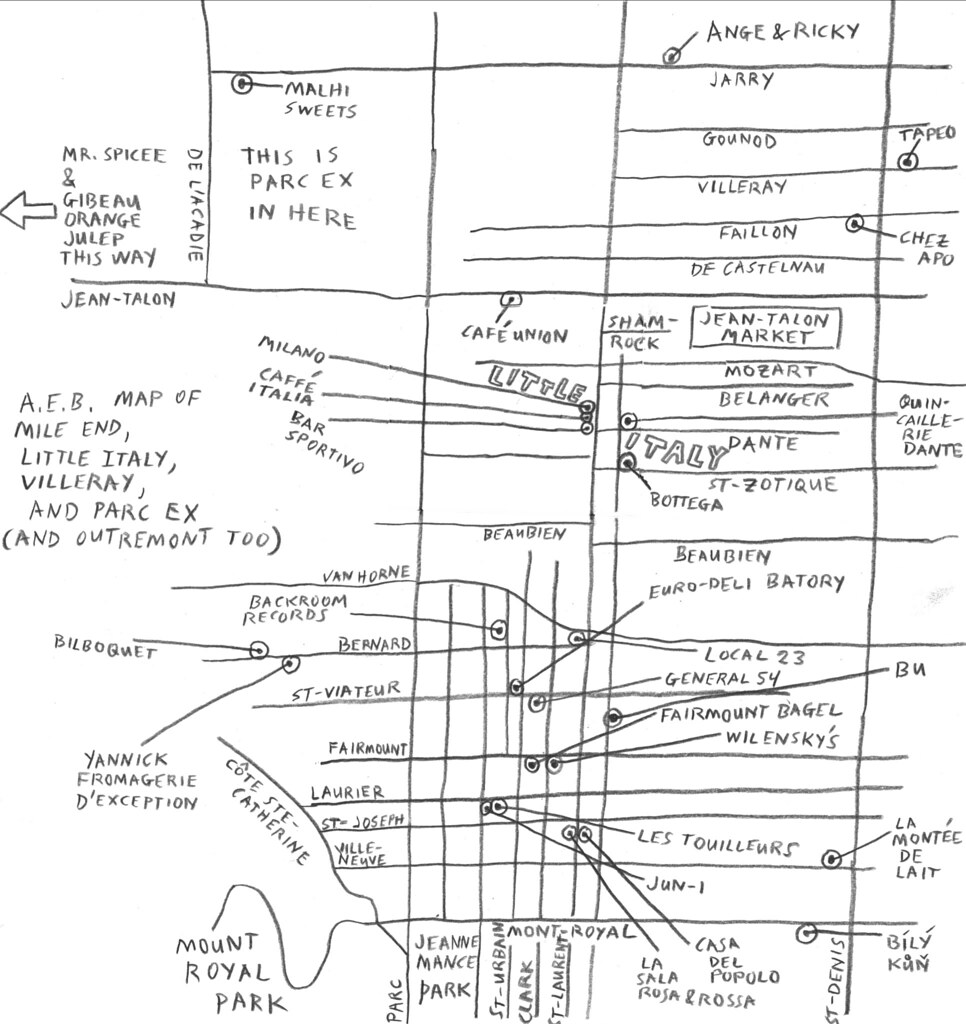
This time around, the grande finale was a visit to Les Chèvres for a special desserts-only tasting menu, but before we got there, we had some other stops to make (!). You see, the original idea for this outing came from Thea, who suggested that we do a culinary tour of Van Horne, stopping at a few pastry shops and boucheries, before ending up at our final destination. Had Thea been able to join us, she would have learned an important lesson: there is such a thing as overkill.

We met at the Outremont Metro station for the first leg of the tour, and at this point there were only three of us, as two others were only able to meet up at 6:30. Our first stop was Lescurier. When I first moved here years ago, I was charmed by the tiny patisseries everywhere and gorged myself on Opéras, Royals, and miniature mousse cakes. These days, though, I go to Montreal’s pastry shops and I generally find myself asking, "Why do they all have the same cakes and pastries?" I asked that same question when I stepped through the door at Lescurier. We had a look around and, more half-heartedly than anything else, chose a palet au rhum, a slice of citrus, and a cup of black currant and mango mousse. Then we marched onwards to Boucherie France-Canada.

The idea was to get a slice of paté or terrine to balance the sweet-savoury ratio. Unfortunately, they were closed, even though I swear to God I checked to make sure they'd be open. So much for savoury. Next up, Paltoquet.

When Paltoquet's croissants are good, they are the best. Nothing can touch them. When they are bad, and believe me, I have had them when they've been bad more than once, they are dense, floury, and tasteless. Why? Who knows? When we got there, their shelves were empty. Only a few items remained. We got a croissant, a brioche, and three pâtes de fruits: pear, apricot, and raspberry. It's probably a good thing we weren't able get any more. We made our way to Camilla's house nearby and had our own little informal tasting with tea.

I am happy to report that the croissant was not one of the bad ones--but it wasn't one of the good ones, either. It was in between, with a nice buttery taste, but somehow both burnt and undercooked in places (?). The brioche was plain. We asked ourselves why we'd chosen it. Oh, well. The pâtes de fruits varied wildly. Pear came away the winner: a pleasant, natural pear flavour and a nice texture. The apricot one was so-so. Nothing too special. The raspberry had seeds in it, which I thought was a good sign. Not so: it had a very strange aftertaste, not unlike iodine (not that I spend that much time ingesting iodine, but...). Next.

We couldn't believe we'd chosen the palet au rhum. It was basically a nicely shaped rum ball. Anyone who has been to pastry school knows what goes into rum balls. Since both Camilla and I are in the know, we had a good laugh at our expense. It wasn't bad. Just forgettable. The citrus slice was a subtle lemon mousse. With chocolate. I don't know what I imagined when I chose it. Yes, I do. A beautiful little citrus-chocolate cake I got at Christian Constant in Paris last summer. It was divine. This one was not. Blah. And we barely touched the black currant and mango mousse. One spoon each. Double blah.

At this point, any normal person, having reached her limit, would have called it a night and gone home, but we were on the road to redemption.


carpaccio de rhubarbe
Originally uploaded by michelle1975.


We met up with Benoit and Maike at Les Chèvres and had a look at the a la carte menu. Should we get one of each and share? Should we each order what we want no matter if there's repetition. Then the waiter came over and asked, "Will you have the dessert tasting menu?" It reminded me of my experience at Au Pied du Cochon: "Will madame have foie gras with that?" There is only one possible answer to these types of questions. Yes.

*NOTE: I don't think that this dessert tasting menu is on offer every night. Correct me if I'm wrong.*

Pictured above is the first plate in what turned out to be a four-course + mignardises parade of desserts. It was one of the big favourites of the evening: a rhubarb carpaccio with fromage blanc battu, pistachio nougatine, and rhubarb sorbet. A few drops of very perfumed olive oil finished the plate. So fresh and light--a welcome change from the genre of sweets we'd eaten earlier. Rhubarb is one of my favourite fruits--after pomegranate, of course. Since starting my stage with the pastry chef at Les Chèvres, Patrice Demers, I have been bugging him to put a rhubarb dessert on the menu. He found the loveliest pink rhubarb any of us had ever seen. This was just one of his "experiments" (if you can believe that). A+.


agrumes
Originally uploaded by michelle1975.


When the next dessert came out, I started to get the feeling that it was only the beginning. (Besides, everytime we peered into the kitchen, the pastry team all had mischievous looks on their faces...) This is a miniature version of the current agrumes dessert on the menu. A coconut milk gelee with a candied kumquat slice, date purée, honey granité, and mandarin and clementine juice. It was even lighter than the first dessert, with a gentle sweetness to it. The textures came together perfectly. I realized that snacking on the individual ingredients of Patrice's desserts somehow add up to his finished creations. We sat back and took a breath, when...

Little bowls came out looking inconspicuous enough. Inside was sapote panna cotta with caramelized honey gelée and almond nougatine. This is when our table went crazy. One bite of this sent Patricia to heaven, while Benoit turned towards the kitchen and said, "Mais, non, il est malade." That's how good it was. Sapote is a hard-to-find spice which tastes of almond and is very fragrant. A seed was brought to the table so we could see and smell it in its natural state. It was simply divine.


chocolate et abricot
Originally uploaded by michelle1975.


The last plated dessert we were served was a miniature version of a new dessert on the menu at Les Chèvres: chocolat et abricot. An apricot gelée topped with two thin, crisp cookies which are filled with a chocolate cream. Alongside are poached apricots and lavender ice cream. This is a fantastic combination. I am very partial to the lavender ice cream. I think Patrice has found the perfect strength at which to use lavender. Too often lavender desserts are overpowering and even soapy. Believe me, his ice cream tops any flavour at Bilboquet. It would have been the perfect last course, except...

The mignardises arrived, and they were plentiful, including tiny ice cream sandwiches, grapefruit pâtes de fruit, lemon and black pepper financiers, sablés topped with an olive oil ganache and candied lemon peel, passionfruit marshmallows, ricotta cardamom beignes with clemantine marmalade.... My God. Is it possible we were actually able to eat them all? Satisfied, in awe, and experiencing heart palpitations (the good kind), we left for home.

Though I highly recommend the dessert tasting menu at Les Chèvres, please refrain from trying the full Van Horne dessert tour. Our dessert club clearly has an unnatural threshhold for sweets. Somehow it seems fitting that I've just started reading Cooking for Kings, a biography of Carème, the master chef. He, too, knew a thing or two about grand gestures with food.

[this edition of the Montreal Dessert Club consisted of Michelle, Camilla, Patricia, Benoit, and Maike]

Les Chèvres, 1201 Van Horne (corner Bloomfield), 514-270-1119
Dessert tasting menu: $15 without tax, tip or drinks.

m