Jambalay’, crawfish pie, filé gumbo… Son of a gun, we’ll have big fun on the bayou—Hank Williams
My Dad and I have a tradition of making seafood stews (cioppino, chowders, etc.) together that dates back a couple of decades now. From the time he pulled into town this time around we were dead-set on making gumbo. I wasn’t entirely sure why at the time, but once we drew up some plans I started to read up on gumbo (
The Joy of Cooking,
The Gourmet Cookbook,
Saveur Cooks Authentic American, etc., etc.), and the more I read, the more I got fired-up. The point of no return, though, came when I finally got to the sections on Louisiana in John Thorne’s
Serious Pig. Thorne devotes a rambling, nearly 100-page section of his book to Louisiana’s cuisine and the diasporic cultures that gave birth to it. In fact, he feels so strongly about this section that he titles it “THERE,” completing the grouping of “HERE,” his opening section on his home state of Maine, and “EVERYWHERE,” his closing section on food miscellany, that he uses to organize
Serious Pig. A pull-quote on the back cover of the book has Leo Lerman of
Gourmet commenting that, “John Thorne is simply the best writer about food in the country,” and Thorne’s chapters that make up “THERE” are an ideal introduction to just what a fine writer he truly is. Rarely have I come across someone who writes with such passion, honesty, insight, and understanding about a cuisine and its significance to the larger culture that encompasses it, and all this from a man who, at the time that he was writing (1996), claimed that he’d only spent a grand total of 30-odd days in Louisiana, and hadn’t actually set foot in Bayou Country in about a decade (!). My own very modest "Bayou Odyssey" began back when I was 13. That summer we drove across Louisiana as part of a Houston-Ft. Lauderdale road trip and it was the first time I had any exposure to Cajun culture of any sort. The landscape, the nondescript bayou diners that unexpectedly served amazing Cajun
boudin, and especially the city of New Orleans--its architecture, its food (jambalaya, po' boy and muffuletta sandwiches, and a wonderfully spicy gumbo), and its incredible
mélange of cultures--left quite an impression. Years later I returned to Louisiana and New Orleans on another road trip--this time rolling solo and making my approach from the north, from Memphis and northern Mississippi along Hwy. 61. I couldn't believe how beautiful the scenery was--exotic vines and flowers and birds everywhere you looked--as I crossed into Louisiana and headed towards Baton Rouge, and hours later when I finally arrived in New Orleans it felt like a homecoming of sorts...
As far as I’m concerned, the real attraction of gumbo has nothing to do with the showcase ingredients—the chicken, or seafood, or sausage, or okra, or what have you—it’s all about the roux. I’m attracted by cuisines that make the most of the simplest ingredients, and few cuisines have transformed such a practice into an underlying philosophy with such zest as the Cajuns. As Thorne explains:
Gumbo is the queen of Cajun cuisine, and the heart of gumbo is roux. This is a very touching and revealing thing. It means that the dearest thing to a Cajun cook—more than any other thing, more than crawfish or blue crab or oysters or shrimp or even rice—is a simple amalgam of flour and fat. The two are gently cooked until the raw taste of the flour is gone and the starch is broken down enough to absorb liquid without lumping. It is the first—and easiest—lesson in French sauce making.
Of course, there are some differences. The French make their roux most often with butter and sometimes with the flavorful fat skimmed out of a marmite. The Cajuns prefer lard for flavor or—more recently—vegetable oil for economy. They also claim the French don’t cook roux the way they do, to a burnished mahogany… but, of course, long, careful cooking has always been the way to make a good brown sauce.
What the French don’t do, however, is care as much about their roux as Cajuns do. So few French cooks possess any of the sense that Cajuns have of what a roux can be made to do, or of its fine gradations of texture, odor, and color, running from creamy pale to the smoky-flavored near-coal black (but not burned) roux that Paul Prudhomme claims is essential to perfect gumbo.
Even so—a whole cuisine based on brown sauce! A cuisine in miniature maybe, but still a cuisine…
Maybe my attraction to roux has something to do with the French-Canadian blood in me, because as Thorne explains, Gumbo is the product Acadian influences (roux, lard), African influences (its name, okra), West Indian influences (hot peppers), and Native American influences (gumbo
filé, made from sassafras leaves). I love how slow-cooking things over a low heat can bring about transformations that border on the sublime. That’s why I love making things like French Onion Soup; and that’s why I love making a dark Cajun-style roux, letting that whole range of complex flavors (smoky and nutty, among other things) come to full fruition.
Early on, we’d decided that this gumbo of ours was going to be a seafood gumbo, one with shrimp, crab, and either oysters or clams. The problem with this is that Cajun seafood gumbo—like
cioppino, clam chowder,
bouillabaisse, and any one of a number of other seafood stews—was based on the premise that this seafood was cheap and plentiful (as apparently it still is in Cajun Country), as well as fresh. Following your standard seafood gumbo recipe in a city like Montreal can be cost-prohibitive, to say the least, which is why it’s important to remember that no self-respecting Cajun cook would actually follow a recipe in the first place and that gumbo is a dish that’s
meant to be different every time, a dish that’s supposed to highlight the cook’s inventiveness, his or her ability to capitalize on what’s fresh and readily at hand. As Thorne describes things, this is a quality acquired from the very environment in which the Cajuns live, where the landscape, at once lush and forbidding, “has taught them to take nothing for granted, and they are always seeing familiar things freshly anew. A gumbo made one way today will not be made that way tomorrow, because a neighbor has come by with a basket of crabs, or because there is some
chaurice to use or a chicken to kill, or simply because the cook is practicing an entirely different spell.” With this lesson in mind, we adapted our seafood gumbo recipe to keep it from getting astronomical in cost, and on day 2 we added some spicy homemade sausages that had been given to us by a friend to the gumbo to give it a different twist, as well as to stretch it out a bit further.
Another consideration had to do with whether or not to add okra to our gumbo. Personally, I really like okra, but the problem with okra is that it’s exceedingly hard to get good okra and I steadfastly refuse to cook with frozen okra. Most everyone who knows anything about gumbo knows that the name is derived from an African (Bantu, actually) word for okra. What many people don’t realize, though, is that the dish gumbo was apparently named after the consistency this dish gets from the addition of either okra or some other green vegetable with similar thickening properties. Many Acadians made a stop in the colony of Saint-Domingue—in many cases, in order to help construct the fortifications that would prove insufficient to stave off the slave revolt that turned Saint-Domingue into Haiti—and there they developed a taste for okra, and other greens of African origin, and hot peppers. When they finally got to
la Belle Louisiane they found that okra was harder to come by in the Bayou, but that
gumbo filé, a compound made of dried sassafras leaves gleaned from the local Choctaw Indians, gave the stew a very similar finish. Since that time Cajun gumbo has tended to contain okra,
gumbo filé, or a combination of the two. That being the case, we opted for the
gumbo filé-based version.
The last two considerations had to do with accompaniments. Like French Canada (until recently, in any case), French Louisiana is a beer-drinking culture. Not only is beer a near-essential part of enjoying eating a good gumbo, it’s also a nice way to enjoy preparing a gumbo. In fact, some die-hards make it a part of the very recipe, insisting that the length of time needed to make a proper Cajun roux has more to do with the length of time it takes one to drink 2 beers than it does with any set number of minutes. And secondly, good Cajun food deserves a good soundtrack. I’m not one of those types who’s Draconian about listening to the correct, culture-specific music with my dinners (“El Condor Pasa” with a Peruvian-style
ceviche, for instance), but I do think it’s important to accompany your gumbo meal with music that swings, music you can dance to. Cajun culture is not a culture of “dinner music” after all. Myself, I’m pretty fond of old-time Cajun, so I like to listen to things like “Hee Haw Breakdown” by Nolan Cormier & The L.A. Aces, or “Hippy-Ti-Yo” by Joe Bonsall & The Orange Playboys.
Finally, it goes without saying that the effects of Katrina (and the gross mishandling of the emergency response to Katrina) were very much present as we prepared for this meal. And as I read the following passage in
Serious Pig, the following words took on a whole new poignancy:
The only string attached to [the bounty that defines the bayou] is that none of it is guaranteed. For this is both a vulnerable and an injured land. It is most palpably vulnerable to weather, especially the hurricanes that sweep across it with terrifying violence and destruction, reshaping the very terrain. Cajuns tend to date their history in terms of hurricanes, rather than in terms of presidents or world events. Hurricanes have far more effect on their lives.
This meal was dedicated to the victims of the Katrina disaster.
Without any further ado...
Seafood Gumbo
3/4 cup vegetable oil
3/4 cup flour
1 medium yellow onion, peeled and finely chopped
1 green bell pepper
2 ribs celery
6 cups hot fish stock
1 tsp salt
1/2 tsp cayenne pepper (or 1/4 tsp cayenne pepper + 1 fresh chili pepper, minced)
1 lb medium shrimp
12 pasta clams
1 lb lump crabmeat
1 scallion
1 tbsp finely chopped fresh parsley leaves
1 tbsp
gumbo filé powder
white rice, freshly cooked
Make a mahogany-brown roux over low heat. Thorne offers the following advice in order to get it just so:
Heat the [oil or lard] in a heavy cooking pot or a large cast-iron skillet. When the fat is hot, add the flour all at once, stirring or whisking quickly to combine it with the fat, smoothing out any persistent lumps with the back of a wooden spoon. Lower the flame and cook, stirring or whisking constantly. The roux will bubble and cast off a fine white foam and, after about 15 minutes, begin to caramelize. It takes about 45 minutes to reach a rich butterscotch color and almost an hour to turn deep mahogany—and become true Cajun roux.
It’s important not to hurry the process and to be careful that the stirring or whisking turns over the entire mixture. If any small black flecks appear, the roux is ruined. That batch must be discarded and the process repeated with new ingredients. (If not, the roux, even if the burned bits are removed, will retain a bitter, scorched taste.)
When the roux has just the right color, texture, and flavor, increase the heat to medium and add the onions, bell peppers, and celery to the roux. Cook until the vegetables become soft, about 15 minutes.
Add the stock to the roux and vegetable mixture in a thin, steady stream, making sure to stir constantly. Be sure not to add the stock too quickly or at too low of a temperature or the roux might separate on you. Add the salt and the cayenne and bring to a simmer, stirring frequently. Reduce the heat to low and simmer for 1 hour.
Add the clams and cook until the clams have opened, about 2-3 minutes. Add the shrimp and crab and cook for another 3-5 minutes. Add the
gumbo filé, stir, and let sit for 5 minutes. Stir in the scallions and the parsley and serve with cooked rice, bread, salad, and an assortment of hot sauces.
Feel free to improvise in whatever way you see fit, keeping in mind that the essentials here are the Cajun roux, the “holy trinity” of onion/celery/bell pepper, and the
gumbo filé.
Serves 6-8 very generously.
[adapted from a recipe in
Saveur Cooks Authentic American]
Laissez bon temps roulez!
aj
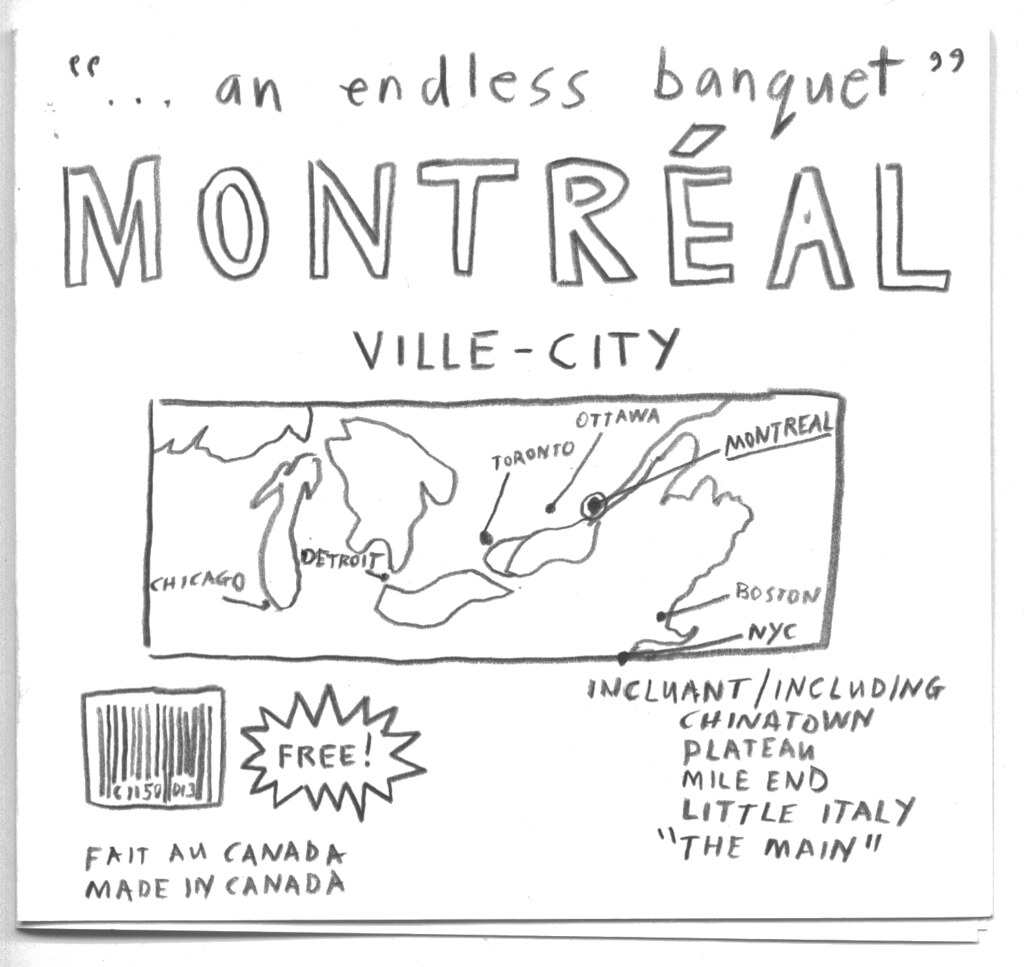
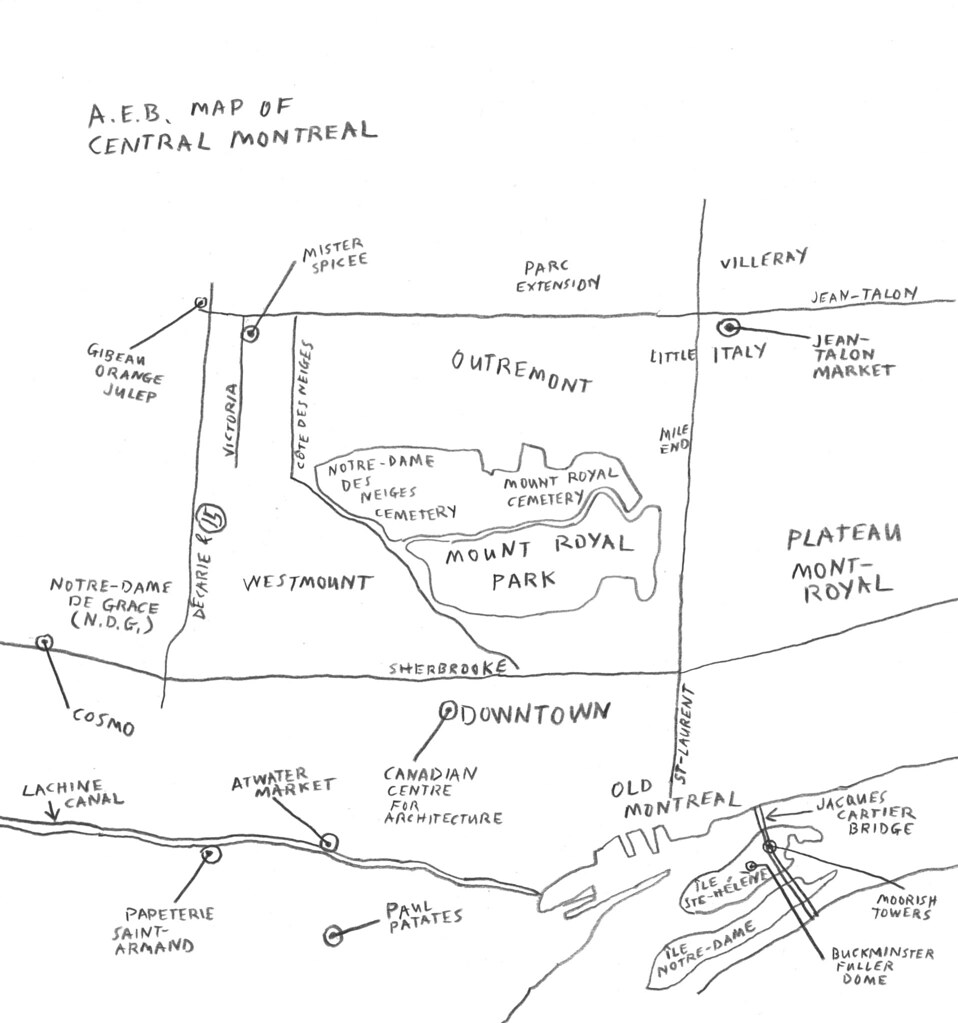
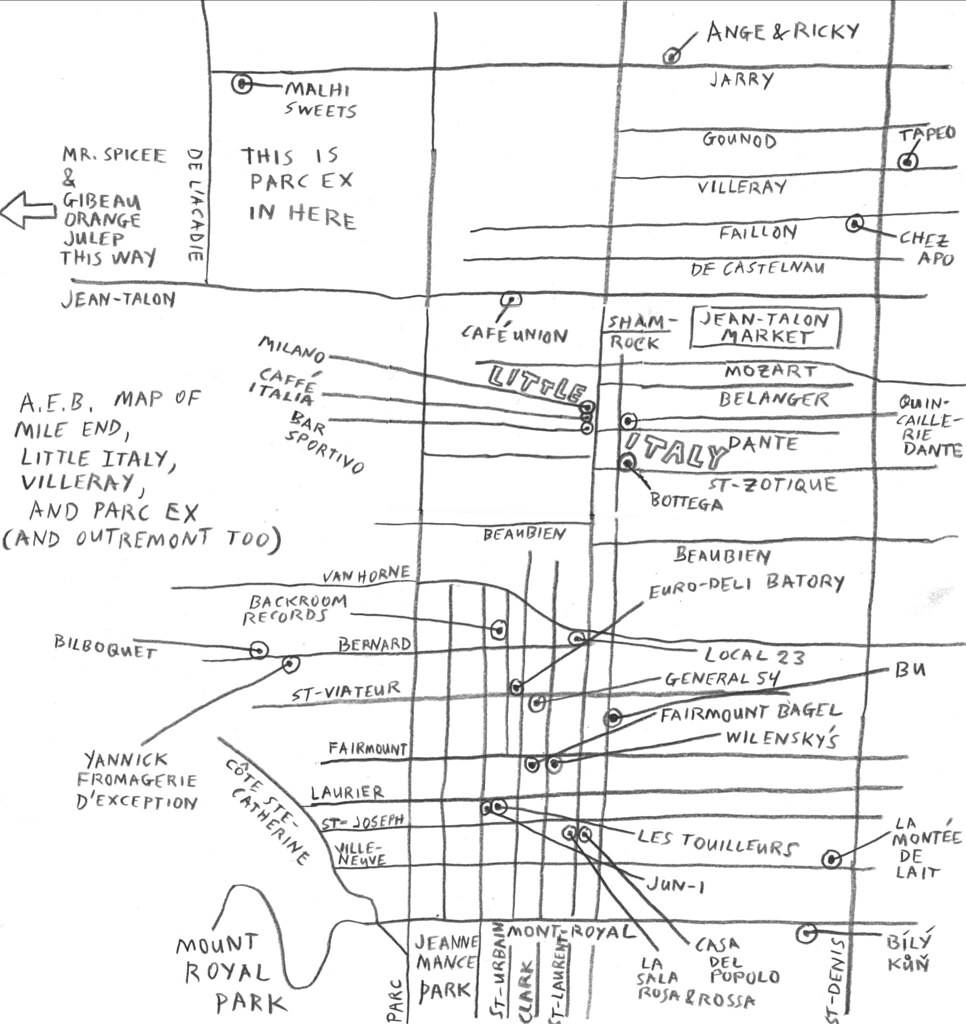
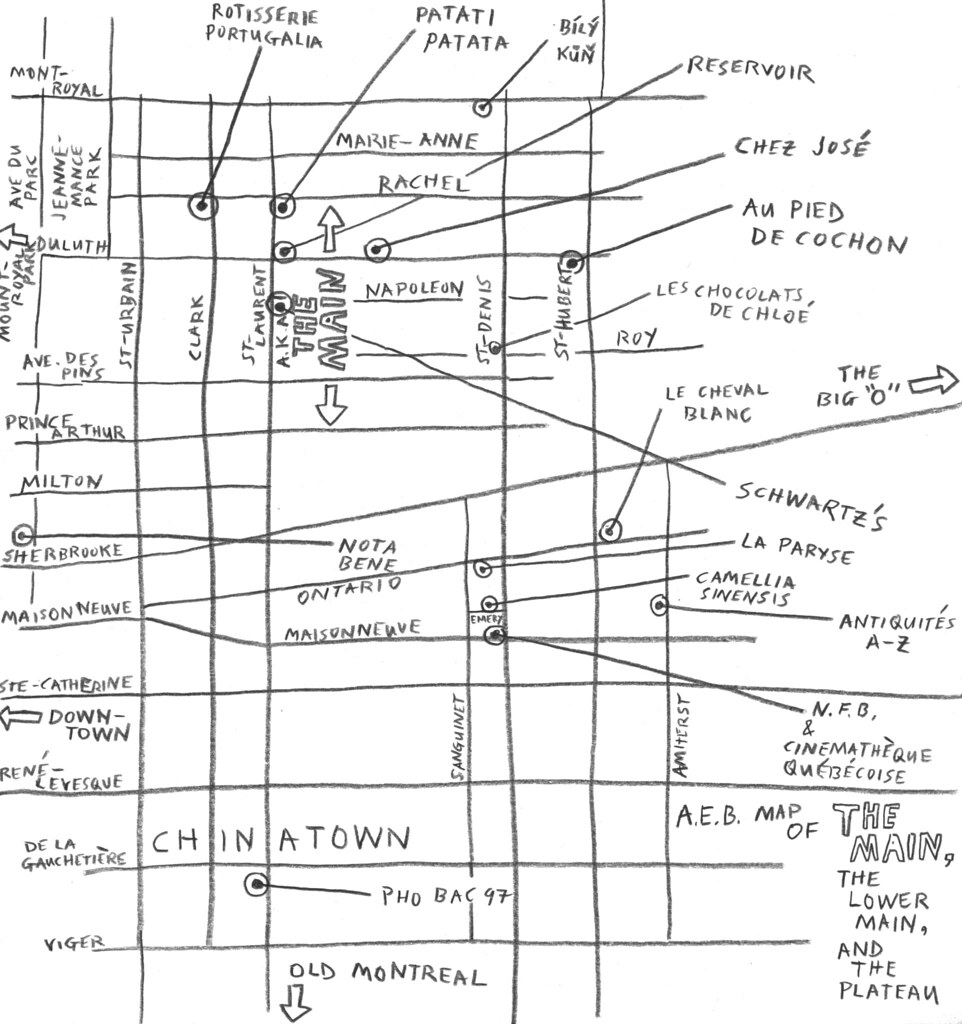
Note: Given the New French roots of Cajun cuisine it’s a little surprising that there isn’t more of a Cajun connection here in Montreal. For the most part, Montreal seemed to have missed out on the Cajun fever that swept across other parts of North America in the ‘80s and ‘90s (although I do remember a cute little place on Duluth East called Le Bijou that had a pretty decent repertoire of Cajun, Mexican, and Brazilian dishes back in the day). Gumbo filé and other Cajun spice blends aren’t the easiest thing to find in Montreal, but you can find them in some supermarkets and at some of your better épiceries. We found ours at Gourmet Laurier on Laurier West.

 fig. b: after
 fig. b: afterer