Monday, March 14, 2005

Tonka bean ice cream, pt. 2

Just what are Tonka beans, you ask?

Well, they're native to the New World, but they come primarily from Brazil, Colombia, Guyana, and Venezuela, with most of those in circulation coming from the forests of Venezuela. Their value comes from the fact that they contain coumarin, the compound that gives them they're distinctive fragrance. Michelle describes this aroma as being somewhere between tarragon, vanilla, and hay. Alan Davidson also describes the presence of vanilla and hay. I don't really smell the tarragon, and I'm not sure I've spent enough time in the country to really sense the hay. All I know is that both of us have been experiencing this really powerful Proustian/un-Proustian effect every time we taste this ice cream. We both have been overwhelmed by some kind of past childhood experience, but these experiences have remained vague at best, and neither of us has been able to identify exactly where we used to taste this flavor. We both have a sense that it was in some candy we liked as kids, but that's as far as we've gotten. Anyway, this aroma was in high demand up until World War II, and it was used in everything from liqueurs, to candies, to chocolates. Everything changed in 1954 when the U.S. government restricted its use to perfume (when you're looking for accents of tarragon, hay, and vanilla prior to a big night out, I guess). In other countries, the real thing has been replaced by an artificial version (sounds BLADE RUNNER-esque, doesn't it?), as well as by the use of vanilla.

As mentioned below, you can find real Tonka beans at Olives & Épices. If you can tell us where we've had that taste before, we'll be forever indebted.

aj

[Thank you to Alan Davidson for his assistance.]

Saturday, March 12, 2005

Plus ça change...


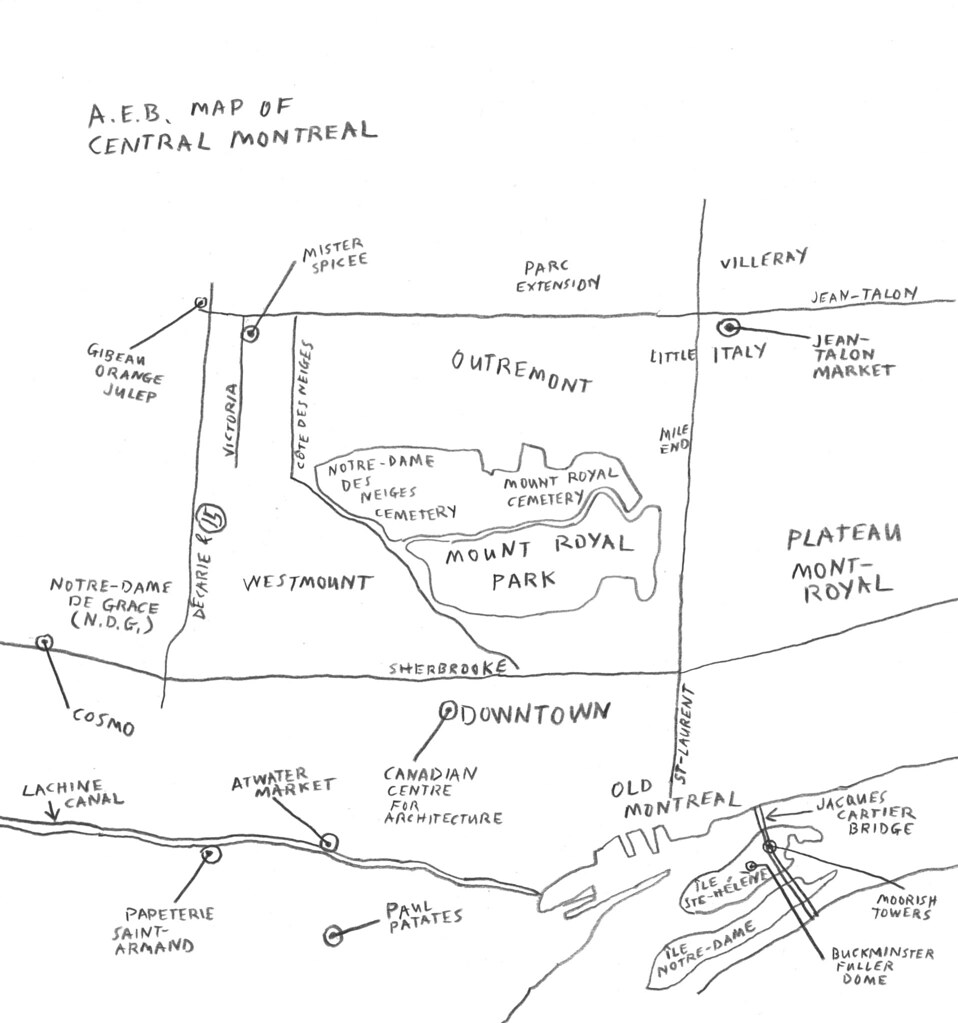
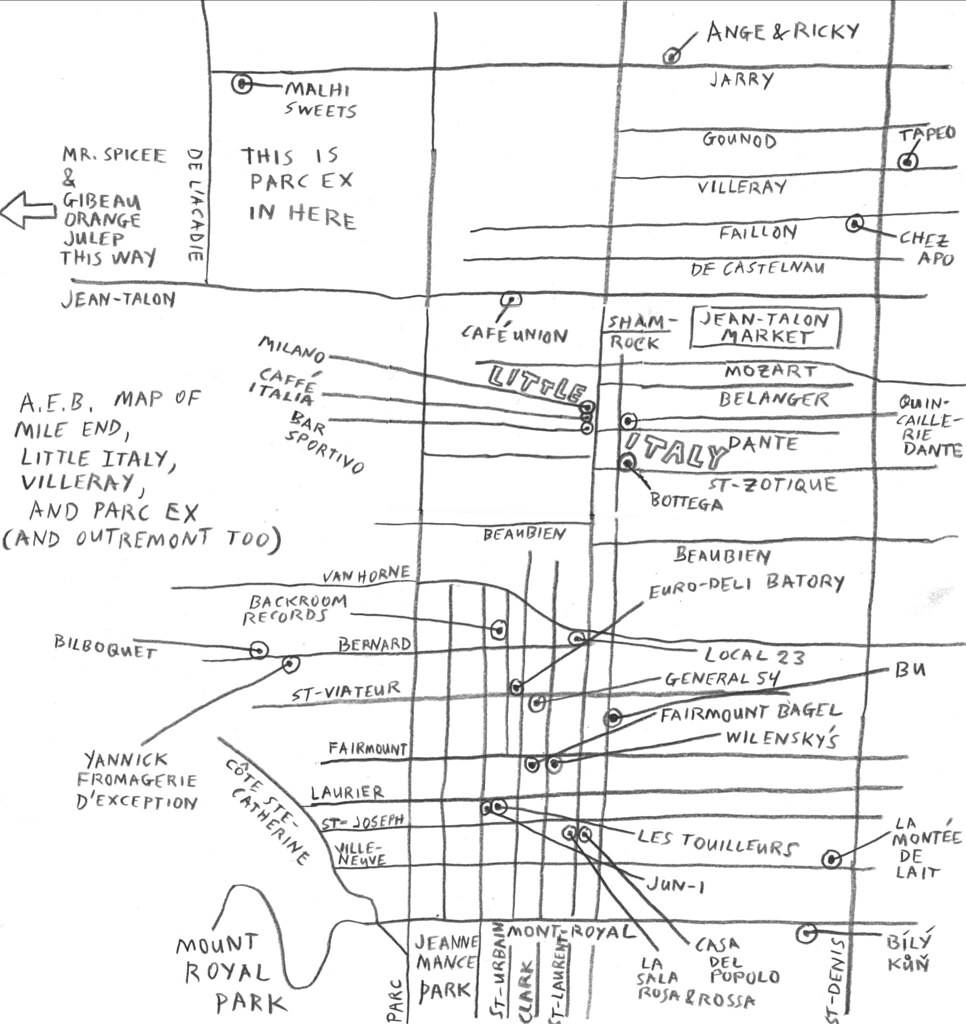
When I got back from Germany early last fall, it didn’t take long before Michelle and I went up to Jean-Talon Market in order to take advantage of its typically abundant/overwhelming harvest offerings. Michelle had warned me that change was underfoot at the market, and when we arrived I noticed that there was indeed a large building being constructed on its eastern edge. There’s been a lot of discussion about the fate of Jean-Talon Market over the last few years, and much of it has revolved around building a multi-tiered parking garage, further “beautifying” the market (i.e., putting up more of those awful garish painted wood signs that are meant to convey “good taste” across so many of Quebec’s most affluent districts, from Magog to Mont Tremblant), and trying to attract even more customers. As much as I love Atwater Market, and especially the beautiful honey-colored market hall that houses it, I find the prices there to be a bit over-the-top, and in my mind it ceased to be a true farmer’s market and developed into something more precious a while ago. Talk of renovation has had me worried that a similar transformation would happen to Jean-Talon Market, and this new building, which I just assumed would be that dreaded parking garage, seemed to confirm my worst fears. Well, it turned out I was wrong: this building isn’t a garage, it’s a new pavilion, one that provides less makeshift quarters for some of the vendors that occupy their stalls all year round, and one that has also introduced a number of new businesses to the market. Now, among other additions, you’ll find an ice cream and sorbet specialist, a new fish market, and a couple of new butchers’ shops. You’ll also find a pretentiously named kitchen supplies shop (“Cuizin”), a cookbook retailer named Librairie Gourmande, which doesn’t quite live up to the breadth and character of its Parisian namesake (4, rue Dante, 5e; www.librairie-gourmande.fr), and a cheese and dairy specialist that definitely has nice products on offer, but also features absurdly high prices and an absurdly bad name (“Qui Lait Cru?”—contributing another terrible pun to Montreal’s ever-expanding collection).

All of these additions indicate a desire to transform Jean-Talon Market into something along the lines of Vancouver’s s touristy Granville Island Market, or maybe even San Francisco’s Ferry Plaza Farmers’ Market—some kind of self-conscious “foodie haven,” with all the inflated attitude and prices that come with such territory. The difference here is that both the Granville Island and the Ferry Plaza were in states of relative disuse prior to their respective face-lifts, whereas Jean Talon Market has been a fully functioning farmers’ market for decades now, one that has served as an anchor for the neighboring Italian community since its beginnings, and one that has proven to be a magnet for subsequent ethnic groups, including North Africans, West Indians, and Southeast Asians. Now, I don’t want to make too much out of this new building, because I don’t think it’ll change things at the market all that radically from the way things already were before its appearance, but I still worry about the track the market is on.

Nonetheless, Wawel Patisserie Polonaise, with its phenomenal plum and apricot-filled doughnuts, and Patisserie Khaima, with its North African delicacies, have also moved into this new pavilion, and I’m happy that both of these businesses will receive more attention because they both deserve it. Perhaps the best news, though, has to do with a business called Olives & Épices. At first, the two of us wrote it off as part of that growing legion of olive oil specialists that have invaded the city in recent years, and we didn’t really give it a second glance. However, we later learned that O & É—as its name suggests—also carries a phenomenal range of spices including the entire line of chef-traiteur Philippe de Vienne’s “épices de cru.” Jean Talon Market has been the #1 place for hard-to-find fruits, vegetables, and herbs for quite some time—now, with the addition of O & É, you can also find two different types of Mexican oregano (including one harvested by an associate from a backyard garden in the Yucatan), Trinidadian cocoa, epazote, Tonka beans, and true cinnamon. The selection here is incredible, but what really sets O & É apart is the quality and the freshness of their herbs and spices. Stale spices can really deaden the taste of a dish, instead of enlivening it. With Olives & Épices' line of "épices de cru" your spice rack will never be the same again, and your tastebuds will thank you for it. Check it!

aj

Life With a Pastry Chef


Pear Charlotte chez Benoit
Originally uploaded by ajkinik.
People often ask me, "What's it like living with a pastry chef?" Well, as Michelle is wont to point out, she's not a pastry chef (yet). Those who haven't seen me in a while ask me if it's been affecting my waistline. Things haven't changed that drastically over the last few months. In many ways, things aren't all that different from the way they'd been for a couple of years before Michelle entered pastry school. She was baking and canning like a fiend back then, too.

More than anything, it means we always have beautiful Michelle-made (sometimes at school, sometimes at home) desserts on offer when people come over for dinner, and when we get invited over for dinner, well...

Here's the Pear Charlotte that we brought over to Benoit's for his "I'm going away to Mexico" dinner. Michelle had made it earlier that day.

ak

Tuesday, March 08, 2005

Will Work For Chocolate


des chocolats de Chloe
Originally uploaded by michelle1975.


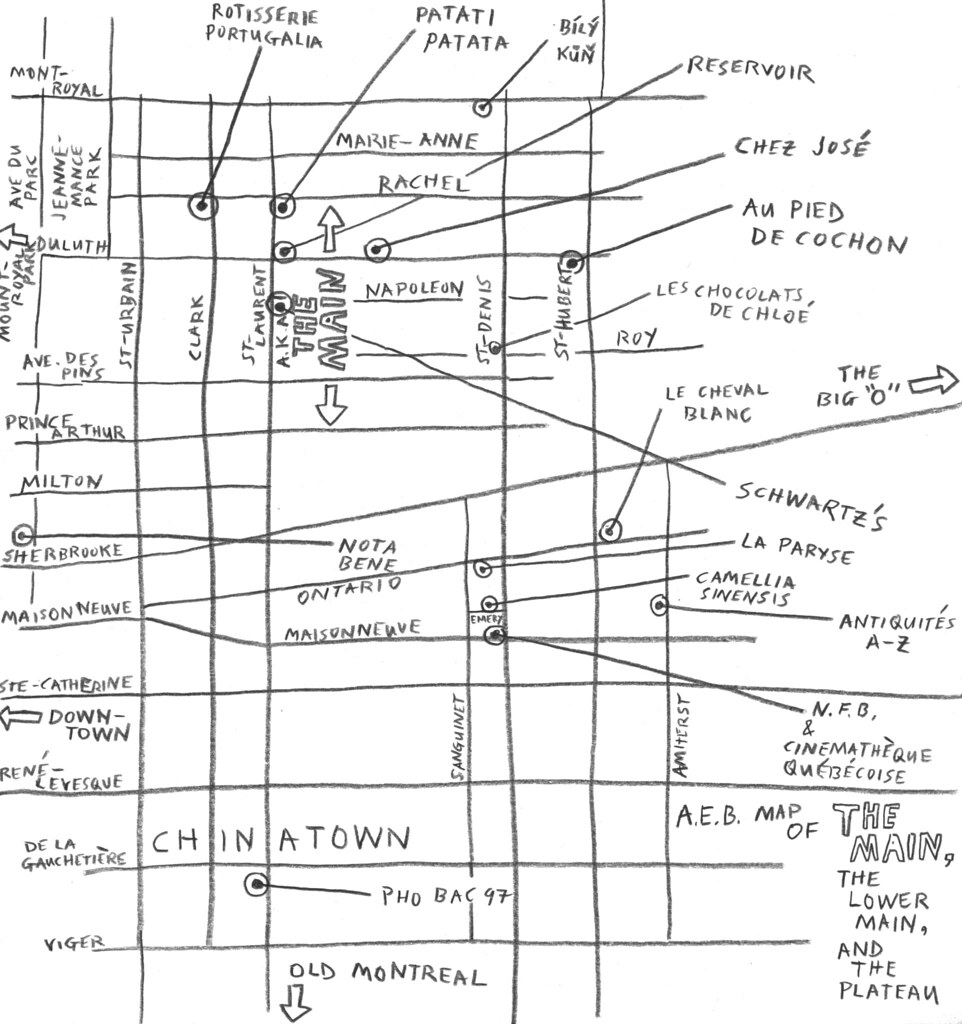
In only a few years, Les Chocolats de Chloé has established itself as one of the best chocolateries in town. The small shop on Roy has steadily built a devoted clientele, one wooed as much by its charm as by its excellent range of chocolates and other treats. It’s really no secret why Les Chocolats de Chloé has been such a hit. First off, no matter how many Easter eggs there are to make, or how many jars of caramel there are to fill, the proprietess, Chloé, and her staff will always take a minute to answer your questions. Then there’s the open kitchen concept which invites people to watch the chocolate-making process without feeling that they are secretly peering into some kind of forbidden world on their tip-toes (am I the only one who’s had this experience?). Finally, and most importantly, having spent the last two weekends working there as part of my stage, I can say with confidence that they take great pains to ensure their chocolates are top of the line: both in ingredients and method. The chocolate they use is Valrhona, which is easily my favourite. All of the flavours they use to infuse the chocolate come from natural sources—there are no extracts here. Even the rum used in the rum and raisin chocolate is St. James brand, not a gelled liquor or, God forbid, rum flavouring.

It was great to work with everyone there. Even though the kitchen is small, I never felt like I was in the way. They took the time to explain every step to me, and let me try it for myself, whatever the outcome (what can I say?: sometimes your hands are just too warm to work with chocolate). Always patient and gracious, I owe them for having taken me under their wings. And yes, I know how they get the caramel inside their caramel bar...

m

chez les chocolats de Chloe


chez les chocolats de Chloe
Originally uploaded by michelle1975.


The picture on the left shows Josée decorating the lemon chocolats with dark chocolate zebra stripes, while I am on the right, packaging easter eggs in a myriad of colours. The cutest thing about their eggs? They each have a baby egg inside. You can find them for $4 each at Les Chocolats de Chloé located at 375 rue Roy est, Montreal.

Sunday, March 06, 2005

Franklin Judd Miller Memorial Dinner, pt. 1


Thursday night, Michelle, Thea, Claudine, and I descended upon Schwartz's Charcuterie Hebraique de Montréal (3895 St.-Laurent Blvd.) in honor of Zoe's father, Franklin Judd Miller. Montreal smoked meat was one of Mr. Miller's favorite meals, and something that wasn't exactly easy to find in Brisbane, Australia. Zoe suggested a trip to one of Montreal's famous smoked meat houses, a round of smoked meat sandwiches, and some pickles might make a fitting tribute.

Thea had had a number of take-out sandwiches from Schwartz's before, but, strangely, she'd never actually sat down to eat on premises in all her years in Montreal. Claudine grew up on the island of Montreal, but, she, too, had never been there--but then she's been a vegetarian since the age of 16. Montreal is not without its dissenting voices, but most fans of smoked meat consider Schwartz's to be the best in town. Say what you will, but theirs is the real thing: huge slabs of beef brisket that are cured (not pickled), then liberally spiced with their legendary spice mix, and then smoked. True Montreal smoked meat is something akin to pastrami, and comes from similar Romanian/Balkan-Jewish origins. Both dishes appear to be related to ancient dry-cured and wind-dried beef dishes that were found across Asia Minor and the Holy Land. Most pastrami starts off with brined or pickled beef brisket these days--so does most second-rate smoked meat. At Schwartz's the end result of their cured-meat process is a smoked meat that is downright luscious--tender, juicy, and spicy. There's a reason it leaves such an impression.

Schwartz's is also renowned for its classic interior and its Old World, no-nonsense (and, frankly, sometimes brusque) service. Not so long ago, Montreal still had plenty of these kinds of operations--places that would fit neatly into the world of Ben Katchor's Julius Knipl, Real Estate Photographer, places that time seemed to have forgotten.

aj

Franklin Judd Miller Memorial Dinner, pt. 2


The spread:
3 smoked meat sandwiches, "medium" (Schwartz's offers their smoked meat three different ways: "lean," "medium," and "regular")
2 dill pickles
1 half-sour
2 orders cole slaw
2 orders french fries
2 Cott black cherry sodas
1 Coca-Cola
1 Schweppes ginger ale

aj

P.S. Wish you were here, Zoe.
Love, from all of us

Saturday, March 05, 2005

Hot Cross Buns and other matters


One Hot Cross Bun To Go
Originally uploaded by ajkinik.


Inspired by our friend Geoff, who posted an extremely tantalizing piece on Sweden’s Semlor pastries earlier this week, I started thinking about Lenten and Passover-season pastries. Semlor are quite clearly pre-Lenten delicacies (their combination of cardamom, whipped cream, and almond paste seems both too heady and too rich to meet Lent’s asceticism), but somehow over time they became seasonal specialties—ones that can now be found in some bakeries from January all the way to Easter. This shift must have something to do with the relative importance of Easter within Swedish culture, but that's another subject altogether. The bottom line, here, is that Semlor got me thinking about everything from Hot Cross Buns to Oma’s “Gremchiles.”

I’ve been an aficionado of the Hot Cross Bun since I was quite young, and they're actually one of the many ways I rate a city (along with bagels, dim sum, rotis and Jamaican patties, delicatessens, and a number of other culinary criteria)--Vancouver rated highly in this department, for reasons that would be obvious to anyone who's ever lived there. However, my knowledge of the Hot Cross Bun's history was foggy at best, so looking for a better understanding, I turned to Alan Davidson’s The Penguin Companion to Food. Hot Cross Buns have generally become sweeter and much less Lenten over the course of time, with their trademark cross now commonly made out of icing sugar and not out of pastry or a simple cross-cut in the dough, as they had been earlier. As it turns out, these icing sugar crosses really belie the pastry’s somewhat somber origins. This cross-bearing pastry dates back to ancient times, the mark being a symbol connected “with religious offerings of bread, which replaced earlier, less civilized offerings of blood,” as Davidson puts it so delicately. Previous to the Christian era, the Egyptians had made offerings of small, round cakes that bore a representation of ox horns to their goddess of the moon. Later, the Greeks and pre-Christian Romans carried on similar traditions, and the Roman Empire eventually brought this custom to the Saxon world. The Saxons ate buns bearing the image of a cross as a tribute to their goddess of light, Eostre, and it is this name that became the root of the word Easter, indicating just how central Hot Cross Buns are to the Anglo-Saxon tradition of Easter.

Oma’s “Gremchiles” are another matter altogether. Not long after I met my friend Mark, we bonded over the subject of pastries. We both had a serious taste for pastries of the Eastern, Central, and Northern European variety—Mark has Dutch and Eastern European roots, while half my family is Slovak—and Montreal at the time was a haven for those with tastes such as ours. We had a number favorite bakeries and we visited them regularly—pastries were the subjects of countless discussions, and the inspirations behind countless of other non-food-related conversations. I remember that the Modern Lovers' masterpiece of the morose, “Hospital,” where Jonathan Richman sang-spoke so plaintively, “I go to bakeries / All day long / ‘Cause there’s a lack of sweetness in my life,” resonated particularly strongly with me at the time. Mark eventually became known as the “Pastry King” within our circle of friends, and one of the things that secured this reputation, in my mind at least, was his devotion to his Oma’s “Gremchiles.” Every year, at Passover, his Oma would make her version of this Dutch-Jewish matzoh-based pastry by the dozens, and every year Mark would wax poetic about them for weeks in advance of his annual Passover trip to Toronto. Eventually, some of us couldn't take it any longer and we started placing orders for them, and Mark would come back with a couple of “Gremchiles” each. I haven’t had them in some 15 years or so, but I still remember them vividly. Finding myself daydreaming about them a few days ago, I got in contact with Mark in an attempt to obtain the recipe. Within 24 hours I’d heard back from both Mark and his mother, Claire, and not only was I now the proud owner of a recipe for them, but I’d finally found out their real name: Gremselich.

Stay tuned, I’ll have more on Gremselich in a few weeks, closer to Passover.

You can find Geoff’s piece on Semlor at Bits and Bytes From Elsewhere under the title “Stockholm Syndrome II.” Don’t miss it.

aj

Friday, March 04, 2005

Spring is coming


Spring cookies
Originally uploaded by michelle1975.


Spring cookie cutters
Originally uploaded by michelle1975.


Maybe I am jumping the gun here, as I always do this time of year, but there is something electric in the air. It must be spring. The birds outside our apartment seem to know it. They are singing louder and louder every day. The days are longer. The snow is retreating. I am cleaning. I made spring-themed cookies. You can't deny it. Don't fight it. And if winter returns with a vengeance, you can blame me for jinxing us. Sorry in advance.

I found this cookie cutter set at Les Touilleurs for $5.50. A steal, I thought. Go get one: 152 Laurier O., near St. Urbain.

m